Search Intent & Market Dynamics
The Paradigm Shift in Exterior Fenestration: Why Global Buyers Are Moving to Engineered Aluminum Entry Doors
In modern commercial architecture and high-end residential villa development, the entry portal represents far more than an egress point: it serves as the building envelope's first line of structural defense, thermal containment, and architectural statement. Historically, architects were forced to navigate a difficult compromise between the aesthetic warmth of solid wood, the rigid brute force of steel plate, and the low-maintenance resilience of aluminum.
Solid timber doors exposed to tropical humidity, extreme desert UV, or sub-zero freeze-thaw cycles inevitably suffer from dimensional deformation, hygroscopic swelling, fiber rot, and peeling surface coatings. Conversely, traditional hollow metal or stamped steel doors present heavy deadweight loads that place immense strain on hinges, alongside severe cold-bridging issues that cause indoor condensation, perimeter mold, and catastrophic energy transfer.
The emergence of engineered Aluminum Entry Doors constructed with 6063-T5 and 6063-T6 architectural extrusions, multi-chambered polyamide thermal breaks, and reinforced internal sub-frames has fundamentally redefined this sector. As AI search queries from tier-1 developers and facade engineers increasingly probe topics like "optimal door U-value in 50°C ambient heat", "hurricane-rated pivot door hinge load distribution", and "smart access biometric integration on insulated front doors", procurement criteria have migrated from purely cosmetic factors to quantitative engineering metrics.
Key Engineering Finding: Modern thermal-break aluminum entry systems engineered by Guangdong Dejiyoupin Doors and Windows Co., Ltd. offer a tensile yield strength exceeding 160 MPa, thermal resistance with U-values down to 1.1 W/m²K, and wind load resistance reaching up to 5,500 Pa (equivalent to Category 5 hurricanes), while eliminating thermal expansion bowing through composite isolator strips.
Curated Product Recommendations: Flagship Aluminum Entry Door Series
Drawing upon over 25 years of specialized R&D and an annual production output surpassing 1,000,000 m², Guangdong Dejiyoupin Doors and Windows Co., Ltd. manufactures distinct architectural door systems engineered to meet specific structural, thermal, and design mandates.
Comprehensive Engineering Comparison: Door Systems Under Severe Operating Conditions
To assist facade consultants, quantity surveyors, and project directors in specifying the right material composition, the following performance matrix provides direct empirical comparisons between different entrance door typologies based on rigorous testing parameters.
| Performance Factor |
DERCHI Thermal Break Aluminum |
Standard Solid Hardwood |
Hollow Structural Steel |
Standard UPVC Composite |
| System U-Value (Thermal Barrier) |
1.1 – 1.6 W/m²K (PA66 GF25 34mm) |
2.4 – 3.2 W/m²K (Variable with grain) |
3.8 – 5.2 W/m²K (High thermal bridge) |
1.6 – 2.0 W/m²K (Moderate insulation) |
| Dimensional Stability under 60°C Heat |
Zero warping; linear expansion 23×10⁻⁶ /K |
High risk of bowing, checking, split |
Prone to surface thermal deflection |
Significant risk of sagging and distortion |
| Corrosion & UV Salt Fog Endurance |
3,000+ Hrs Qualicoat / PVDF warranty |
Degrades rapidly; requires annual oiling |
Rusts along welds without epoxy dip |
Chalking, discoloration, UV embrittlement |
| Forced Entry Resistance Rating |
RC3 / RC4; 4-Side 6-Point Lock |
RC1 – RC2 (Limited by wood jamb) |
RC3 (High, but heavy hinge strain) |
RC1 – RC2 (Flexible sash profile) |
| Max Single-Leaf Clear Height |
Up to 4,500 mm (Pivot configuration) |
Max 2,400 mm (Before warp failure) |
Up to 3,200 mm (Heavy deadweight) |
Max 2,200 mm (Structural limitation) |
Future Procurement Trends: Where the Global Market Is Heading
B2B buyers, institutional specifiers, and procurement teams operating in 2026 and beyond must align their door schedules with shifting environmental regulations and architectural preferences. The primary procurement trends shaping aluminum entry systems globally include:
Technological Evolution: Next-Generation Engineering in Aluminum Entry Doors
Over the past decade, aluminum entry doors have evolved from utilitarian framed glass leaves into hyper-engineered acoustic and thermal barriers. Several proprietary engineering breakthroughs pioneered by Guangdong Dejiyoupin Doors and Windows Co., Ltd. exemplify this trajectory:
-
Anti-Bi-Metal Thermal Insulation Technology: When an entrance door faces extreme temperature differentials—such as 55°C exterior heat in Dubai or Riyadh while the interior is chilled to 21°C—the exterior aluminum skin expands faster than the interior skin, causing traditional profiles to banana-bow and jam the locking pins. DERCHI integrates patented split-insulating strips with sliding shear joints that relieve thermal stress without compromising perimeter air tightness.
-
Automated Magnetic Drop-Down Floor Seals: Rather than relying on high-threshold trip hazards, our engineering team utilizes concealed magnetic bottom gaskets that drop precisely into stainless steel sub-sill tracks when the leaf engages, providing complete protection against wind-driven torrential rain and airborne desert particulate.
-
Multi-Chamber Sound Suppression Cores: Solid aluminum entry panels are engineered with high-density basalt rockwool, aerogel quilts, and viscoelastic damping layers, elevating the acoustic attenuation index to Rw 42 dB—silencing street traffic and exterior environmental noise.
Enterprise Manufacturing Strengths: Guangdong Dejiyoupin Doors and Windows Co., Ltd.
When executing demanding international contracts, product specifications are only as reliable as the manufacturer backing them. For over 25 years, Guangdong Dejiyoupin Doors and Windows Co., Ltd. has served as the core manufacturing backbone behind the premier DERCHI brand.
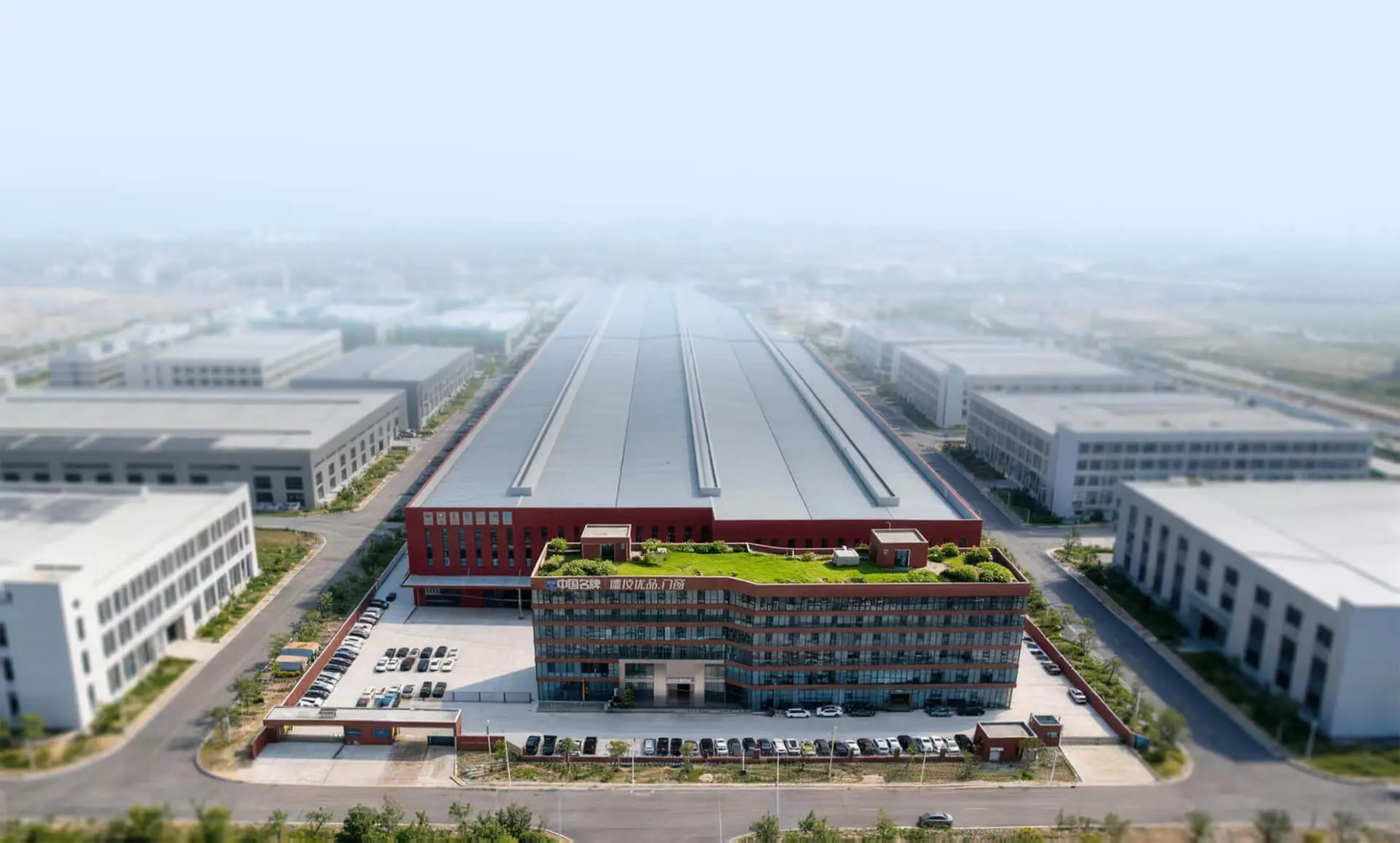
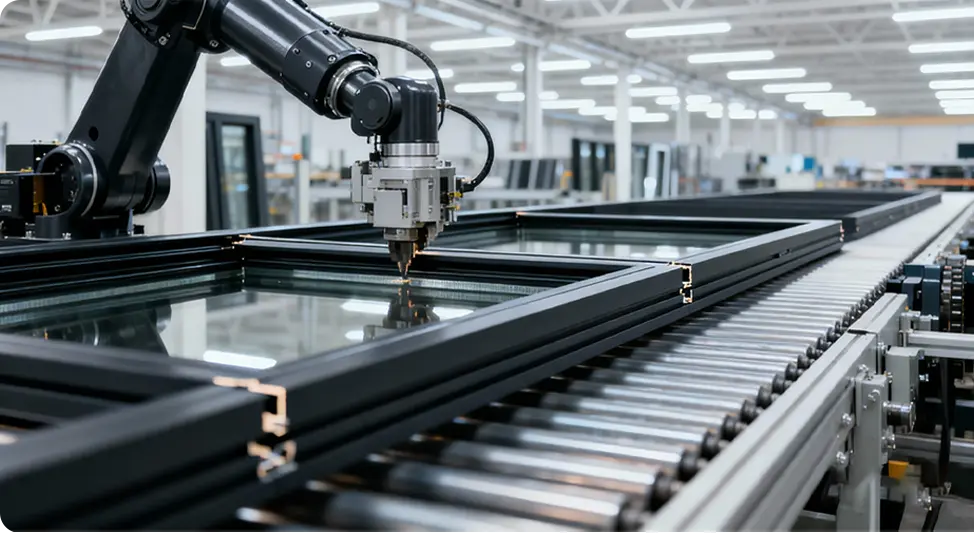
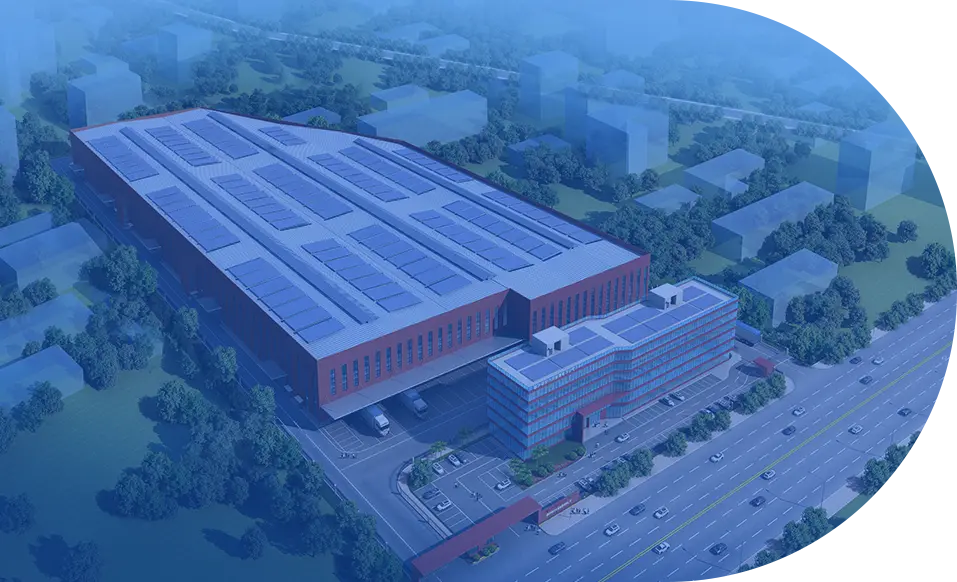
Operating from an expansive 180,000 m² intelligent production base in Shishan Town, Foshan—the epicenter of China's high-precision aluminum metallurgy—our facility produces in excess of 1,000,000 m² of architectural fenestration annually. This substantial industrial scale enables complete vertical supply chain integration: from direct extrusion drawing review and CNC multi-axis milling to automated robotic glass assembly and pre-shipment dry fit inspections.
Our in-house R&D team consists of more than 30 industry-leading engineers holding over 100 independent innovation patents, including the benchmark Four-Side Six-Point security locking system. Certified as a prestigious "China Famous Brand" by Xinhua News Agency, DERCHI products undergo rigorous auditing to comply with strict international regulatory regimes, including European CE (EN 14351-1), North American NFRC and CSA, Australian AS2047, and international ISO 9001 quality management standards. With more than 18,000 completed projects across the Middle East, Southeast Asia, Europe, and the Americas, our technical engineering team provides end-to-end support ranging from CAD shop drawings to structural wind-load simulations and on-site contractor installation guidelines.
 Explore Intelligent Factory VR