0%

Choosing an Aluminum Bathroom Door manufacturer for an international project involves more than comparing catalog prices. Moisture, frequent cleaning, and limited ventilation can expose weaknesses in finishes, seals, and hardware. A door that looks sound in a showroom may behave differently after months of daily use. Small details matter.

This guide to the 2026 best manufacturers helps global buyers assess product quality, customization, and supplier reliability. It considers frame construction, finish consistency, hinge performance, glass options, and the fit of gaskets around the door. Buyers should also ask for clear specifications, sample products, production timelines, and packaging details before placing an order. These checks can reveal practical issues early, including unclear tolerances or parts that are difficult to replace. Not every supplier provides the same level of documentation, and a polished website is not proof of factory capability. That deserves a closer look.

The right choice depends on the project. A hotel renovation may prioritize repeatable dimensions and dependable delivery, while a residential installation may need a specific opening size or finish. Verify claims against current test reports and relevant project requirements. Compare responses, not just brochures. This overview offers a starting point, but buyers should confirm details directly with each manufacturer before making a final decision.
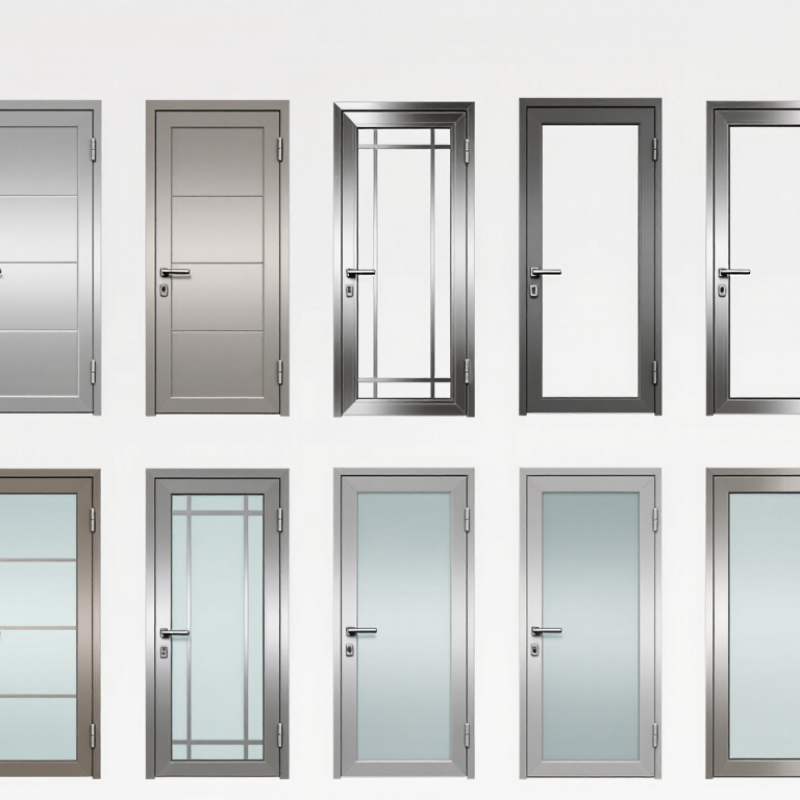
2026 Best Aluminum Bathroom Door Manufacturers for Global Buyers

Aluminum Bathroom Door Types and Their Global Applications

Aluminum bathroom doors fit different layouts, climates, and privacy needs. Hinged doors offer a firm seal and suit larger bathrooms, while sliding doors save floor space in compact apartments. Folding panels can open wider, but their tracks need regular cleaning. Louvered designs support airflow, though they offer less privacy. There is no single best type.

The UN Department of Economic and Social Affairs projected that 68% of the world’s population would live in urban areas by 2050. That trend makes space-saving sliders practical for many homes, but not every narrow bathroom can accommodate a wall-mounted track. Check wall clearance, water splash zones, and the direction of travel before selecting a system. The 2024 Global Status Report for Buildings and Construction estimates that buildings account for 32% of global energy demand. For bathrooms beside exterior walls, insulated frames and well-fitted seals can help limit drafts; installation quality still matters.

Tips: In humid or coastal settings, specify corrosion-resistant finishes and stainless-steel hardware. Ask for drainage details and replacement seals. A sleek sample can look convincing, but real-world maintenance is easy to overlook.

How Aluminum Bathroom Doors Are Designed and Manufactured

An aluminum bathroom door starts with the opening, not the profile catalogue. Designers measure wall plumb, floor slope, ventilation gaps, and splash zones. A narrow bathroom may need an outward-opening or sliding layout, but hardware clearance still needs an on-site check. Small details matter. Even a clean CAD drawing can miss a tile lip or a wall that bows.

Fabricators select an appropriate aluminum alloy, then extrude or source profiles and cut them to measured lengths. CNC machining helps keep hinge and lock positions consistent. Corner cleats or mechanical fasteners join the frame. Anodizing or powder coating adds color and helps protect exposed surfaces. Drainage paths and compatible fixings also help limit moisture-related problems. Fit is unforgiving.

Material choices affect environmental impact, too. The International Aluminium Institute reported about 70.6 million tonnes of global primary aluminum production in 2023. The Aluminum Association says recycled aluminum requires about 95% less energy to produce than primary metal. Buyers can request verified recycled-content declarations rather than rely on broad claims. Before shipment, check frame diagonals, coating consistency, latch movement, and panel retention. A sample installation is useful, though humidity and daily use may still reveal issues.

Key Standards for Evaluating Manufacturers in 2026

2026 Best Aluminum Bathroom Door Manufacturers for Global Buyers

Key Standards for Evaluating Manufacturers in 2026

For global buyers, verifiable control over materials, dimensions, and finishing matters more than broad claims. Ask which aluminum alloy and profile wall thickness the manufacturer uses. Compare those details with technical drawings and purchase specifications. A door that feels rigid in a showroom may still twist after repeated use.

Small differences matter.

Review coating information, including pretreatment, coating type, and stated film thickness. Request test reports for corrosion resistance, adhesion, and color consistency. Confirm that the results apply to the same production process used for your order. Bathroom humidity often exposes weak edges first, especially around cutouts and screw holes. Look closely there. Assess hinges, handles, seals, and drainage gaps as one system.

Reliable suppliers should provide inspection records, dimensional tolerances, sample approval procedures, and packaging details. Check whether the approved sample matches the production configuration, including inserts and hardware. Ask how defects are recorded and corrected; vague answers need follow-up. For international shipments, confirm carton protection, labeling, spare parts, and realistic lead times. Standards vary by destination, so verify local requirements with qualified professionals. Even a careful audit can miss problems, which is why ongoing quality records matter.

Leading Manufacturer Profiles and Product Capabilities

A capable aluminum bathroom door manufacturer should show more than attractive finishes. Look for clear profiles covering frame depth, alloy options, glass compatibility, and opening styles. Practical product ranges may include hinged, sliding, and folding doors, with thresholds and seals suited to wet rooms. Details matter. A profile that lists dimensions and hardware choices helps buyers compare products without guessing.

Manufacturing capability is visible in the small things: square frame corners, consistent coating, smooth rollers, and seals that sit evenly against the floor. Ask whether the supplier can provide drawings, finish samples, and packaging specifications before production. These details are useful. They also reveal how carefully a manufacturer manages customization and quality checks. However, a polished catalog cannot confirm how a door performs after repeated daily use.

Global buyers should compare production capacity, lead times, communication, and after-sales support alongside product features. Request sample inspection photos or a pre-shipment quality report, and confirm which measurements must be supplied by the project team. Some suppliers offer broad customization; others perform better with standard sizes and finishes. Neither profile is automatically superior. I would still verify installation tolerances early, since a few millimeters can complicate fitting, even when the door itself is well made.

How Global Buyers Can Compare Suppliers and Place Orders

Global buyers should compare suppliers using the same technical brief, not brochure claims. Ask each manufacturer to quote identical opening dimensions, frame depth, alloy grade, wall thickness, finish, hardware, and tolerances. Request a physical corner sample. Samples reveal gaps. Check coating thickness and color in daylight; screen images can conceal both. Review test reports for air leakage, water resistance, and wind pressure against the project’s exposure and local requirements. A test certificate may not cover every door configuration, so confirm the tested model matches the quotation.

Order planning deserves equal care. The World Bank’s 2023 Logistics Performance Index covers 139 economies and assesses areas such as customs, infrastructure, tracking, and timeliness. It measures national logistics conditions, not a factory’s reliability, but can help buyers assess route risks. Ask suppliers for recent shipment records, realistic production lead times, packing photos, and inspection checkpoints. UNCTAD’s Review of Maritime Transport 2024 reports that over 80% of world trade by volume moves by sea, making crate strength and container loading practical buying criteria. Put dimensions, finish codes, quantities, delivery terms, and defect procedures in the purchase order. Small details matter. Agree on pre-shipment inspection and signed sample approval; buyers sometimes underestimate the time and cost these steps add.

2026 Best Aluminum Bathroom Door Manufacturers for Global Buyers - How Global Buyers Can Compare Suppliers and Place Orders

Use this as a procurement comparison guide, not a verified ranking of named manufacturers. The supplier profiles and commercial figures below are illustrative planning ranges; confirm specifications, capacity, pricing, compliance documents, and delivery dates directly with each prospective supplier.

Anonymous Supplier Profile Typical Product Offering Common Technical Details to Verify Indicative MOQ Indicative Production Lead Time Customization and Samples Documents to Request Best Fit for Buyers Key Checks Before Ordering
Export-focused standard range Common hinged or sliding bathroom doors in standard sizes, with a limited selection of frame finishes and hardware. Confirm frame alloy and temper, profile dimensions, glass thickness and type, opening direction, hardware material, and corrosion-resistant finish. Often around 10–50 sets for standard configurations; confirm the exact quantity by size and finish. Typically around 15–30 days after approved drawings and deposit; shipping time is additional. Standard colors may be available in smaller quantities. Request a physical sample or a sample of the frame finish and hardware. Dimensioned drawings, packing details, material specifications, inspection records, and destination-market compliance documents where applicable. Importers seeking repeatable specifications and a relatively straightforward first order. Check whether quoted dimensions are overall frame dimensions or opening dimensions, and confirm the glass and hardware are included.
OEM and private-label capable Made-to-order hinged, sliding, or folding configurations, with options for packaging, labels, and selected design changes. Review approved shop drawings, tolerances, glass specification, profile finish, hardware schedule, and packaging artwork before production. Often around 30–100 sets for a customized order; special finishes or packaging can increase the minimum. Commonly around 25–45 days after final approval; complex tooling or finish work may extend the schedule. Custom dimensions and packaging may be possible. Confirm sample charges, tooling costs, ownership of drawings, and approval deadlines in writing. Approved drawings, bill of materials, finish samples, quality plan, carton markings, and any requested test or compliance reports. Distributors and retailers that need a consistent product specification or market-specific packaging. Separate one-time tooling and sampling charges from unit pricing; approve a pre-production sample before mass production.
Project-oriented fabricator Configured door sets for residential developments, hotels, renovations, or other projects with multiple sizes and opening layouts. Check site measurement responsibility, wall and floor conditions, threshold details, hardware options, installation clearances, and variation between openings. May quote by project or batch rather than a fixed standard MOQ; ask for minimums by configuration. Often around 30–60 days for mixed or project-specific orders, subject to drawing approval and production scheduling. Site-specific sizing may be available. Require a clear process for measurement confirmation, change orders, and replacement parts. Final opening schedule, shop drawings, installation instructions, packing list by unit or room, and inspection criteria. Contractors, project buyers, and wholesalers coordinating several sizes or delivery phases. Confirm how dimensional changes, site-measurement errors, damaged goods, and phased deliveries are handled.
Flexible low-volume supplier Small batches of standard or lightly customized doors, often with a narrower selection of profiles and finishes. Verify that low-volume options use the same materials, glass specifications, hardware, and quality checks as larger orders. Some standard products may be available from about 5–20 sets; custom finishes may require higher quantities. Often around 20–40 days, depending on whether components are in stock and whether the order requires customization. Useful for pilot orders and market testing. Ask whether sample orders are production-representative and can be credited toward a larger order. Written product specification, sample approval record, packaging details, and applicable destination-market documents. New importers or buyers validating demand before placing a larger order. Compare unit price with freight and packaging costs; check spare-part availability and consistency for repeat orders.
Documentation and testing-oriented supplier Bathroom door systems supplied with a stronger focus on specification records, inspection procedures, and project documentation. Match test evidence to the exact product configuration, including glass, frame, hardware, finish, and intended installation conditions. Often around 20–100 sets, depending on the test scope, specification, and production setup. Typically around 30–60 days when additional reviews, testing, or approval stages are required. May support samples, inspections, or third-party testing by agreement. Confirm scope, cost, sampling method, and acceptance criteria. Product data sheets, traceable test reports where available, inspection records, material declarations, and market-specific conformity documents. Buyers with formal project requirements or markets that require documented product review. Check report issuer, date, product-model match, test method, and whether the document is accepted in the destination market.

FAQS

What should be measured before designing an aluminum bathroom door?

Measure the opening, wall plumb, floor slope, ventilation gaps, and splash zones. Check for tile lips and bowed walls. A drawing may miss them.

Which opening style works best in a small bathroom?

Hinged, sliding, or folding doors can suit different layouts. Check hardware clearance on site before choosing. A few millimeters matter.

What material and finish details should buyers check?

Ask for the alloy, wall thickness, coating type, and verified recycled-content information. Recycled aluminum can require about 95% less energy to produce than primary aluminum. Broad claims need proof.

How can buyers assess a manufacturer’s workmanship?

Inspect frame corners, coating consistency, roller movement, and seals against the floor. Request drawings, finish samples, and packaging details. Catalog photos are not enough.

How should suppliers be compared?

Give each supplier the same dimensions, frame depth, alloy grade, finish, hardware, and tolerances. Request a physical corner sample. Samples reveal gaps.

Which product tests and documents are useful?

Review reports for air leakage, water resistance, and wind pressure. Confirm that the tested door matches the quoted configuration. A certificate may not cover every version.

What should an order and shipping plan include?

Put dimensions, finish codes, quantities, delivery terms, and defect procedures in the purchase order. Ask for realistic lead times and packing photos. Crate strength matters.

What should happen before shipment and installation?

Check frame diagonals, coating, latch movement, and panel retention. Agree on sample approval and pre-shipment inspection. These steps add time and cost, which buyers may underestimate. I would still check installation tolerances early.

Conclusion

This guide explores how Aluminum Bathroom Door designs serve different needs across residential, hospitality, and commercial projects worldwide. It compares common door types, opening styles, finishes, and configurations, while explaining how materials, hardware, fabrication, and quality checks shape a door’s durability, appearance, and suitability for humid environments. It also outlines practical criteria for assessing manufacturers in 2026, including product consistency, customization options, production capacity, documentation, communication, and after-sales support.

For global buyers, the article offers a structured way to compare suppliers and move from product selection to an order. It highlights the value of confirming dimensions, specifications, finishes, packaging, lead times, and shipping arrangements in advance. By evaluating capabilities against project requirements and requesting clear quotations and samples where appropriate, buyers can make more informed decisions and reduce avoidable sourcing complications.

Charlotte

Charlotte

Charlotte is a professional marketing specialist with a strong understanding of the company’s products and the needs they are designed to address. She works closely with product and customer-facing teams to turn detailed information into clear, useful guidance, helping readers make informed......