0%

Commercial washrooms put doors through a demanding daily routine. Staff, visitors, carts, and cleaning equipment may pass through the same opening, often within minutes. An Aluminium Washroom Door can suit these settings because aluminium is relatively lightweight and does not absorb moisture like many untreated materials. Still, the material alone does not guarantee a durable installation. Frame quality, hinges, locks, edge protection, and fitting all matter.

This guide explores 10 aluminium washroom door options for commercial use, from compact cubicle doors to full-height room entrances. The right choice depends on the building, traffic levels, privacy needs, and cleaning routine. A busy sports facility may need sturdy hardware and surfaces that tolerate frequent wiping. An office washroom may place more emphasis on appearance, sound control, or matching existing finishes. Small details count. Check clear opening widths, ventilation gaps, accessible hardware, and the manufacturer’s care instructions before comparing prices. Confirm applicable local requirements with a qualified professional.

No door is perfect. A lightweight design may be easier to operate, yet feel less substantial if its hardware is poorly specified. A premium finish may look sharp, but fingerprints and scratches can still show. We should be honest about that. The selections ahead are starting points, not universal recommendations; product availability and performance vary by supplier and installation. Consider the actual site conditions, ask for technical specifications, and inspect samples where possible. Then choose a door that balances durability, privacy, maintenance, and budget without expecting one feature to solve everything.
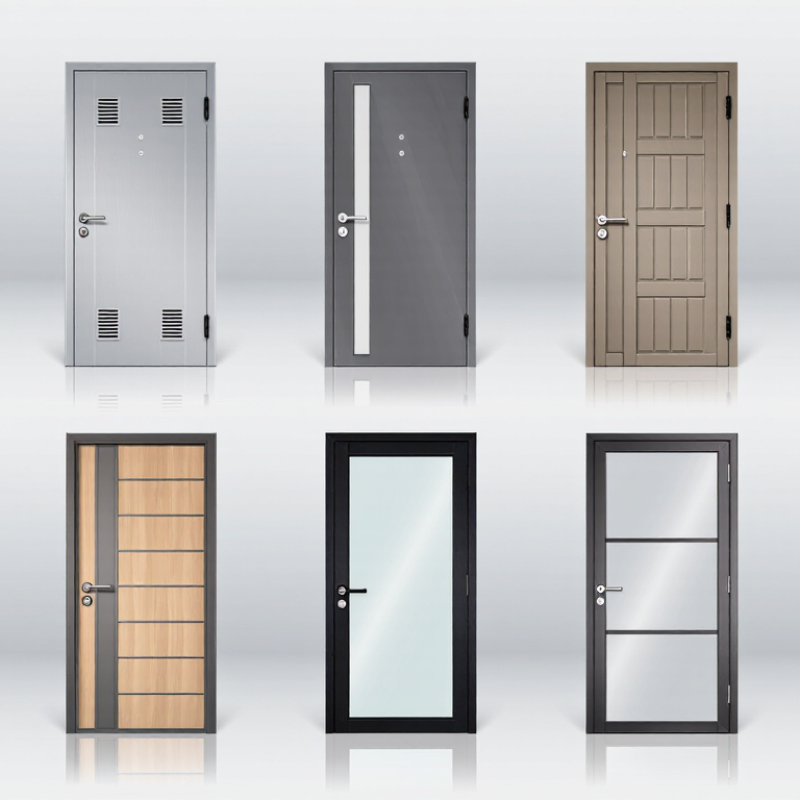
10 Best Aluminium Washroom Doors for Commercial Use?

How to Classify 10 Commercial Aluminum Washroom Door Types by Use

Commercial aluminum washroom doors are best classified by the job they perform, not just by their appearance. Main-entry doors handle frequent traffic, so sturdy hinges and easy-clean surfaces matter. Standard cubicle doors provide basic privacy in shared facilities. Full-height cubicle doors reduce sightlines, though they may make cleaning and ventilation more demanding. Accessible-compartment doors need suitable clearances and easy operation; confirm dimensions against local requirements. Ambulant-accessible cubicle doors serve users who need support but not a wheelchair-sized compartment. Family or caregiver doors allow room for an adult and child, or for assistance.

Shower-enclosure doors need finishes and hardware suited to regular moisture. Changing-room doors prioritize privacy and often benefit from simple, reliable latches. Poolside or wet-area doors should tolerate damp floors and frequent rinsing. Staff-only washroom doors may use controlled access while remaining easy to clean. A dedicated service-room door can separate cleaning supplies from public areas, but it should not obstruct washroom circulation. In practice, these categories overlap: a shower door may also serve a changing area. That is not always a design flaw. Check the actual traffic, moisture, privacy, and maintenance needs before choosing a type.

10 Commercial Aluminium Washroom Door Types by Typical Use

Ratings are illustrative qualitative suitability scores (1 = limited fit; 5 = strong fit), not measured test results. Choose a door based on the intended use, privacy needs, available space, hardware, installation, and applicable accessibility and building codes.

Compare Hinged, Sliding, Folding, and Louvered Designs for Traffic Needs

Hinged aluminium washroom doors suit facilities with steady traffic and enough swing clearance. Their simple operation makes them easy to inspect and adjust. Check that the door will not strike a sink, partition, or passing user. That detail is often missed. For busy corridors, a durable closer can reduce slamming, though it may need seasonal adjustment.

Sliding doors keep the doorway clear, which helps in compact washrooms and narrow circulation areas. They can ease movement for people carrying supplies or using mobility aids. But the track collects dust and moisture; regular cleaning matters. Folding designs create a wide opening without a full swing arc, useful near changing areas or service routes. Their linked panels and hinges need closer inspection where users move quickly. They can also feel less solid if poorly aligned.

Louvered aluminium doors support airflow, which may help a damp washroom dry between cleaning rounds. The trade-off is reduced visual privacy and more edges to wipe. For heavy, continuous traffic, a louvered design may not be the best fit by itself. Match the door to actual peak use, not just the floor plan. Count queues, carts, and door openings during the busiest hour. It is easy to overestimate how much a small clearance helps.

10 Best Aluminium Washroom Doors for Commercial Use? — Compare Hinged, Sliding, Folding, and Louvered Designs for Traffic Needs

# Door design Typical construction Traffic suitability Space and circulation Privacy and ventilation Best-fit commercial setting Key considerations
1 Single-acting hinged door Aluminium frame with a solid or opaque infill panel; mounted on side hinges. Good for low-to-moderate traffic and individual toilet rooms. Requires clear swing space; the swing direction must not create a circulation hazard. Good privacy with an opaque, well-fitted panel; little inherent ventilation. Small offices, clinics, and single-user washrooms. Choose durable hinges, a suitable closer where needed, and hardware that can withstand frequent cleaning.
2 Outward-swing hinged door Side-hinged aluminium-framed door with an opaque infill. Suitable for busy individual rooms when the corridor or lobby can accommodate the swing. Frees interior floor area, but the door leaf projects into the exterior circulation area. Good privacy when the panel and perimeter details are selected for that purpose. Compact accessible single-user rooms and washrooms where interior maneuvering space is limited. Check corridor clearance, adjacent doors, and applicable accessibility and life-safety requirements before selecting the swing direction.
3 Inward-swing hinged door Aluminium-framed door with solid or opaque infill, hinged to open into the room. Best for low-to-moderate use where the room has adequate interior clearance. Keeps the corridor clear but uses interior floor and maneuvering space. Good privacy with an opaque panel; ventilation generally depends on separate room ventilation. Staff washrooms and private rooms with a spacious interior. Confirm that the door can open without striking fixtures or reducing required accessible clearances.
4 Double-acting hinged door Door swings in both directions on pivot or double-acting hardware; commonly used with a vision panel in service areas. Useful for frequent two-way movement between rooms. No fixed swing direction, but the door still needs clearance on both sides. Privacy depends on the panel and glazing; a vision panel is generally unsuitable where visual privacy is essential. Staff-only washroom entrances or service routes where two-way flow is expected. Specify controlled closing and safe finger-clearance details; assess whether the door is appropriate for a public toilet-room entrance.
5 Top-hung sliding door Aluminium-framed panel suspended from an overhead track, with a floor guide where required. Good for steady traffic when the track and hardware are rated for the expected cycle frequency. Does not require a swing arc, but needs wall space beside the opening. Privacy varies with panel overlap and side gaps; sliding doors may provide less acoustic sealing than well-fitted hinged doors. Compact washrooms and accessible rooms where swing clearance is difficult. Keep the track accessible for inspection and cleaning; confirm the clear opening and operating force against project requirements.
6 Surface-mounted sliding door Aluminium-framed panel on an exposed wall-mounted track, often with a floor guide. Suitable for moderate use where simple access to the operating hardware is useful. Needs uninterrupted wall space; no swing arc is required. Privacy is affected by gaps at the jamb, floor, and track side; seals or overlapping details may help. Renovations and rooms where a recessed pocket cannot be built. Protect the track and guide from impact and dirt; avoid placing switches, dispensers, or other obstacles in the door’s travel path.
7 Telescopic sliding door Two or more linked panels slide and stack together to create a wider opening from a shorter wall run. Can suit busy entrances where a larger opening is needed and wall space is limited. Uses less stacking space than a single sliding panel, but requires a more complex track arrangement. Privacy depends on panel overlap and the quality of edge and meeting-stile details. High-use washroom entries with restricted wall space and a need for a wider passage. Allow for more moving parts and maintenance than a basic slider; verify the clear opening with all panels fully open.
8 Bi-fold door Two hinged panels fold together and travel along a top track, typically with a floor guide. Appropriate for light-to-moderate traffic when robust commercial hardware is specified. Needs little swing space, but folded panels occupy part of the opening. Privacy depends on panel joints, edge gaps, and infill; it is generally less airtight than a single-panel door. Small staff washrooms, storage-adjacent facilities, or tight retrofit layouts. Check the usable clear width, pinch points, and the suitability of the hardware for frequent public use.
9 Folding partition door Multiple linked panels fold to one or both sides; aluminium rails and frames may be combined with opaque infill panels. Useful for wide openings or flexible layouts; suitability for constant high traffic depends on the system and hardware. Reduces the need for a full swing arc but requires space to stack the folded panels. Panel joints can allow sound and sight gaps; select an opaque, properly overlapping system where privacy matters. Large washroom entrances or adaptable facilities with occasional wide-opening needs. Confirm panel storage space, track support, locking arrangements, and the level of privacy required.
10 Louvered hinged door Hinged aluminium-framed door with angled slats or louver inserts for airflow. Suitable for utility or staff areas with ventilation needs and limited privacy requirements. Requires a swing arc like other hinged doors. Allows airflow but can reduce visual, acoustic, and odor separation; not generally suitable for privacy-critical toilet rooms. Janitor rooms, plant areas, or washroom service rooms rather than individual public toilet cubicles. Consider cleanability, sightlines through the louvers, and whether the room’s ventilation system requires a specific free-air area.

Selection note: Clear opening, door swing, hardware, privacy details, ventilation, and accessibility requirements vary by project and local codes. Confirm dimensions and performance with the project designer and applicable regulations; the descriptions above are general comparison guidance, not product specifications.

Check ADA §404.2.3: A Minimum 32-Inch Clear Doorway Width

For commercial washrooms, an aluminum door’s nominal size does not tell you its usable passage width. Under ADA §404.2.3, the clear opening must be at least 32 inches when the door is open 90 degrees. Measure from the door’s face to the stop, not across the slab. If the doorway depth exceeds 24 inches, the required clear opening increases to 36 inches. Small detail. Big difference.

Aluminum frames can have sturdy, narrow profiles, but hinges, stops, and hardware may still reduce the opening. A 36-inch door leaf does not automatically provide 32 inches of clear width. Check the installed assembly with the door fully open, including its handle and closer. Then review maneuvering space, thresholds, and approach conditions separately; meeting the width requirement alone does not make the entire route accessible. On renovation jobs, measurements taken before the frame is installed can be misleading. That mistake is easy to make. Verify the finished opening on site, and confirm any additional local requirements with the project’s accessibility professional.

Specify AAMA 611 Anodizing: Class I 0.7 mil or Class II 0.4 mil

Commercial washroom doors face wet hands, detergent mist, shoe impacts, and frequent wiping. Anodizing is more than a color choice; it is a measurable surface specification. AAMA 611-20 sets minimum coating thicknesses of 0.7 mil (about 18 μm) for Class I and 0.4 mil (about 10 μm) for Class II. That difference can matter in high-use rooms. (AAMA, Voluntary Specification for Anodized Architectural Aluminum, AAMA 611-20.)

For busy schools, transport hubs, or public facilities, consider specifying Class I on exposed door surfaces. Class II may suit lower-abuse interior settings, but cleaning frequency and chemicals deserve review. Do not rely on “heavy duty” wording alone. State the class, thickness, finish, and sealing requirements in the door schedule. Small detail. Big consequence.

Ask for documented coating-thickness checks. ASTM B244 describes eddy-current measurement for nonconductive coatings on nonmagnetic conductive metals. Readings on a sample may not represent every finished door if processing differs. Worth checking. Door profiles and edges can also complicate measurement, so confirm the inspection method with the project team. Thickness helps compare options, but it cannot replace checking finish consistency, sealing, and maintenance conditions.

Match Door Hardware and Maintenance to Commercial Washroom Demands

Commercial aluminium washroom doors face repeated opening, moisture, cleaning chemicals, and hurried use. Hardware should suit the door’s weight and daily traffic, not just its appearance. A properly rated hinge helps prevent sagging and uneven gaps. Check that the closer shuts the door smoothly without slamming. Small details matter.

Choose handles and privacy locks that are easy to operate with wet hands. Their fixings should resist corrosion, and exposed edges should be simple to wipe clean. In accessible washrooms, confirm that the handle position and operating force suit the intended users. A lock that is too stiff can frustrate people, even when the door itself performs well.

Maintenance works best as a simple, recorded routine. Inspect hinges, closers, locks, and fixings for looseness or unusual noise. Clean aluminium with a soft cloth and a suitable mild cleaner; harsh products may damage finishes. Replace worn components before they affect reliable latching. It is tempting to tighten everything at once, but overtightening can damage fittings. Match replacement hardware to the door’s construction, and check the manufacturer’s care guidance when available.

FAQS

When are hinged aluminium washroom doors a good choice?

They suit steady traffic when there is enough swing clearance. Check nearby sinks, partitions, and passing users. Small clashes are easy to miss.

Why choose sliding doors for a compact washroom?

They keep the doorway clear and can help people carrying supplies or using mobility aids. Tracks collect dust and moisture, so clean them regularly.

Where can folding doors work well?

They create a wide opening without a full swing arc, which can help near changing areas or service routes. Inspect linked panels and hinges often.

Do louvered doors suit every busy washroom?

No. They support airflow, but reduce visual privacy and add edges that need wiping. Heavy, continuous traffic may call for another design.

How should door hardware be selected?

Match hinges, closers, handles, and locks to the door’s weight and daily use. A suitable hinge helps prevent sagging and uneven gaps.

What should you check on privacy locks and handles?

They should be easy to operate with wet hands, with fixings that resist corrosion. In accessible washrooms, check handle position and operating force.

How can staff maintain aluminium washroom doors?

Record regular checks of hinges, closers, locks, and fixings. Watch for looseness or unusual noise. Replace worn parts before latching becomes unreliable.

What is a safe way to clean aluminium doors?

Use a soft cloth and a suitable mild cleaner. Harsh products may damage the finish. Tighten fittings carefully; overtightening can cause damage.

Conclusion

Choosing the right Aluminium Washroom Door starts with matching its design to the room’s layout and level of use. The ten commercial options can be grouped by function, including hinged, sliding, folding, and louvered styles. Hinged doors suit straightforward layouts, while sliding or folding designs can help save space in compact areas. Louvered doors may support airflow where ventilation is a priority. Compare traffic patterns, privacy needs, available clearance, and ease of access before selecting a type.

Check that the doorway provides at least 32 inches of clear width under ADA §404.2.3, and specify an anodized finish suited to the environment: AAMA 611 Class I at 0.7 mil or Class II at 0.4 mil. Durable hinges, handles, latches, and other hardware should match expected traffic and moisture exposure. Regular cleaning, inspection, and timely hardware adjustments can help keep doors operating smoothly and extend their service life.

Ethan

Ethan

Ethan is a professional marketing specialist with a deep understanding of the company’s products, the needs they address, and the practical considerations that help customers choose the right solutions. He regularly contributes expert articles to the company website, turning product knowledge and......