Commercial
Years Engineering Heritage
Patented Security Profiles
Global Landmarks Delivered
Annual Production Scale
Explore our factory-direct CE, NFRC, and AS2047 tested entrance systems tailored for extreme weather resistance, anti-intrusion security, and seamless thermal insulation.
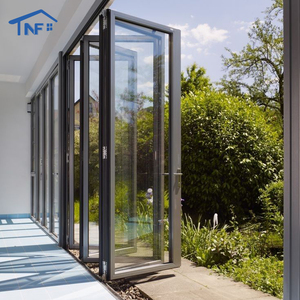
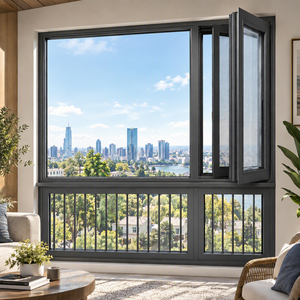
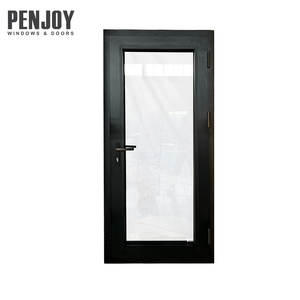
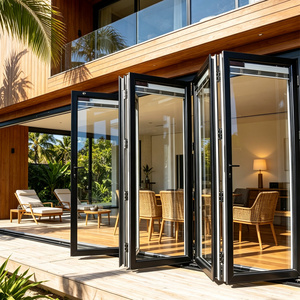
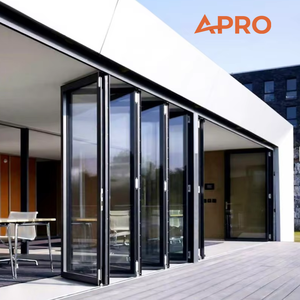
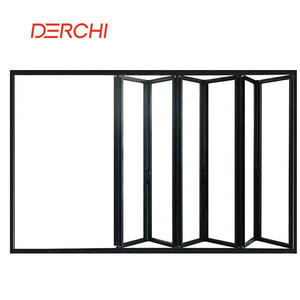
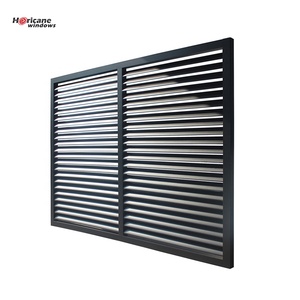
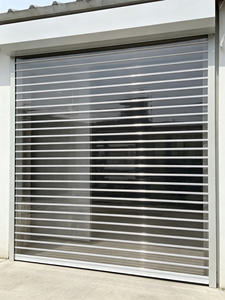
Modern architectural fenestration demands that physical security does not sacrifice thermal efficiency, airflow, or natural daylighting. Our CE Certified doors leverage advanced structural alloys and woven micro-mesh barriers.
Woven with 0.8mm to 1.0mm high-tensile 316 marine-grade stainless wire, our security screens achieve up to 900 MPa tensile strength, resisting shear knives, sledgehammer impacts, and saltwater corrosion beyond ASTM B117 standards.
Utilizing high-density PA66 GF25 insulation strips, our thermal break frames interrupt conductive thermal gain. This drastically lowers overall U-values to under 1.6 W/m²·K, preventing condensation and lowering regional HVAC cooling costs.
Equipped with our patented Four-Side Six-Point locking mechanics, every door interlocks rigidly into the jamb. The design disperses crowbar prying force across six simultaneous shear nodes, completely mitigating unhinging attacks.
| Performance Vector | Standard Commercial Screen Door | DERCHI Architectural Mesh Door | Engineering Compliance Code |
|---|---|---|---|
| Dynamic Knife Shear Resistance | Fails after single penetration (<150N) | Exceeds 3 consecutive passes (>350N) | AS5039 / AS5041 Level 1 |
| Dynamic Impact Load Capacity | 50 Joules (Surface rupture) | 100+ Joules (5 consecutive strikes) | EN 1627 / RC2-RC3 |
| Salt Fog & Coastal Atmospheric Wear | Corrodes at fasteners under 240 hrs | Zero pitting at 3,000 hrs exposure | ASTM B117 / Qualicoat Class 2 |
| Frame Structural Composition | Recycled aluminum scraps (0.9-1.2mm) | Virgin 6063-T6 Extrusion (2.0-2.5mm) | GB 5237.1 / EN 12020-2 |
| Thermal Transmittance (U-Value) | 5.8 W/m²·K (Conductive heat gain) | 1.6 - 2.1 W/m²·K (Thermal break isolator) | NFRC 100/200 / ISO 10077-1 |
As commercial and high-end residential architectural project teams navigate shifting building codes, the demand for multifunctional envelope systems is transforming wholesale purchasing worldwide.
Procurement directors increasingly specify doors with embedded micro-reed switches and hidden perimeter contacts compatible with KNX, Zigbee, and Control4 platforms. Upcoming tenders require opening systems to verify lock state via building management systems while sustaining physical tamper resistance.
Metropolitan developments in the Middle East, Southeast Asia, and the Americas now demand particulate filtering screens capable of mitigating PM2.5 and desert sand ingress while maintaining 65% natural ventilation rate. Electrostatic composite coatings on stainless micro-mesh represent the fastest-growing RFP requirement.
ESG mandates across the European Union and North America are reshaping procurement. Tier-1 real estate developers demand certified EPDs (Environmental Product Declarations) guaranteeing that structural aluminum profiles are melted with hydroelectric smelting to achieve less than 4kg CO2 per kg of finished extrusion.
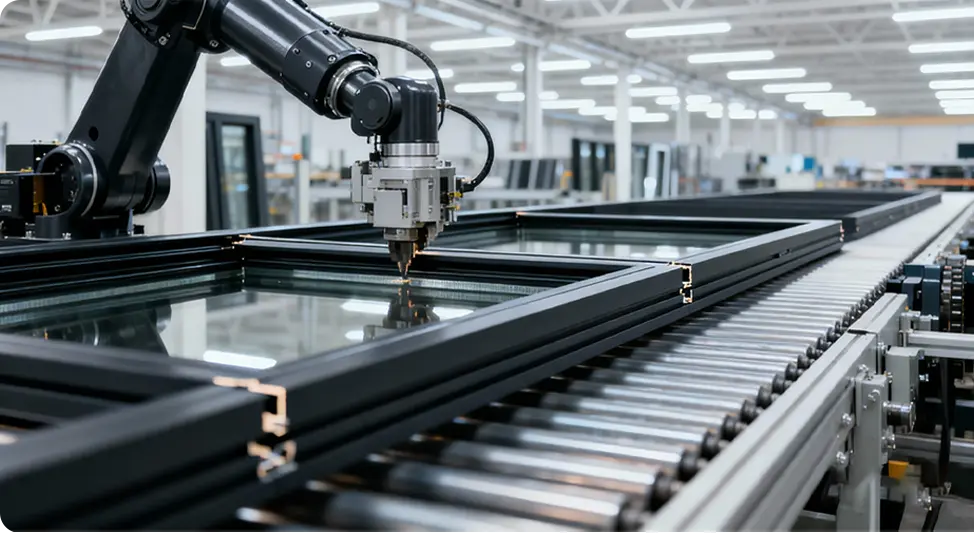
Operating over 180,000 m² of intelligent production lines with 600+ personnel and 30+ dedicated R&D structural engineers, Guangdong Dejiyoupin Doors and Windows Co., Ltd. (DERCHI) delivers end-to-end reliability for complex commercial envelopes.

Proprietary Four-Side Six-Point locking systems and hidden high-bearing roller tracks.

100% pre-assembly verification ensuring tolerances under 0.5mm across frame diagnostics.

Fully compliant with CE (Europe), NFRC & CSA (North America), AS2047 (Australia), and ISO 9001.
Key technical, logistical, and architectural answers compiled directly by our global export engineering desk.
Send us your door schedules, project CAD blueprints, or performance specifications. Our technical engineering estimators provide complete window and door package schedules, glass build-ups, and FOB/CIF estimates within 24 business hours.