Factory-Certified Aluminium Architectural Openings
Direct from Foshan's premier manufacturing center. High-performance bifold configurations, lift-and-slide systems, hurricane-rated profiles, and fire-resistant industrial solutions engineered to international standards.
Engineering Architecture of Top-Tier China Bifold Door Plants
When global developers and façade contractors search for the best aluminium bifold doors factory in China, commercial success depends on microscopic technical differentiation. Below is the multi-point engineering baseline that separates precision extrusion hubs from assembly-only workshops.
Primary 6063-T6 Extrusions
Top Chinese manufacturers exclusively utilize virgin billet 6063-T6 aluminium alloy with web thickness ranging from 2.0mm to 3.0mm. This provides the tensile strength necessary for ultra-tall folding leaves up to 4,000mm in height without torsional deflection or sagging under wind loads exceeding 3.5 kPa.
PA66GF25 Thermal Breaks
To conquer strict energy codes like California Title 24, UAE Estidama, and EU CE EN 14351-1, profiles integrate continuous 24mm to 34mm Technoform polyamide strips (PA66 reinforced with 25% glass fiber), effectively isolating exterior convection and suppressing overall frame U-values down to 1.1 - 1.4 W/m²K.
Multi-Point Locking Gear
Unlike commodity hinge designs, tier-1 producers integrate concealed continuous transmission gearboxes with the patented Four-Side Six-Point locking architecture. Utilizing CNC-machined shoot bolts and stainless steel anti-jemmy mushroom cams, systems effortlessly meet PAS 24 and RC3 burglary security mandates.
Heavy-Duty Roller Bearings
The heart of an effortless bifold operation lies in bottom-rolling quad-roller assemblies with sealed surgical-grade SUS304/SUS316 bearings. Capable of carrying sashes weighing up to 250 kg (550 lbs) each, these carriage mechanisms guarantee minimum 50,000 continuous cycle lifespans with under 15N gliding resistance.
Emerging Sourcing Trends for Aluminium Bifold Fenestration
International developers, façade consultants, and general contractors are revising standard tender schedules. China's top export manufacturing ecosystem is actively evolving to support zero-carbon construction, panoramic glazing, and smart-building automation.
1. Ultra-Slim Sightline Engineering (<35mm)
The modern architectural market demands maximum daylight ratio. Conventional 75mm+ stiles are being replaced by high-tensile 32mm - 38mm sightlines. Achieving this without forfeiting thermal efficiency or wind resistance requires advanced structural adhesive bonding between double/triple-glazed IGUs and slim extruded perimeter profiles.
2. Recycled Low-Carbon Billets & EPD Certification
With the European Carbon Border Adjustment Mechanism (CBAM) and North American LEED v4 standards tightening, tier-1 Foshan plants are shifting toward hydro-powered aluminium smelting and circular recycled post-consumer scrap. Environmental Product Declarations (EPD) are rapidly becoming a mandatory B2B procurement prerequisite.
3. Universal Flush Thresholds with Concealed Siphon Drainage
Zero-step seamless transitions connecting living spaces to exterior terraces or hospitality patios have traditionally risked water infiltration. Emerging Chinese systems combine subterranean dual-chamber drainage troughs with linear concealed stainless-steel grates, sustaining 600 Pa water tightness while meeting strict ADA barrier-free access regulations.
4. Motorized Electric Folding & Smart BMS Integration
Commercial bifold door units exceeding 8 to 12 meters in span are increasingly specified with brushless DC motor assemblies and concealed top-track drives. Integrated with building management systems (BMS), they feature obstacle-detection infrared laser curtains, remote smartphone telemetry, and automatic rain-sensor closing triggers.
5. Hurricane Impact & Coastal Corrosion Finishes
Global warming has driven strict demand for Florida Building Code (FBC) High Velocity Hurricane Zone (HVHZ) compliant laminated glass bifold systems. Paired with Qualicoat Class 2 or Class 3 PVDF fluoropolymer surface coatings (AAMA 2605), products withstand intense coastal salt spray (3,000+ hours ASTM B117) and heavy ultraviolet radiation without chalking or fading.
System Engineering Specifications: Standard vs. Heavy-Duty
To assist architectural specifiers and commercial quantity surveyors in assessing factory bid tenders, compare key performance metrics between basic residential bifold assemblies and industrial heavy-duty systems manufactured by top-tier Chinese plants.
| Performance / Feature Criterion | Standard Low-Cost Assembly | Tier-1 Factory Heavy-Duty Bifold System | International Standard Reference |
|---|---|---|---|
| Alloy & Wall Thickness | 6063-T5 | 1.4mm - 1.6mm | 6063-T6 Primary Extrusion | 2.0mm - 3.0mm | ASTM B221 / GB 5237 |
| Thermal Insulation (U-Value) | Non-Thermal or 14mm PVC | U > 2.8 W/m²K | 24mm - 34mm Technoform PA66GF25 | U = 1.1 - 1.4 W/m²K | NFRC 100/200 / EN ISO 10077 |
| Maximum Sash Height & Width | Height 2,400mm | Width 800mm | Height up to 4,200mm | Width up to 1,200mm | Structural Engineering Analysis |
| Individual Leaf Weight Capacity | 70 kg - 90 kg | Up to 250 kg (550 lbs) per sash | Cycle Life Testing (EN 1191) |
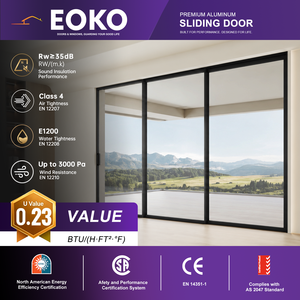
| Air Permeability | Class 2 (300 Pa) | Class 4 (600 Pa) - Hermetic EPDM Triple Gasket | EN 12207 / AAMA 501 |
| Water Tightness | 250 Pa - 350 Pa (Standard Sill) | Class 9A (750 Pa - 900 Pa) with Sub-Sill Weep Holes | EN 12208 / ASTM E331 |
| Wind Load Resistance | Class 3 (1,200 Pa) | Class C5 / E2400 (2,400 Pa - 3,600 Pa Gust Peak) | EN 12210 / AS 2047 |
| Acoustic Attenuation (Rw) | 28 dB - 32 dB (Double Glazed) | Up to 42 dB - 46 dB (Laminated Triple Insulated) | ISO 717-1 / ASTM E413 |
| Locking & Burglary Rating | Single-point or standard 2-point latch | Patented 4-Side 6-Point shoot-bolt system (RC3 / PAS 24) | EN 1627 / PAS 24:2022 |
Guangdong Dejiyoupin Doors and Windows Co., Ltd. (DERCHI)
As one of China's most verified and prominent fenestration manufacturers, Guangdong Dejiyoupin Doors and Windows Co., Ltd. (operating the internationally recognized DERCHI brand) represents the apex of intelligent, zero-error industrial fabrication. Operating from our monumental 180,000 m² automated production base in Foshan, Guangdong—the core of global precision aluminium metallurgy—we eliminate standard overseas sourcing risks through end-to-end quality governance.
Certified as a "China Famous Brand" by Xinhua News Agency, DERCHI combines 30+ dedicated profile research engineers with automated German and Italian CNC machining centers. Every corner crimp, thermal break rolling joint, and EPDM vulcanization seal undergoes exhaustive 360-degree digital inspection prior to ocean freight consolidation.
From prestigious international hospitality developments (including Hilton and Atour hotel properties) to coastal super-villas and mixed-use commercial towers across the Middle East, North America, Australia, and Europe, our engineering bureau provides complete shop drawing sign-offs, wind pressure simulations, and remote or on-site technical installation guidance.
Patented Anti-Theft Security Engineering
DERCHI holds over 100 proprietary utility and invention patents. Our signature engineering breakthrough is the exclusive Four-Side Six-Point Lock. Specifically designed for large-span multi-panel bifold and sliding systems, it utilizes multi-axial linkage drive rods to interlock perimeter stiles across all four outer edges simultaneously, rendering traditional exterior prying attempts mechanically impossible.
Frequently Asked Questions for B2B Aluminium Bifold Sourcing
Direct technical, commercial, and logistical clarifications compiled by our export engineering division to guide project developers, architects, and quantity surveyors through sourcing from China.
What are the key technical criteria for vetting a Chinese aluminium bifold door factory?
How do top factories prevent bifold leaves from dropping or sagging over time?
Can large bifold systems withstand severe coastal winds, typhoons, and hurricanes?
What packaging protocols are implemented to prevent damage during long-distance ocean shipping?
What surface treatment standard is recommended for extreme ultraviolet or coastal marine environments?
What is the standard production lead time and Minimum Order Quantity (MOQ) for custom projects?
How are air and water tightness maintained across multi-panel bifold door configurations?
Does the factory provide shop drawings, BIM models, and on-site engineering installation support?
Launch Your Bifold Sourcing Tender with China's Premier Manufacturer
Connect directly with our senior fenestration engineering team for full structural calculations, customized profile specifications, shop drawings, and competitive direct-factory quotations.
Send an Inquiry