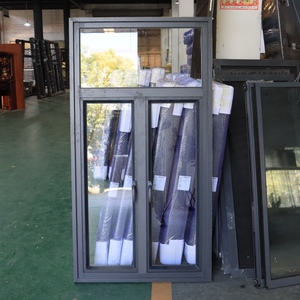
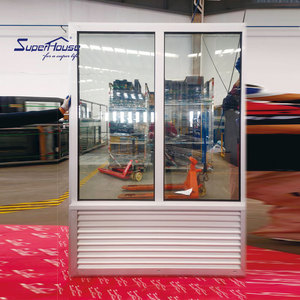
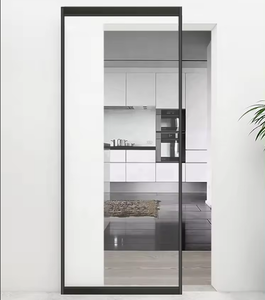
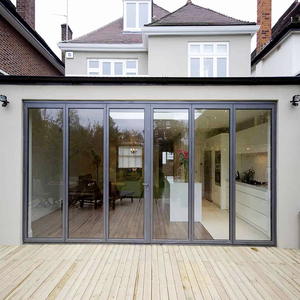
Featured Export Architectural Systems & Glazing Assemblies
Engineered for extreme thermal loads, cyclonic wind forces, and high-specification acoustic insulation. Every assembly undergoes comprehensive 360-degree factory acceptance inspections prior to global export shipping.
Future Procurement Trends in Global Fenestration (2026–2030)
As international building energy codes tighten across North America, the Middle East (GCC), Europe, and Australasia, fenestration sourcing has shifted from pure unit-cost purchasing to life-cycle carbon calculations, verified thermal resistance, and extreme climate durability.
Low-Carbon & Polyamide Thermal Integration
Modern mega-projects mandate building envelopes with rigorous U-factor targets (U ≤ 1.4 W/m²K in cold regions; SHGC ≤ 0.22 in desert regions). Chinese precision manufacturers now utilize multidirectional PA66 GF25 thermal break strips combined with triple Low-E warm-edge technology to outperform legacy uPVC and standard aluminum frames.
Climatic Resiliency & Stringent Testing Standards
Procurement teams are shifting away from generic lab certificates to country-specific compliance models: NFRC and Florida Product Approval (TAS 201/202/203) for Atlantic hurricane zones, AS2047 for Australian cyclonic conditions, and extreme cyclic heat/sand infiltration durability for Gulf Cooperation Council (GCC) developments.
Factory-Direct BIM Integration & Modular Glazing
Commercial tier-one developers require complete CAD/BIM shop drawing integration prior to profile extrusion. Sourcing directly from advanced Chinese factories eliminates tier-two distributor markups while embedding parametric window schedule data directly into Revit models, ensuring zero-error structural tolerances at job-site delivery.
| Performance Characteristic | Legacy Export Standard | DERCHI Next-Gen Engineered Profile | Procurement Advantage |
|---|---|---|---|
| Thermal Insulation (U-Factor) | U-value > 2.8 W/m²K (Cold bridges) | U-value ≤ 1.2–1.6 W/m²K (Polyamide PA66) | LEED, Estidama & Energy Star compliant |
| Air / Sand Permeability | Class 2 (Standard wool pile brush) | Class 4 / ASTM E283 (EPDM continuous gasket) | Zero dust ingress in desert/storm environments |
| Structural Wind Load Capacity | < 2500 Pa (Standard extrusions) | ≥ 4500–5500 Pa (Internal steel reinforcement) | Suitable for 50+ story towers & exposed coastlines |
| Locking & Anti-Intrusion | Single/Dual crescent latch | Patented 4-Side 6-Point Lock | Enhanced forced-entry resistance for private villas |
State-of-the-Art Aluminium Extrusion & Glazing R&D
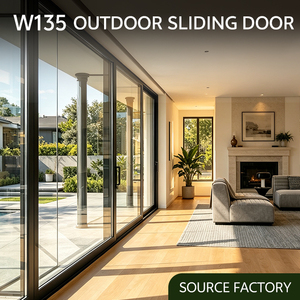
Modern architectural trends favor expansive glass sightlines, concealed structural mullions, and floor-to-ceiling panoramic sliding panels. Fulfilling these architectural ambitions without sacrificing load-bearing safety requires advanced 6063-T5 and 6060-T6 primary aluminum alloys with tensile strength exceeding 160 MPa.
At our Foshan production complex, robotic CNC multi-axis milling, automated corner-crimping systems, and silicone structural glazing processes are consolidated into a standardized zero-defect pipeline. Every batch undergoes rigorous cyclic water-tightness (EN 1027), acoustic dampening (up to 42 dB STC), and solar heat gain coefficient calibration.
Strict Quality Assurance Pipeline
How Chinese top-tier exporters safeguard delivery timelines and structural integrity across oceanic transit:
- 01. Pre-Fabrication Drawing Audit: Full architectural reconciliation with engineering shop drawings to avoid site clashes.
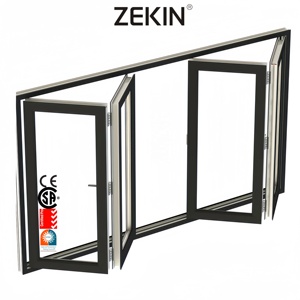
- 02. Trial Assembly & Hardware Testing: 100% dry assembly of complex bifold and oversized sliding frames to verify tolerances.
- 03. Heavy-Duty Oceanic Packaging: Multi-layer PE foam, protective edge board, and fumigated steel-braced timber crates designed for zero transit deflection.
Why Global Builders Select DERCHI (Guangdong Dejiyoupin)
Headquartered in Foshan, China's central manufacturing hub for architectural fenestration, Guangdong Dejiyoupin Doors and Windows Co., Ltd. represents over 25 years of engineering mastery, powering premier hospitality projects, private luxury compounds, and commercial towers worldwide.
180,000 m² Mega Facility
State-of-the-art automated manufacturing lines capable of delivering 1,000,000+ m² annually, guaranteeing project handover deadlines for master-planned communities and multi-story hotel contracts.
30+ Fenestration R&D Team
In-house mechanical and structural engineers holding 100+ national patents, including our proprietary Four-Side Six-Point high-security multi-lock mechanism and concealed ghost-track sliding technologies.
"China Famous Brand" Status
Accredited by national press (Xinhua News Agency) and verified through global inspection boards: CE (Europe), NFRC & Florida Approval (USA), AS2047 (Australia), CSA (Canada), and ISO 9001.
18,000+ Verified References
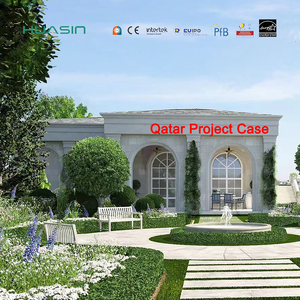
Demonstrated portfolio supplying international five-star hospitality flags (Hilton, Atour) and luxury beachfront compounds across the UAE, Saudi Arabia, Qatar, North America, Europe, and Australasia.
Frequently Asked Questions by Global Importers & Contractors
Direct technical clarification on ocean freight risk, customization capabilities, building codes, and hardware durability from our senior engineering staff.
We implement a strict 3-tier CAD/BIM drawing approval process. Prior to cutting, production shop drawings detailing rough opening deductions, shim clearances, floor finishes, and water-sill profiles must be signed off by your project architect. Our automated CNC fabrication lines maintain cutting tolerances within ±0.5 mm, eliminating costly on-site frame rework.
We specify multi-chambered thermal break profiles with reinforced 24 mm to 34 mm PA66 polyamide insulating strips, coupled with double or triple insulated glazing units (IGUs) incorporating low-iron, solar-control Low-E coatings. To eliminate fine sand ingress during shamals or dust storms, we incorporate triple EPDM gasket sealing and raised-barrier drainage tracks.
All frames are individually wrapped in electrostatic protective film, corner-guarded with high-density EVA foam, and bundled with moisture-absorbing desiccants. Glazed units are packed in custom-built, fumigated plywood crates reinforced with internal steel structural brackets and shock-absorber rubber dampening pads, certified to withstand intermodal container shifting.
Yes. We support complete bespoke tailoring: AkzoNobel or Tiger Drylac powder coatings in any RAL color, fluorocarbon (PVDF) for aggressive coastal environments, and authentic architectural wood-grain sublimation. For hardware, we offer factory-integrated solutions from premier German and European manufacturers (Siegenia, Roto, Hoppe) as well as our patented high-security proprietary lock systems.