High-Performance Architectural Fenestration Systems
Discover our precision-fabricated collection of thermal-break aluminum and aluminum-clad systems. Designed for luxury villas, commercial developments, and high-wind coastal environments, each model undergoes rigorous computerized stress analysis and water-tightness validation prior to overseas export.
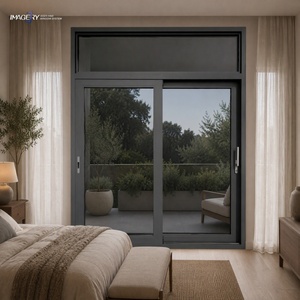
Large 156 Lift-Slide Aluminum Sliding Glass Doors Thermal Insulation for Patio Villa House
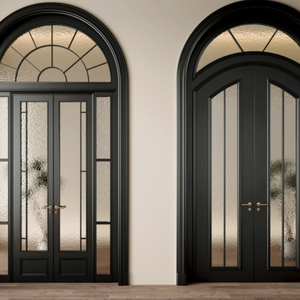
ALUFRONT Insulated Arched Antique Heritage Black Aluminium French Front Doors with Grid Strip Glass for Outdoor Entry
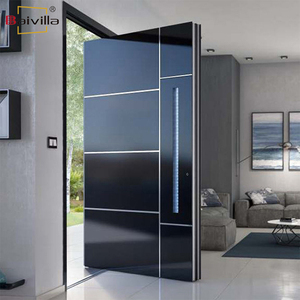
Luxury Smart Multi Lock Entrance Door Aluminum Single Front Entry Anti Theft Exterior Security Doors Pivot Front Door Villa Gate
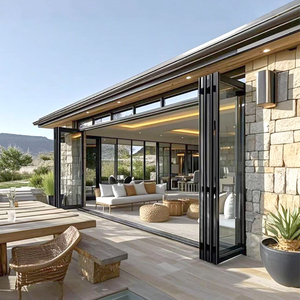
NFRC Thermal Break Aluminum Folding Door Aluminum Large Folding Patio Doors Exterior with Retractable Insect Screen
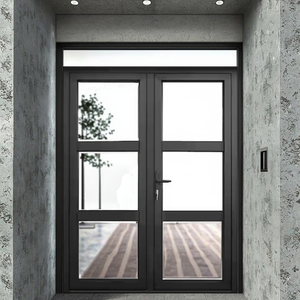
Thermally Broken Aluminum Doors Fiberglass | Divided Lite Grilles Single/Double French Hinged Entry Systems | Heritage Modern
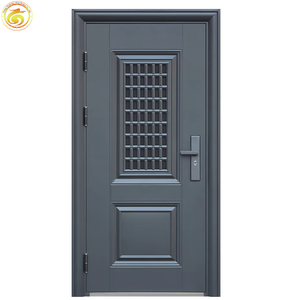
New Custom Grain Design Villa Main Entrance Front Aluminum Doors with Smart Lock
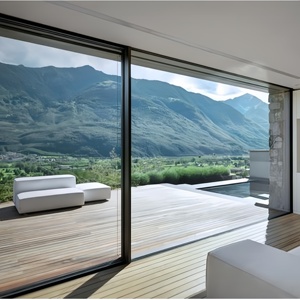
Customized Modern Style Sliding Door For Home Villa Balcony Double Glazed Energy Efficient Aluminum Glass Sliding Door For Sale
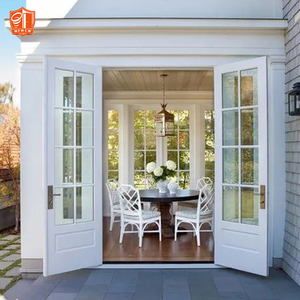
Exterior Aluminium Glass Double Door Garden Entry Doors Patio Casement French Doors
25+ Years of Zero-Defect Manufacturing Excellence
Operating from Foshan, Guangdong—the epicenter of global architectural aluminum processing—Guangdong Dejiyoupin Doors and Windows Co., Ltd. (DERCHI) represents China's gold standard in precision fenestration engineering, blending German digital CNC machining lines with artisanal structural woodwork.
Patented Four-Side Six-Point Security
Fenestration perimeter failure remains the primary vulnerability in residential break-ins. DERCHI engineered and patented the Four-Side Six-Point Locking Mechanism, driving reinforced mushroom-head steel cams simultaneously into hardened keep-plates across all four frame perimeters, providing unrivaled RC3 anti-burglary defense.
Xinhua News "China Famous Brand"
Honored with national recognition by Xinhua News Agency, our facility operates in strict adherence to international quality management regimens. Every extrusion batch, polyamide thermal break, and insulated glass unit is tracked via unique QR identity codes, ensuring full traceability from ingot fusion to on-site hoisting.
Multinational Certification Portfolio
We remove regulatory friction for international general contractors and façade consultants. DERCHI fenestration products are systematically certified under CE (EU EN 14351-1), NFRC (US Energy Performance), AS2047 (Australian Wind & Water), CSA (Canada), and Energy Star standards, verified by third-party testing laboratories.
The Mechanics of High-Performance Aluminum Clad Wood Windows
Combining the organic thermal capacitance of slow-grown architectural timber with the structural durability of extruded exterior aluminum demands sophisticated metallurgical and mechanical mitigation of distinct thermal expansion differentials.
Independent Floating Clip Mechanics
Aluminum and solid wood exhibit fundamentally divergent linear expansion coefficients (aluminum expands at ~23×10⁻⁶ /K, while timber expands along its grain at negligible rates but contracts transversely with relative humidity). Our engineering employs snap-on composite nylon floating clips that mechanically decouple the exterior aluminum shell from the internal structural timber. This prevents frame warping, joint shear, and glue line rupture under severe temperature differentials ranging from -35°C arctic winters to +55°C desert exposures.
Timber Stabilization & Moisture Equilibrium
Interior timber profiles are derived from certified sustainable European White Oak, Larch, or Nordic Pine. Raw timbers undergo a multi-tier vacuum high-frequency drying procedure to establish a stable equilibrium moisture content (EMC) of 8% to 12%. Profiles are fabricated from three- or four-ply finger-jointed laminated scantlings, canceling internal radial wood tension and eliminating cross-grain twist, while exterior-grade eco-friendly micro-porous waterborne coatings ensure non-toxic interior environments.
Exterior Weather Armoring & Drainage Geometry
The exterior shell utilizes 6063-T6 architectural grade aluminum extrusions with a minimum wall thickness of 1.8mm to 2.2mm, exceeding AAMA 101 standards. Exterior finishes include 3-coat PPG fluorocarbon (PVDF) or Class 1 anodization resistant to high-salinity oceanic spray and sandstorm erosion. Independent pressure-equalized rainscreen drainage cavities ensure that wind-driven rainwater is immediately evacuated through concealed sill vents without contacting the wooden substructure.
| Performance Metric | DERCHI Alu-Clad Wood System | Standard Thermal Break Aluminum | Standard Vinyl (uPVC) Fenestration | Test Standard Reference |
|---|---|---|---|---|
| Thermal Transmittance (Uw) | 0.79 - 1.10 W/m²·K | 1.40 - 1.80 W/m²·K | 1.30 - 1.60 W/m²·K | ISO 10077-2 / NFRC 100 |
| Acoustic Attenuation (Rw / STC) | 42 dB - 48 dB | 34 dB - 38 dB | 28 dB - 32 dB | ASTM E90 / EN ISO 140-3 |
| Air Permeability Class | Class 4 (≤ 0.05 m³/h·m) | Class 3 | Class 2 | EN 12207 / ASTM E283 |
| Water Tightness Rating | Class E1200 (1200 Pa) | Class 9A (600 Pa) | Class 7A (350 Pa) | EN 12208 / ASTM E331 |
| Structural Wind Load (P3) | Class C5 (≥ 5000 Pa) | Class C4 (4000 Pa) | Class B2 (2000 Pa) | EN 12210 / AS 2047 |
| Condensation Resistance (CR) | > 78 (Virtually Zero Risk) | 55 - 62 | 58 - 65 | AAMA 1503 / CSA A440 |
Procurement Trends Reshaping the Global Fenestration Market
For property developers, general contractors, and fenestration import distributors, navigating changing building energy codes, carbon legislation, and lead-time volatility requires aligning with technologically integrated Chinese OEM/ODM production partners.
Net-Zero & Passivhaus Code Mandates
International municipal energy standards—such as the EU Energy Performance of Buildings Directive (EPBD) recast, North American ASHRAE 90.1-2022, and Australia's NCC 2022 7-Star energy ratings—are rendering un-insulated fenestration obsolete. Procurement directors are systematically shifting contracts toward triple-glazed, argon-filled, warm-edge insulated spacer systems capable of overall U-values under 0.8 W/m²·K.
Supply-Chain Consolidation & Whole-Envelope Packages
Managing fragmented suppliers for sliding doors, casement windows, pivot entrance gates, and solarium sunrooms induces costly on-site dimensional misalignments and installation delays. The market trend points toward single-source unified fabrication, where interior architectural doors, monumental pivot systems, and exterior curtain walls are engineered from matching profile depths, hardware finishes, and tint values.
Landed Cost Optimization vs. Quality Parity
Escalating European and North American labor expenses have propelled the landed cost of locally made clad wood windows beyond sustainable commercial budgets ($1,200 - $1,800/m²). By leveraging Foshan's deep supply chain clusters and computerized CNC workflows, DERCHI delivers identical European timber selections, German Siegenia/GU hardware, and Saint-Gobain glass at 40% to 60% lower landed costs with shorter turnaround cycles.
Emerging Engineering Horizons in Clad Fenestration
DERCHI's dedicated 30+ member R&D engineering division is actively pushing the boundaries of fenestration physics, incorporating smart nanomaterials, automated micro-ventilation, and carbon-neutral bio-composites.
Vacuum Insulated Glazing (VIG) Integration
By replacing conventional 16mm argon gas cavities with ultra-thin 0.15mm vacuum gaps held apart by microscopic micro-pillars, our next-generation VIG profiles achieve an unheard-of center-of-glass Ug rating of 0.40 W/m²·K. This enables slimmer, elegant frame sash sightlines without sacrificing acoustic or thermal insulation.
Dynamic Electrochromic & Photovoltaic Glass
Future-ready villa projects are increasingly deploying smart low-voltage electrochromic glass panels that tint autonomously based on solar radiation sensors, modulating SHGC from 0.45 down to 0.09. Coupled with building-integrated photovoltaic (BIPV) window sills, these systems generate clean energy while reducing active HVAC loads.
Automated Concealed Actuation & Smart Home Protocols
Manual operation of 400kg oversized lift-slide panels is superseded by concealed German 24V brushless motorization. Integrated with Zigbee, KNX, and BACnet building management networks, our windows feature concealed multi-point locking actuators, concealed magnetic contact sensors, and motorized micro-trickle ventilation modes.
Precision End-to-End Export Execution
Cross-border fenestration procurement demands meticulous pre-production planning. A single dimensional discrepancy can compromise structural handovers. DERCHI eliminates project risk through our 8-stage zero-defect protocol.
Architectural Takeoff
Thorough CAD/BIM analysis of window schedules, elevation reveals, structural deflection limits, and design intent.
System Engineering
Selection of custom profile wall thicknesses, thermal break widths, and glass specs tailored to localized wind loads.
Shop Drawings Approval
Generation of 1:1 scale perimeter anchorage details, sill pans, shim allowances, and hardware schedules for sign-off.
Corner Sample Sign-off
Physical dispatch of timber stain swatches, aluminum powder coat coupons, and structural cross-section mockups.
CNC Milling & Joining
5-axis digital machining, dual-component corner crimping, and automated silicone perimeter sealant extrusion.
360° Dry Assembly QC
Pre-glazing frame squareness checks, sash tolerance measurements, and cyclic opening/closing functional verification.
Export Crate Packaging
IPPC ISPM-15 compliant heat-treated fumigated plywood crates, desiccants, shock indicators, and foam buffering.
Installation Guidance
Detailed bilingual digital installation manuals, perimeter flashing diagrams, and remote video engineering supervision.
Frequently Asked Questions for B2B Importers & Contractors
Detailed answers addressing critical technical parameters, maritime shipping logistics, hardware compatibility, and warranty protection.