Featured Architectural Window & Door Systems
Engineered for extreme cyclonic wind loads, thermal conservation, and rigorous acoustic mitigation. Fully customizable to regional fenestration specifications.
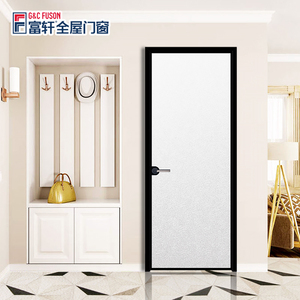
Hotel Room Glass Interior Casement Door With Lock Kitchen House Bedroom Door Office Aluminum Frame Swinging Glass Swing Door
View Specifications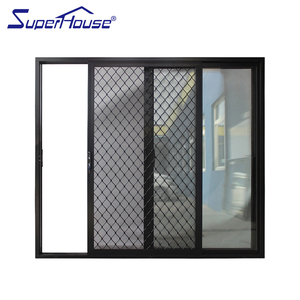
Australia Standard Sliding Terrace Glass Doors Half Glass Aluminium Sliding Mesh Door
View Specifications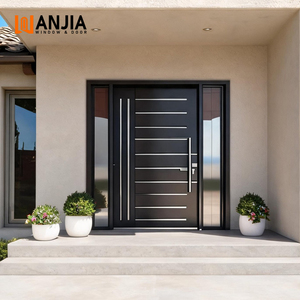
WANJIA Modern Design Entry Aluminum Security Door Energy Efficient Thermal Break Exterior Front Door Finished Surface
View Specifications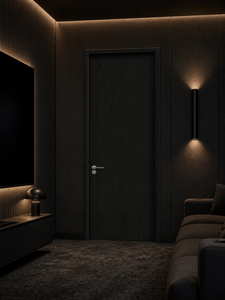
Customized Modern Aluminum Clad Wood Interior Bedroom Door for Villa House Residential Architectural Building Projects
View Specifications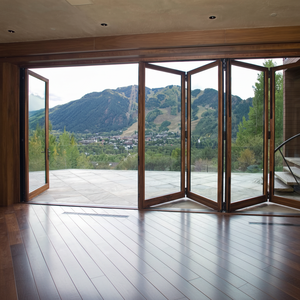
Modern Exterior Folding Bi-Fold Stacking Patio Double Glass Waterproof Soundproof Aluminum Alloy Panoramic Doors Outdoor Mall
View Specifications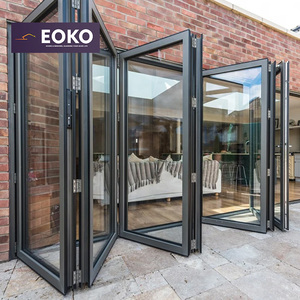
EOKO Residential Bifold Folding Door Low-E Glass Aluminum Bi Folding Accordion Bifold Exterior Door for Construction Contractors
View Specifications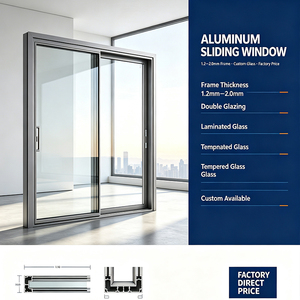
Factory Price Wholesale Aluminum Alloy Tempered Glass Sliding Windows & Doors Systems Exterior Fly Screen For Hotel Projects
View Specifications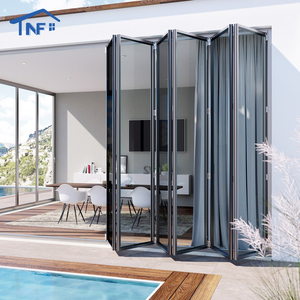
Custom NF Aluminium Folding NFRC Thermal Break Waterproof Double Low-e Tempered Glass Exterior Patio Accordion Bi-fold Doors
View SpecificationsState of Chinese Aluminum Casement Window Manufacturing
A deep technical examination of primary alloy metallurgy, multi-cavity thermal barriers, and air-tightness optimization in modern architectural envelopes.
Over the last decade, China’s architectural aluminum fenestration sector has transitioned from an era of labor-intensive assembly to advanced, high-precision automated manufacturing. As global energy conservation targets grow more rigorous—mandated by standards such as ASHRAE 90.1 in North America, EN 14351-1 across the European Union, and strict Estidama pearl rating requirements in the Middle East—the engineering design of the aluminum casement window has assumed paramount importance in high-performance building envelope design.
Casement windows, by virtue of their compression-seal mechanics, inherently deliver superior air tightness and water impermeability compared to traditional sliding systems. When an aluminum casement sash engages with its perimeter frame via multi-point locking mechanisms, the continuous vulcanized EPDM or silicone gaskets are uniformly compressed along all four axes. This physical compression eliminates interstitial gaps, achieving air infiltration rates well below 0.1 m³/(m·h) under high negative wind pressure cycles.
"In commercial curtain wall and high-end residential fenestration, thermal resistance is no longer merely a function of insulated glass unit (IGU) thickness. True performance hinges on the elimination of structural thermal bridges through high-density polyamide barriers integrated into 6063-T5/T6 alloy extrusions."
At the center of this structural performance is the thermal break: structural insulating bars manufactured from Polyamide 66 reinforced with 25% short glass fibers (PA66 GF25). These insulating strips match the coefficient of thermal expansion of virgin structural aluminum (approximately 2.3 × 10⁻⁵ /K), preventing structural delimitation or internal shear failure under severe diurnal temperature fluctuations. By bisecting the interior and exterior aluminum profiles, thermal conduction across the frame is reduced by up to 85%, allowing overall window U-factors (Uw) to reliably reach 0.8 to 1.4 W/(m²·K) when coupled with argon-filled, warm-edge triple glazing.
| Performance Characteristic | Standard Specification | DERCHI Heavy-Duty Casement | Testing Protocol & Certification |
|---|---|---|---|
| Thermal Transmittance (Uw) | 1.8 – 2.4 W/(m²·K) | 0.85 – 1.20 W/(m²·K) | NFRC 100/200, ISO 10077-2, CE EN ISO 12567-1 |
| Acoustic Attenuation (Rw / STC) | 28 – 32 dB | 40 – 48 dB (Acoustic PVB Lami) | ASTM E90, ISO 717-1 Laboratory Sound Insulation |
| Water Penetration Resistance | 300 – 450 Pa | 700 – 900 Pa Static / Cyclic | ASTM E331, BS EN 12208 (Class 9A / E900) |
| Structural Wind Load Resistance | 2000 – 3000 Pa | Up to 5000 Pa (Deflection < 1/300) | ASTM E330, AS 2047, GB/T 7106 Class 9 |
| Air Infiltration Rating | < 1.5 m³/(m²·h) | < 0.05 m³/(m²·h) (A3 Class) | ASTM E283, EN 12207 Class 4 airtightness |
Furthermore, structural resilience against wind loads relies on specialized wall-thickness engineering. While light commercial standards often utilize profile wall thicknesses between 1.4mm and 1.6mm, export-grade architectural casement systems engineered in our Foshan production facility employ 2.0mm to 3.0mm primary wall thickness conforming strictly to national GB/T 5237 standards and American AAMA 2604/2605 specifications. This elevated moment of inertia permits expansive floor-to-ceiling casement sashes exceeding 2.8 meters in height without requiring supplementary steel box stiffeners, preserving slim sightlines and unobstructed architectural views.
Future Procurement & Engineering Trends (2025–2030)
Critical technological disruptions shaping global supply chains, green building compliance, and fenestration procurement over the next five years.
Low-Carbon "Green" Aluminum Supply Chains
Institutional developers and ESG-governed investment trusts are demanding audited Environmental Product Declarations (EPDs). Procuring virgin aluminum smelted with renewable hydro-electric energy reduces embodied carbon from 16 kg CO₂e/kg to under 4 kg CO₂e/kg, directly qualifying projects for LEED Platinum and BREEAM certifications.
Concealed Hardware & Ultra-Slim Sightlines
Modern architectural aesthetics prioritize minimalist profiles where the casement sash aligns flush with the outer frame. Concealed 180-degree heavy-duty hinge pivots capable of bearing 150kg to 250kg glass weights eliminate exposed metalwork, enhancing both aerodynamic drag coefficients and building facade uniformity.
Motorized Building Management (BMS) Actuation
Casement systems are increasingly integrated into smart commercial envelopes. Concealed 24V linear micro-actuators synchronize with HVAC systems and indoor air quality sensors to perform automated night-purge natural cooling and emergency smoke extraction, operating under standardized BACnet or KNX communication protocols.
Cyclonic & Hurricane Impact Integration
With coastal urbanization accelerating in the Gulf Cooperation Council (GCC), Florida, the Caribbean, and Australasia, procurement specifications require integrated large-missile impact certification (ASTM E1886/E1996 and AS/NZS 1170.2). Sashes feature structural SentryGlas® (SGP) ionoplast interlayer lamination anchored directly into the structural frame rebates.
Pre-Glazed Unitized Modular Assemblies
To circumvent escalating jobsite labor costs and quality inconsistencies in target markets, international developers are transitioning from on-site glazing to factory pre-glazed, unitized casement modules. Windows arrive hermetically sealed, nitrogen-cured, and pre-calibrated with factory-installed sub-frames and perimeter flashings.
Advanced PVDF & Anodic Nanocoatings
Surface treatments are migrating toward 3-coat fluoropolymer (PVDF) electrostatic liquid spraying and hyper-durable 25μm architectural anodizing complying with Qualicoat Seaside and AAMA 2605 specifications. This ensures 30+ year color retention, chalk resistance, and galvanic protection against coastal airborne salinity.
Guangdong Dejiyoupin Doors & Windows (DERCHI)
Operating from Foshan, China—the global epicenter of high-end aluminum extrusion—DERCHI provides institutional-grade manufacturing scalability and zero-defect precision.
180,000 m² Intelligent Production Facility
Equipped with computerized German and Italian CNC 5-axis automated machining centers, computerized robotic corner crimping machines, and high-precision double-mitre saws that guarantee frame dimensional tolerances within ±0.5mm across extended production batches.
Over 100 Proprietary Invention Patents
Pioneering patented security technologies, including our exclusive Four-Side Six-Point perimeter locking transmission gear, anti-sagging sash hinge stabilizers, and high-velocity isobaric pressure equalization drainage matrices.
Recognized "China Famous Brand"
Endorsed by state-level media, including Xinhua News Agency, DERCHI maintains a stellar track record supplying international hotel brands such as Hilton and Atour, as well as ultra-luxury residential master communities across five continents.
Comprehensive Global Certification Portfolio
Our products undergo destructive laboratory structural and thermal testing to secure third-party compliance, including CE (EU), NFRC (USA), AS2047 & AS1288 (Australia), CSA (Canada), Energy Star, and ISO 9001 quality management credentials.
360° End-to-End Quality Control (Zero-Error Protocol)
From metallurgical spectrometer testing of incoming billet alloys to laser dimension checking, nitrogen seal chamber integrity inspections, and multi-stage dry-run assembly cycles before sea-freight packing, defect risks are eliminated at the factory source.
Global Project Engineering & Logistics Assurance
Backing over 300 international distributors and 18,000+ completed commercial and residential projects worldwide. Dedicated structural engineering departments generate comprehensive CAD/BIM shop drawings and mock-up prototypes for project approval.
Essential Sourcing Questions for Fenestration Buyers
Direct, unvarnished technical answers regarding structural calculations, thermal performance verification, lead times, and logistical risk mitigation.