Precision Product Recommendations for Global Projects
Explore our certified fenestration portfolio engineered to integrate seamlessly with residential, commercial, and coastal architectural envelopes. Every unit undergoes precision acoustic, aerodynamic, and structural tolerance evaluations prior to worldwide export.
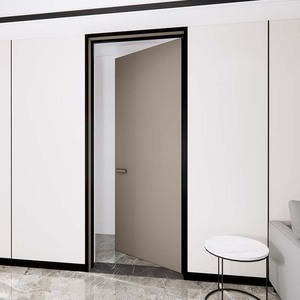
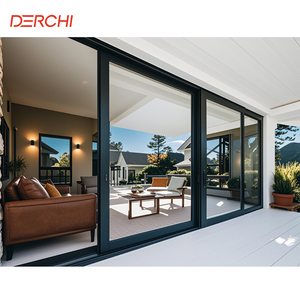
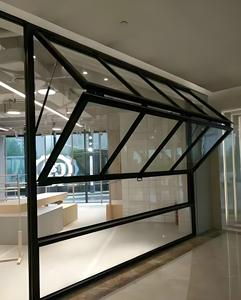
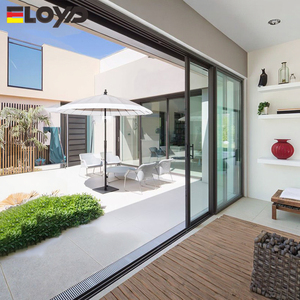
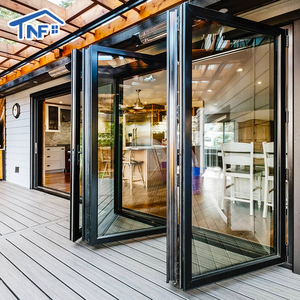
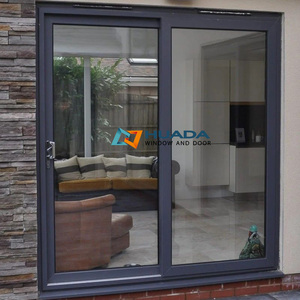
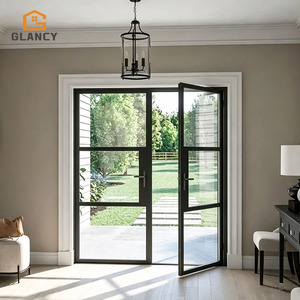
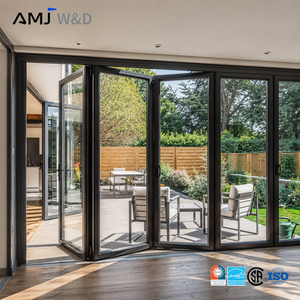
Aluminium Louvre Door Systems: Aerodynamic Physics & Structural Mechanics
In modern architectural building envelopes, aluminium louvre doors (jalousie assemblies) fulfill dual mission-critical requirements: providing continuous passive airflow volume while maintaining weatherproofing integrity against driven rain, dust storms, and structural wind pressure.
Aerodynamic Blade Profiles
Standard architectural louvres often suffer from air turbulence and restricted volumetric throughput. Our engineered aerofoil and chevron-profile extruded 6063-T5/T6 blades maximize aerodynamic coefficient of discharge (Cd), yielding upwards of 52% free area while minimizing static pressure drop across mechanical plant rooms and residential verandas.
Water Penetration Mitigation
Tested in compliance with AMCA Standard 500-L laboratory protocols, our multi-stage drainable blade chambers disrupt wind-driven water droplets. Internal drainage troughs route water down integrated vertical jamb mullions, guaranteeing zero bulk water penetration under storm wind thresholds exceeding 50 Pascals.
Severe Wind-Load Resistance
Engineered with reinforced internal structural ribs, our louvre framing tolerates cyclic wind pressures spanning up to 4500 Pa (equivalent to Category 5 typhoons). Heavy-duty extruded pivot pins and stainless steel (SUS304/SUS316) link bars prevent vibrational blade fatigue and acoustic rattle under severe sustained gusts.
| Louvre Blade Architecture | Effective Free Area (%) | Water Entrainment Rejection | Acoustic Attenuation (Rw / STC) | Typical B2B Applications |
|---|---|---|---|---|
| Aerofoil Fixed Blade (6063-T5) | 48% – 56% | Class B (AMCA 500-L verified) | 12 – 16 dB | Commercial HVAC intake, electrical substations, utility enclosures |
| Dual-Stage Drainable Chevron | 42% – 48% | Class A (99.2% water rejection) | 15 – 20 dB | High-rise coastal penthouses, oceanfront villas, exterior plant rooms |
| Acoustic Absorptive Infill Blade | 32% – 38% | Class B / C | 28 – 35 dB | Chiller rooms, industrial generator enclosures, urban data centers |
| Operable Motorized Jalousie Blade | 0% – 60% (Adjustable) | Full compression seal when closed | 22 – 27 dB (with dual gaskets) | Smart-home verandas, tropical luxury villas, natural ventilation shafts |
Guangdong Dejiyoupin (DERCHI): Zero-Error Intelligent Manufacturing
Headquartered in Foshan, China—the undisputed global core of architectural aluminum extrusion—Guangdong Dejiyoupin Doors and Windows Co., Ltd. (brand name DERCHI) brings over 25 years of specialized OEM/ODM excellence to developers, project contractors, and architectural fabricators across the globe.
360° Multi-Stage Quality Assurance
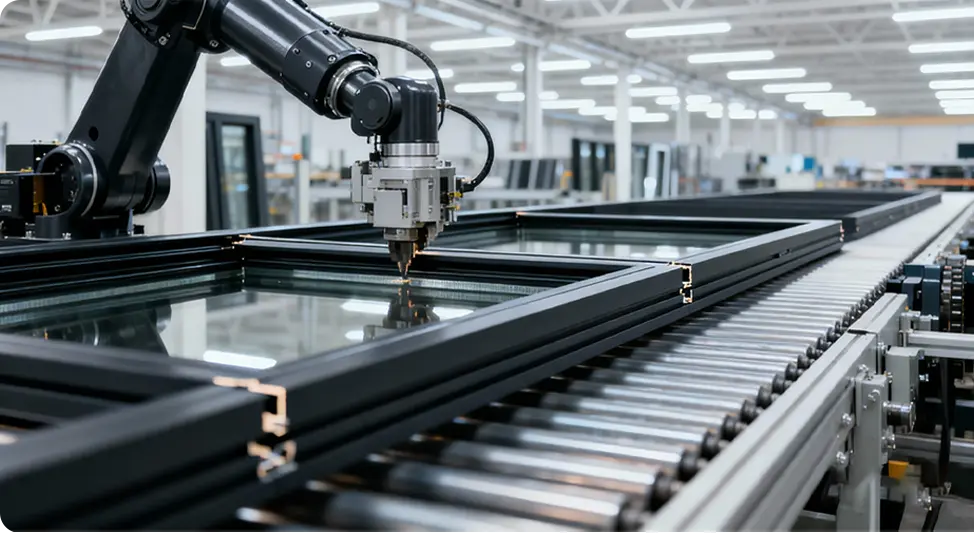
For international tier-one commercial construction and hospitality portfolios (such as our supplied projects for Hilton, Atour, and private luxury estates), dimensional variance must remain under sub-millimeter tolerances. A 1mm skew across a 3-meter frame can compromise weather seals and jam louvre linkage mechanics.
DERCHI implements automated digital cutting centers, CNC blade mortising, and ultrasonic profile flaw detection. Every batch of extruded billet undergoes spectrophotometer metallurgical analysis to guarantee correct magnesium-silicon balance, preventing stress-corrosion cracking.
Consult Factory EngineersXinhua "China Famous Brand"
Officially recognized and certified by Xinhua News Agency—a premier national media institution—reflecting our unyielding adherence to ethical sourcing, technical innovation, and exceptional manufacturing scale.
Patented Anti-Theft Security
Equipped with our independently developed Four-Side Six-Point Lock mechanism. Unlike typical louvre doors that compromise security for air circulation, our design prevents lever attacks and blade prying.
Global Certification Array
Extensively certified to meet and exceed global municipal requirements: CE (Europe), NFRC & Hurricane Impact (USA), AS2047 (Australia), CSA (Canada), Energy Star, and ISO 9001 certified manufacturing rigor.
Future Procurement Trends: What Global Buyers Must Prepare For
Procuring wholesale architectural louvre doors requires aligning with rapid regulatory shifts, smart building standards, and environmental certifications. These four dominant trajectories are currently reshaping global supply chains.
IoT-Integrated Motorization
Architectural projects are abandoning purely manual tilt levers. Commercial specifications now mandate 24V DC tubular or chain actuators interfaced directly with centralized Building Management Systems (BMS), closing louvres during sandstorms or driving rain via automated anemometer and precipitation sensors.
Thermal Break Hybrid Systems
Historically, louvre doors were non-thermal uninsulated components. In desert climates (GCC) and humid tropics, modern codes mandate thermal break polyamide (PA66 GF25) strips inside louvre perimeter frames and composite insulated louvre blades to eradicate thermal bridging and internal condensation.
Coastal Ultra-Durability
With accelerated coastal resort construction along the Arabian Gulf, Red Sea, and Caribbean, standard polyester powder coating fails within 24 months. Wholesale procurement has pivoted towards Qualicoat Class 2 / Class 3 super-durable fluoropolymer (PVDF) finishes tested to exceed 3,000 hours of acetic salt spray exposure.
Circular Economy & Low-Carbon Billets
European and North American developers increasingly mandate Environmental Product Declarations (EPD) verifying that aluminum profiles utilize hydro-powered smelter sourcing and post-consumer recycled aluminum, cutting carbon intensity below 4.0 kg CO2e per kg of finished extrusion.
End-to-End B2B Export: The 8-Step Verification Protocol
Overseas fenestration sourcing presents risks regarding on-site installation misalignments. DERCHI implements a rigorous, milestone-gated process eliminating dimensional, logistical, and structural discrepancies.
Phase 1: Engineering Review & Shop Drawings
Our 30+ in-house fenestration engineers ingest your CAD and Revit architectural drawings. We evaluate structural opening tolerances, static wind loads, and air exchange CFM targets before generating comprehensive 1:1 scale shop drawings detailing perimeter flashing, sub-frames, and anchorage fasteners.
Phase 2: Billet Extrusion & Surface Treatment
Primary 6063-T6 virgin billets are heated and pressed through high-precision tungsten dies. Profiles undergo robotic chemical pre-treatment and automated electrostatic powder coating or wood-grain sublimation to ensure uniform 60–80 micron film thickness across all recessed louvre channels.
Phase 3: Assembly & Anti-Wrack Pre-Erection
Unlike flat-pack distributors, we conduct full modular test erections in our Foshan workshop. Operating hardware, concealed linkages, and patented Four-Side Six-Point locking cylinders undergo 50,000-cycle mechanical stress testing prior to custom sea-worthy steel crate crating.
Request Engineering CAD Review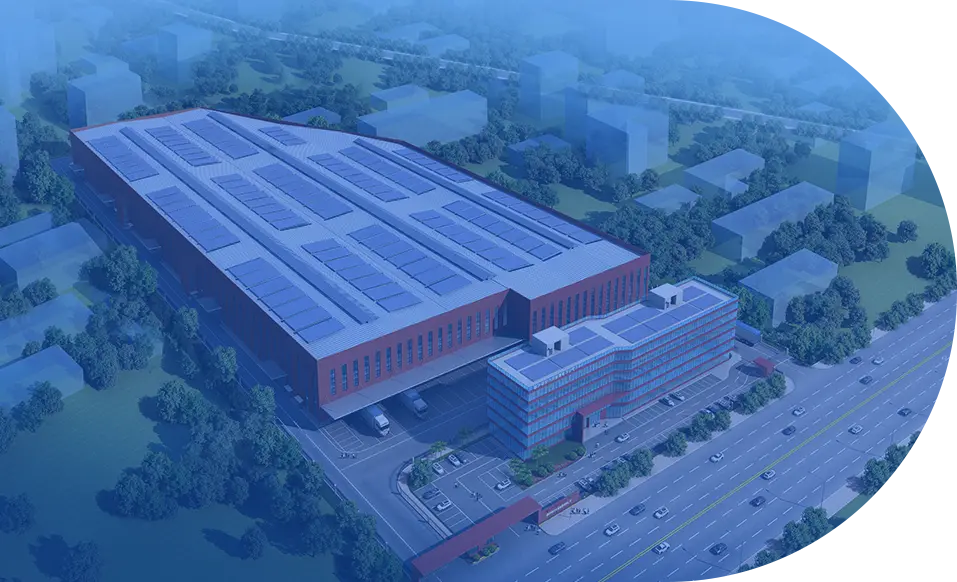
Frequently Asked Questions: Architectural Aluminium Louvre Doors
Detailed technical, logistical, and commercial inquiries answered directly by our senior facade engineering and export management department.