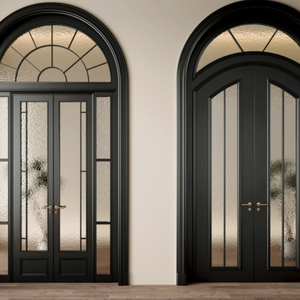
Factory Direct Architectural Fenestration & Millwork
Featured OEM Products & Precision Extrusion Enclosures
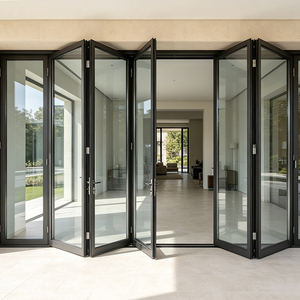
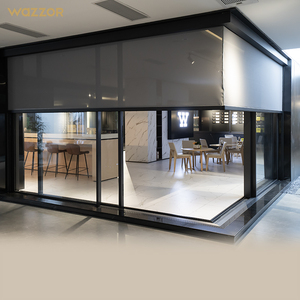
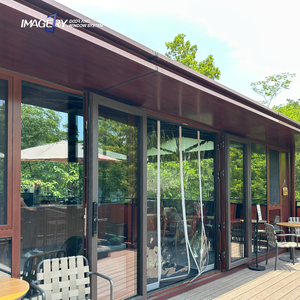
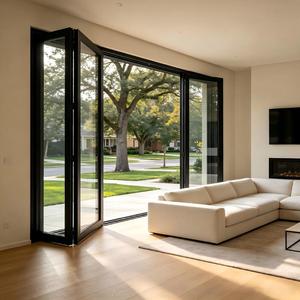
Manufactured in our 180,000 m² zero-error production complex. From slimline kitchen glass-front cupboard panels to structural thermal-break building openings, our engineering tolerances exceed international standards.
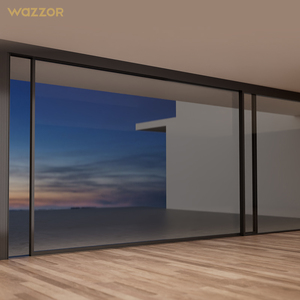
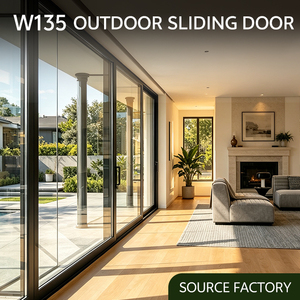
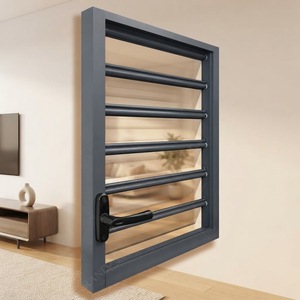
25+
Years Industrial Excellence
180,000 m²
Intelligent Manufacturing Base
100+
Patented Engineering Assets
18,000+
Delivered Projects Worldwide
B2B Technical Specification
Engineering Metallurgy & Manufacturing Rigor
In modern architectural joinery and high-end residential cabinetry, custom OEM aluminium cupboard doors represent the convergence of structural stability and minimalist luxury. Unlike traditional timber or medium-density fibreboard (MDF) substrates, custom extruded aluminium provides exceptional dimensional accuracy, absolute moisture imperviousness, and unmatched torsional stiffness over prolonged operational lifecycles.
6063-T5 & 6060 Primary Alloys
Our OEM factories exclusively process primary, virgin billet aluminium alloyed to exact 6063-T5 and 6060 structural specifications. This provides an ultra-fine grain matrix required for micron-accurate CNC milling, zero internal stress deformation, and seamless 45° corner joins secured with internal mechanical corner cleating.
Surface Passivation & Anodizing
Engineered for high-humidity cooking environments and coastal atmospheres. Profiles undergo automated alkaline etching, multi-stage rinsing, and anodizing to Qualanod Class 15/20 standards, or electrostatically applied architectural powder coatings certified by Qualicoat Seaside to resist grease, oils, and chemical cleaners.
Glazing & Composite Integration
Profiles are calibrated to receive tempered architectural glass (fluted, smoked, reeded, Low-E, or ultra-clear low-iron) and porcelain stoneware slabs from 4mm to 8mm. Precision co-extruded Santoprene and EPDM acoustic gaskets ensure vibration-free dampening, zero glass rattling, and hermetic dust exclusion.
Strategic Procurement Horizon
Future Sourcing & Technological Trajectory
Procurement leaders across hospitality, multi-family high-rises, and luxury residential projects are transitioning away from fragmented supply chains. Sourcing trends for aluminium cabinetry and architectural joinery reflect four critical macroeconomic shifts.
Ultra-Narrow Visual Sightlines
Demand for micro-frame profiles featuring 6mm to 10mm face widths continues to expand. These minimalistic designs place extreme physical demands on profile alloy yield strength. Our R&D engineering optimizes wall-thickness distribution to eliminate deflection over 2.7m full-height pantry runs.
Low-Carbon Recycled Extrusions
Global developers prioritize ESG metrics and LEED Platinum benchmarks. Leading OEM suppliers must verify closed-loop circular aluminium manufacturing, utilizing hydro-powered smelted alloys and up to 75% post-consumer scrap without compromising surface aesthetics or tensile properties.
Factory-Integrated Smart Hardware
The industry is rapidly superseding aftermarket hinge preparation with robotic CNC pre-milling for concealed 3D-adjustable soft-close hinges, integrated handle channels, and magnetic acoustic latching. Standardizing milling within factory parameters eliminates on-site contractor installation errors.
Technical Audit Matrix
Substrate Comparison: Aluminium Cupboard Systems vs. Conventional Millwork
| Performance Vector | OEM Aluminium Glass Cupboard System | MDF / Particle Board Laminate | Solid Hardwood Joinery |
|---|---|---|---|
| Dimensional Stability | Zero swelling or thermal creep (Coefficient < 23.1×10⁻⁶/K) | High risk of core swelling when exposed to moisture (>12% expansion) | Seasonal hygroscopic warpage along grain axes (3-8% shift) |
| Combustibility Rating | Class A1 / Non-combustible architectural metal matrix | Class B / C flammable organic substrate | Class C / D untreated combustibility |
| Service Life Cycle | 25+ years without loss of mechanical integrity or alignment | 5 to 7 years in humid or hot culinary environments | 10 to 15 years with intensive resurfacing maintenance |
| Volatile Organics (VOCs) | Zero formaldehyde outgassing; Qualicoat & LEED approved | Variable emissions from urea-formaldehyde adhesive binders | Low base emissions, dependent on polyurethane seal coats |
| Hardware Retention | Machined metric tap threads and internal steel backer blocks | Coarse wood screws susceptible to strip-out under cyclic load | Reliable retention; subject to screw looseness over seasonal drying |
Factory Competency & Infrastructure
Why Major Developers Partner with Our OEM Manufacturing Base
Originating in Foshan, Guangdong—the epicentre of global precision aluminium fabrication—our parent manufacturing group, Guangdong Dejiyoupin Doors and Windows Co., Ltd. (DERCHI), pairs over 25 years of engineering authority with cutting-edge digital production systems.
100+ Patent Portfolio & R&D Team
With an in-house team of 30+ dedicated structural engineers, we develop bespoke profile dies and hold more than 100 patents. This includes our proprietary four-side multi-point retention geometries and vibration-damped concealed extrusion interlocks.
360° Zero-Error Quality Inspection
Across our 180,000 m² automated production line, every mill run, miter cut, and anodized batch undergoes laser-guided dimension checking, coating thickness measurement, and hardware cycle-testing to ensure flawless on-site installation.
Global Conformance Certifications
DERCHI products comply with stringent global regulatory standards, backed by CE (EN14351-1), NFRC thermal performance ratings, AS2047 Australian fenestration standards, CSA, ISO 9001 quality systems, and verified Hurricane Impact certifications.
Procurement Knowledgebase
Frequently Asked Questions for OEM Sourcing
Detailed technical answers to common queries raised by international contractors, millwork specifiers, and commercial cabinet distributors.
What profile alloys and wall thicknesses are specified for custom cupboard doors?
We primarily utilize 6063-T5 aluminium alloy profiles with wall thicknesses ranging from 1.2mm to 2.0mm depending on height and panel weight. For ultra-slim micro-profiles, structural ribs are incorporated within internal extrusion chambers to ensure rigidity without visible bulk.
How does your factory ensure anodized and powder-coated color consistency across batches?
Our surface finishing lines employ automated chemical bath dosing and spectrophotometer color-reading systems. Every batch is calibrated against Master Control Targets within a Delta-E variance of less than 0.8, eliminating visual disparities across phased development handovers.
Can you customize CNC milling for proprietary hinge systems like Blum or Salice?
Yes. Our multi-axis CNC milling centers process exact DXF/DWG tooling layouts for all international concealed hinge brands, integrated pocket doors, and recessed handle profiles prior to surface treatment, ensuring corrosion-sealed precision mortises.
What are your export crating protocols for international ocean freight?
Finished doors and modular assemblies are wrapped in non-scratch protective film, interlayered with high-density EPE foam cushions, edge-armoured with heavy-duty corner protectors, and sealed in fumigated ISPM-15 compliant plywood crates designed for container crane handling.