25+
Years Industry Experience
180km²
Smart Production Base
1,000km²+
Annual Glazing Output
100+
Global Patents & Certs
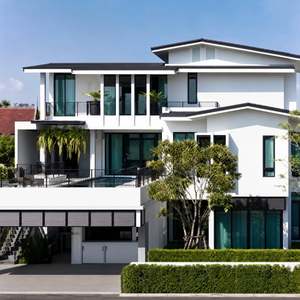
Featured Architectural Portfolio
Precision OEM/ODM Aluminum Window & Glazing Systems
Engineered for high-end residential, luxury hospitality, and high-rise commercial structures requiring stringent structural integrity and energy insulation.
Technical Engineering White Paper
High-Performance Fenestration Engineering: Material Science & Thermal Mechanics
A rigorous examination of primary architectural alloys, structural load tolerances, thermal breaks, and glazing science for global procurement teams.
In modern commercial and high-end residential architecture, selecting a custom OEM aluminum glass window manufacturer demands far more than evaluating aesthetic profiles. Fenestration envelopes constitute up to 40% of a structure's building envelope, serving as the primary barrier against environmental load factors, thermal bridging, solar heat gain, and acoustic infiltration. Aluminum alloy 6063-T5 and 6063-T6 remain the gold standard in architectural extrusion due to their optimal balance of tensile yield strength (exceeding 215 MPa), exceptional extrusion precision, and superior surface finishing affinity.
Thermal-break fenestration technology has revolutionized building energy management. Standard non-thermal aluminum exhibits high thermal conductivity (approximately 205 W/m·K), leading to intense condensation and significant HVAC loads. Contemporary custom engineering employs glass-fiber reinforced Polyamide (PA66 GF25) thermal barrier strips inserted directly between the interior and exterior extruded profiles. This design interrupts heat pathways, decreasing total window U-values to under 1.4 W/m²·K (0.25 BTU/hr·ft²·°F) when paired with advanced argon-filled, double or triple Low-E insulated glazing units (IGUs).
Precision Metallurgy & Tempering
Utilizing high-purity virgin aluminum billets extruded precisely to ASTM B221 and EN 755 tolerances. Homogenized 6063-T6 architectural frames resist seismic distortions, heavy dead loads, and extreme cyclic positive/negative wind pressures in coastal and skyscraper environments.
Polyamide Thermal Stratification
Multi-cavity PA66 GF25 thermal breaks minimize thermal conductivity while matching the linear expansion coefficients of structural aluminum. This prevents internal shear stress during extreme ambient swings ranging from -30°C winters to 55°C desert climates.
Hurricane & Impact Hardening
Integrated structural silicone glazing (SSG) alongside multi-laminated SentryGlas (SGP) or PVB interlayers tested against ASTM E1886/E1996 and Florida Building Code (TAS 201/202/203) missile impacts and cyclic wind forces up to +/- 100 PSF.
| Performance Parameter | Standard Non-Thermal Aluminum | Advanced Thermal Break System | DERCHI High-Impact Hurricane Series |
|---|---|---|---|
| Overall U-Factor (W/m²·K) | 5.2 - 6.8 (Poor efficiency) | 1.2 - 1.8 (Energy Star Compliant) | 0.9 - 1.4 (Passive House Benchmark) |
| Solar Heat Gain Coeff. (SHGC) | 0.65 - 0.82 | 0.21 - 0.35 (Solar-Control Low-E) | 0.18 - 0.28 (Spectrally Selective) |
| Acoustic Attenuation (Rw / STC) | 22 - 26 dB | 35 - 42 dB (Acoustic Laminated) | 42 - 48 dB (Decoupled Resonant Core) |
| Structural Wind Resistance | Up to 1.5 kPa (Serviceability) | Up to 3.5 kPa (High-Rise Tested) | Exceeding 5.0 kPa (Category 5 Hurricane) |
| Air & Water Infiltration Barrier | Single Wool Pile / Basic Rubber | Triple EPDM Co-Extruded Gaskets | Four-Side Multi-Point Continuous Compression |
Enterprise Capabilities
Guangdong Dejiyoupin Doors and Windows Co., Ltd. (DERCHI)
A premier Chinese manufacturing and export authority providing end-to-end architectural engineering, custom OEM/ODM production, and zero-error logistics.
180,000 m² Intelligent Campus
Headquartered in Foshan, China—the global capital of aluminum manufacturing. Our state-of-the-art facility integrates automated 5-axis CNC machining centers, precision laser cutting, and automated double-miter saw lines handling over 1,000,000 m² of glazing annually.
100+ Patents & Proprietary R&D
Backed by over 30 dedicated R&D fenestration engineers, DERCHI holds over 100 national invention and utility patents, including the revolutionary Four-Side Six-Point Anti-Theft Lock mechanism engineered for maximum shear resistance.
Stringent Global Certifications
Fully compliant with worldwide building codes: USA NFRC and Energy Star, Australian AS2047 and AS1288, Canadian CSA, European CE (EN 14351-1), ISO 9001, and Florida hurricane impact testing.
End-to-End Shop Drawing Support
Our architectural engineering division produces comprehensive CAD, BIM/Revit models, structural wind load calculations, and thermal simulation reports for direct submission to municipal planning authorities.
600+ Skilled Workforce
Over 25 years of continuous manufacturing experience and 18,000+ completed projects worldwide across premium residential villas, multi-family towers, and world-class hospitality chains including Hilton and Atour.
Zero-Tolerance Quality Control
360-degree multi-stage inspection verifies extrusion squareness, diagonal variance under 0.5mm, coating thickness (AAMA 2604/2605 compliant), and vacuum seal integrity before specialized export crating.
Procurement Intelligence
Future Sourcing & Procurement Trends in Global Fenestration
How developers, general contractors, and import distributors are optimizing their supply chain economics, carbon taxation risks, and supply continuity.
B2B procurement paradigms for architectural glass and aluminum windows are undergoing dramatic structural shifts. Commercial developers no longer rely merely on regional distributors with limited tooling capabilities; instead, they establish direct-to-factory OEM/ODM partnerships with high-capacity integrated manufacturers. This direct engagement model reduces material markups by 30% to 45%, eliminates intermediary communication errors during shop drawing translation, and drastically shortens critical path schedules on mega-projects.
Furthermore, international carbon accounting policies, including the European Union's Carbon Border Adjustment Mechanism (CBAM) and strict North American LEED v4.1 Platinum / Net-Zero energy codes, necessitate strict traceability of raw materials. Sourcing teams prioritize aluminum extruders leveraging low-carbon hydro-powered smelting processes and scrap closed-loop recycling loops that drastically diminish embedded carbon footprints.
Factory-Direct Integration
Direct CAD-to-CNC pipeline eliminates regional trading intermediaries, securing direct access to profile R&D, custom tooling extrusion dies, and standardized mock-up approvals.
Low-Carbon Lifecycle Glazing
Specification of circular recycled aluminum (minimum 75% recycled content) and warm-edge silicone structural spacer bars to fulfill stringent LEED/BREEAM environmental mandates.
Pre-Engineered Unitized Systems
Shifting away from field-assembled knock-down frames toward fully assembled, factory-glazed unitized wall and window modules, accelerating building dry-in times by 60%.
Supply Continuity Hedging
Locking in raw ingot futures on the London Metal Exchange (LME) or Shanghai Futures Exchange through OEM long-term contracts protects developers from volatile currency and metal spikes.
Technological Innovation
Emerging Technology Trends in Architectural Windows
The convergence of material physics, photovoltaic integration, and smart home automation defining the next decade of architectural fenestration.
Vacuum Insulated Glass (VIG)
By extracting air between two panes of tempered glass to create an absolute vacuum (internal pressure below 0.1 Pa), VIG achieves center-of-glass U-values as low as 0.45 W/m²·K in a slender 8.3mm profile, matching solid insulated wall thermal barriers without bulk.
Building Integrated Photovoltaics (BIPV)
Transparent and semi-transparent cadmium telluride (CdTe) or perovskite thin-film solar cells embedded directly into vision glass or spandrel panels transform building envelopes into power-generating systems capable of offsetting up to 25% of municipal electricity consumption.
Electrochromic & Smart PDLC Glazing
Dynamic tinting glass operated via low-voltage electrical current dynamically transitions from pristine transparency to shaded opacity in response to exterior solar intensity or occupancy automation, rendering mechanical shades and curtains obsolete.
Ultra-Slim Concealed Sightlines
Minimalist structural glazing systems featuring structural interlocks with visible sightlines as narrow as 18mm to 21mm. Frames are engineered to recess completely into floor slabs and peripheral structural finishes for expansive 98% glass ratios.
Buyer Knowledge Base
Frequently Asked Questions: B2B OEM Aluminum Glazing Procurement
Authoritative technical answers compiled by our fenestration engineering, quality assurance, and global logistics directors.
What are the minimum order quantities (MOQ) and tooling lead times for custom OEM extrusion dies?
For existing proprietary DERCHI systems, there are minimal volume constraints for custom dimensions. For brand-new architectural profile dies tailored to unique project schematics, tooling lead times typically range from 10 to 18 business days. The typical MOQ for custom profile tooling extrusion runs is 3 metric tons, with full tooling amortization credited back to the client upon reaching project milestone procurement quantities.
How do DERCHI aluminum window systems perform against severe salt spray corrosion in coastal projects?
For marine and coastal environments within 1 km of ocean shorelines, profiles receive high-performance PVDF (polyvinylidene fluoride) fluorocarbon coatings or 25-micron class seaside architectural anodizing compliant with AAMA 2605 and Qualicoat Seaside standards. This finish exceeds 4,000 hours of accelerated neutral salt spray testing without blistering, chalking, or adhesion loss. Hardware components feature Marine Grade 316 stainless steel friction hinges and multi-point locking bars.
What international testing standards and compliance reports are available for municipal permitting?
We provide verified test certificates from independent laboratory bodies (including Intertek, TÜV Rheinland, and National Fenestration Rating Council). Documentation includes NFRC 100/200/500 thermal and air infiltration test results for North America, Australian Standard AS2047 / AS1288 certified compliance with NATA accreditation, CE EN 14351-1 declarations of performance for the EU, and ASTM E1886/E1996 large missile impact ratings for high-velocity hurricane zones.
How are oversized glazing panels packaged to ensure zero breakage during intermodal transit?
Every shipment incorporates an engineered export crating protocol. Glass panels and fully-glazed window frames are enveloped in multi-layer protective PE film, cushioned with high-density EVA edge protectors, and secured into fully enclosed fumigated plywood structural crates or heavy-duty steel transport A-frames. Desiccant packs prevent condensation inside containers during ocean transit through changing climate zones.
Can your engineering team adapt systems to meet strict acoustic dampening (Rw/STC) requirements?
Yes. For urban towers, airports, and luxury hotels, our engineering team designs customized asymmetrical acoustic glass compositions. By pairing disparate glass thicknesses (e.g., 8mm exterior tempered + 16mm argon cavity + 6mm interior laminated with 0.76mm acoustic PVB), we break harmonic sound wave resonance. Combined with co-extruded multi-chamber EPDM compression gaskets, our systems achieve sound reduction values up to Rw 45 - 48 dB (STC 46).
What is the standard production cycle and project fulfillment workflow from drawings to site delivery?
The standard turnaround follows an 8-step quality lifecycle: Step 1 Architectural Drawing Review (3-5 days); Step 2 R&D & System Specification; Step 3 Formal Technical Proposal; Step 4 Shop Drawing Sign-off & Sample Approval; Step 5 Production Line Slot Reservation; Step 6 Site Dimension Verification; Step 7 Manufacturing & 360° QC Inspection (25-35 days); Step 8 Export Crating & Shipping Coordination. Typical door-to-port lead times average 35 to 45 calendar days.
Architectural Consultation & Factory Direct Quotations
Connect directly with our senior fenestration engineering team in Foshan. Submit your CAD elevations, window schedules, or tender requirements for comprehensive engineering analysis and manufacturer-direct pricing.