High-Performance Architectural Systems for Commercial & Residential Projects
Manufactured using structural 6063-T6/6060-T66 aluminium alloy profiles, certified thermal isolation barriers, and customizable multi-point hardware configurations. Engineered to exceed AAMA, ASTM, AS2047, and EN 14351 building standards.
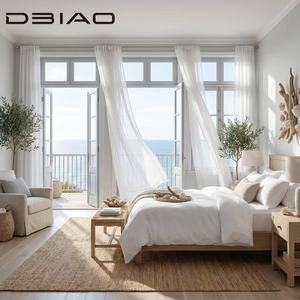
Modern Double French Swing Door Aluminium Alloy Frame
- Energy-saving insulated argon-filled glazing
- Multi-point anti-theft security locking gear
- Concealed bearing hinges with 180° swing
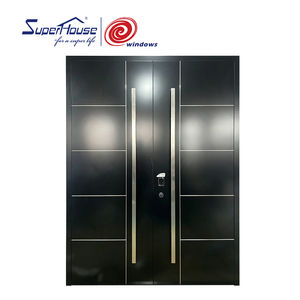
Modern Luxury Aluminium Double Exterior Entry Door
- Biometric smart lock & extended architectural pull
- Reinforced 2.5mm profile wall thickness
- German automotive-grade continuous EPDM seals
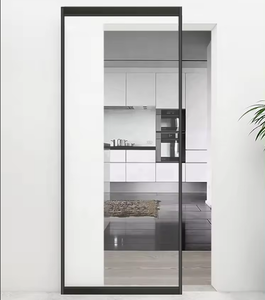
Aluminium Ghost Door Narrow Frame Sliding System
- Fully concealed hardware & floating track mechanism
- 16mm ultra-narrow visible sightline framing
- Dual hydraulic soft-close damping dampeners
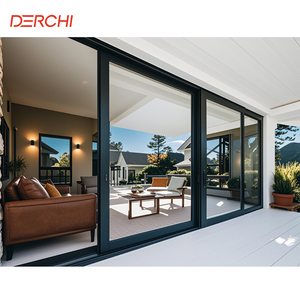
Thermal Break Multi-Panel Patio Sliding Doors
- Polyamide PA66 GF25 thermal insulation barrier
- Heavy-duty stainless steel quad carriage rollers
- High water-tightness sub-sill drainage design
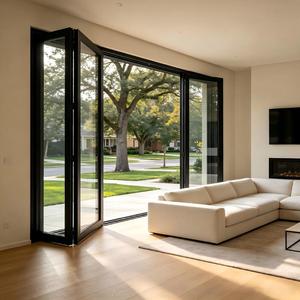
Matted Black 6060 Thermal Bi-Folding Door System
- Heavy load top-hung guides up to 150kg per sash
- Smooth accordion fold with barrier-free flush sill
- Matted fluorocarbon architectural powder coat
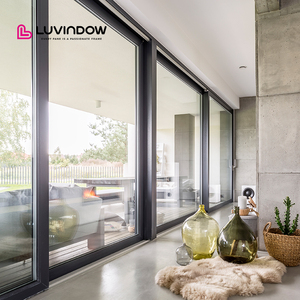
Hurricane Impact Thermal Break Sliding Doors
- SentryGlas (SGP) laminated safety glass build-up
- High wind-load resistance rated up to +5000 Pa
- Dual Low-E coating with inert argon gas filling
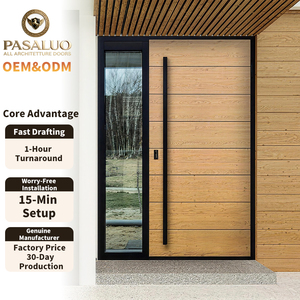
Fire-Rated Aluminium Security Residential Entry Door
- Intumescent perimeter thermal sealing expanders
- Certified 60/90-minute fire integrity resistance
- Heavy-duty patented multi-point locking deadbolts
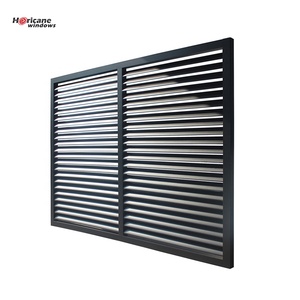
Hurricane Impact Aluminium Louver & Jalousie System
- Reinforced aerodynamic extruded adjustable louvers
- Marine-grade anti-corrosive powder coat finish
- Dual-purpose natural ventilation & storm shielding
Next-Generation Technology & Architectural Fenestration Trends
As commercial building codes mandate stringent operational carbon reductions and architectural aesthetics trend toward minimalist sightlines, custom OEM/ODM manufacturers are pivoting toward advanced extrusion metallurgy and precision glazing integration.
Advanced Polyamide Thermal Decoupling
Traditional non-thermal aluminium frameworks create severe building envelope thermal bridging. Modern fenestration demands multidimensional thermal breaks utilizing continuous Polyamide PA66 GF25 (25% glass fibre reinforced) insulating struts. Combined with multi-cavity polyurethane foam infusion, current systems achieve frame U-values (Uf) as low as 1.1 W/(m²·K), dramatically reducing cooling and heating HVAC loads across harsh climate extremes.
Minimalist Sightlines with Structural Glass Coupling
Architectural demand is heavily skewed toward "frameless" or ultra-narrow profile systems (sightlines under 18mm) that maximize natural daylighting. Achieving structural integrity on panel heights reaching 3,500mm to 6,000mm requires structural silicone structural glazing (SSG) technology, where the double or triple insulated glass unit functions as a composite load-bearing diaphragmatic element resistant to dynamic wind pressures.
Electro-Pneumatic IoT & Concealed Automation
Building management systems (BMS) integration has transformed high-end residential and hospitality fenestration. Motorized multi-panel sliding and pivot assemblies now incorporate concealed high-torque brushless servo motors, hidden optical sensors, and magnetic multi-locking gears. Doors communicate via KNX, Modbus, or Zigbee protocols, permitting programmatic solar tracking, automated night purge ventilation, and biometrics.
Strategic B2B Sourcing Trends in High-Volume Aluminium Doors
Institutional developers, General Contractors (GCs), and fenestration distributors are adjusting their OEM/ODM procurement strategies to optimize total lifecycle cost, supply chain transparency, and project milestone integrity.
Supply Chain Decarbonization
Procurement teams increasingly require Low-Carbon Aluminium profiles extruded from hydro-powered smelting or verified post-consumer recycled billet (6063-T6) with documented Environmental Product Declarations (EPDs) to verify Scope 3 emission targets.
Modular Pre-Glazed Delivery
To mitigate escalating job-site labor rates and on-site glazing errors, procurement contracts require 100% factory pre-glazed, unitized frames. Units arrive dry-glazed with vulcanized corner gaskets, ready for direct rough-opening crane installation.
BIM Level-2 Parametric Models
Leading architects require fenestration manufacturers to submit parametric Revit families (.RFA) during shop drawing submittals. This prevents clash detection failures between structural concrete cores and curtain wall/door anchor brackets.
AAMA 2605 Surface Performance
In harsh marine, coastal, and desert environments, standard powder coatings rapidly degrade under high UV index and salt fog. Modern procurement specifies 70% PVDF fluoropolymer or hyper-durable powder coating withstanding 10-year south Florida testing.
| Performance Criterion | Standard Commercial Grade | DERCHI Heavy-Duty Architectural (OEM/ODM) | Test Standard / Regulatory Compliance |
|---|---|---|---|
| Aluminium Alloy Grade | Recycled Mixed Scrap Billet | Primary Virgin Billets 6063-T6 / 6060-T66 | GB/T 5237, ASTM B221, EN 755-2 |
| Thermal Decoupling | Cold Non-Thermal / PVC Strip | Polyamide PA66 GF25 Thermal Barrier (34mm+) | EN 14024 / NFRC 100 Heat Flow Test |
| Air Permeability / Leakage | Class 2 (300 Pa) | Class 4 (< 0.1 m³/(h·m) @ 600 Pa) | EN 12207, ASTM E283, AS4420.4 |
| Water Penetration Resistance | 300 Pa Static Head | Up to 1050 Pa (Sub-Sill Internal Chambers) | ASTM E331, EN 12208, AS4420.5 |
| Structural Wind Load (Dynamic) | 2000 Pa Deflection Limit | Design Pressure (DP) > 4500 Pa (Serviceability) | ASTM E330, AS4420.2, CWCT Section 4 |
| Acoustic Isolation (STC / Rw) | STC 28 - 32 dB | STC 42 - 48 dB (Acoustic PVB Laminated Glass) | ASTM E90, ISO 10140-2, ASTM E413 |
Guangdong Dejiyoupin: Smart Manufacturing Base in Foshan
Operating under the premier DERCHI international brand banner, our smart manufacturing infrastructure represents the gold standard of fenestration engineering. Headquartered in Foshan, China—the epicenter of global aluminium extrusion—we operate as a trusted single-source manufacturing partner for GCs, architects, and luxury property developers globally.
"China Famous Brand" by Xinhua News Agency
Certified and recognized by Xinhua News Agency, our production protocols reflect elite manufacturing sovereignty. With over 25+ years of dedicated fenestration excellence, our team of 30+ dedicated R&D mechanical engineers continuously develops bespoke profile dies, thermal breaks, and anti-theft locking hardware.
Global Certification Matrix
Zero-barrier global compliance. DERCHI fenestration products are rigorously tested and certified under world-class testing bodies: CE (European Conformity EN 14351-1), NFRC & Energy Star (USA energy standards), AS2047 & AS1288 (Australia / Oceania), CSA (Canada), and ISO 9001 quality management systems.
Patented Anti-Theft Security Systems
Holders of the breakthrough Four-Side Six-Point Lock invention patent. Our mechanical locking assemblies link gearboxes along all four interior perimeter frame faces, delivering impenetrable resistance against forced physical entry, jemmy bar manipulation, and dynamic negative wind suction.
Frequently Asked Questions: B2B Technical Sourcing
Essential engineering and procurement answers for facade consultants, project managers, and overseas purchasing executives seeking full OEM/ODM execution.
How do you guarantee frame stability under severe desert and coastal thermal loads?
In regions such as the Arabian Gulf (UAE, Saudi Arabia, Qatar) or coastal North America, profile surface temperatures can spike past 75°C, causing bimetallic expansion distortion (the "banana effect"). We counter this by specifying low-shear composite polyamide thermal struts (PA66 GF25) that absorb disparate expansion rates between exterior and interior aluminium profile leaves without sash bow or lock jamming.
What is the standard OEM/ODM tooling and profile extrusion development cycle?
For custom architectural profiles, our in-house tooling shop fabricates custom extrusion dies within 12 to 15 business days. Rapid 3D cross-sectional prototyping is completed within 48 hours for engineering sign-off. First-article die trial extrusion and sample powder coating approval are delivered in under 20 business days prior to full mass-production billet extrusion runs.
How does your zero-error factory quality control mitigate on-site installation variance?
We deploy automated 4-axis CNC milling centers ensuring machining tolerances within ±0.2mm on all hardware lock mortises, drainage slots, and corner cleat joints. Before packaging, 100% of custom assemblies undergo complete mock-up frame squaring, diagonal laser verification, gasket compression audits, and operational cycling before receiving their QR-coded QC clearance tag.
Can you provide wind load calculations and structural shop drawings for local authority submission?
Yes. Our engineering division operates licensed finite element analysis (FEA) software. We calculate structural mullion inertia requirements (Ixx/Iyy) based on localized building heights, basic wind speed (m/s), terrain roughness categories, and internal pressure coefficients, delivering stamped structural shop calculations for municipal authority permits (e.g., Dubai Municipality, Saudi SBC, Florida DBPR).
What surface finishes are available for marine environments exposed to saline sea air?
For installations within 5 kilometers of the shoreline, we mandate Qualicoat Class 2 or Class 3 PVDF (fluorocarbon) finishes or high-thickness anodizing (Class 20 / 25 microns). These finishes surpass 3,000 to 5,000 hours of continuous neutral salt spray (NSS) and cyclic acid testing without blistering, chalking, or edge corrosion under ASTM B117 standards.
What export packaging protocol is implemented to prevent ocean freight glass damage?
Units are packed using export-grade fumigated solid plywood crates with integrated steel lifting lugs. Profile surfaces are masked with 0.08mm anti-scratch protective film, corners are shielded with reinforced HDPE caps, and panels are isolated within crates via high-density EVA foam spacers and moisture-absorbing desiccant packs to withstand long-haul transoceanic shipments.
Request a Direct Engineering Proposal for Your Next Architectural Project
Connect directly with our senior fenestration engineers in Foshan. Submit your CAD elevation drawings, window/door schedules, or tender specifications for comprehensive structural analysis, thermal optimization, and competitive factory-direct OEM/ODM pricing within 24 hours.