Featured Doors, Windows & Fenestration Systems
Precision-engineered aluminum profiles designed for high-humidity residential, commercial hospitality, and coastal villa projects worldwide.
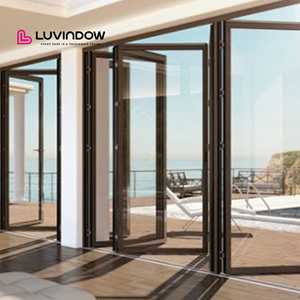
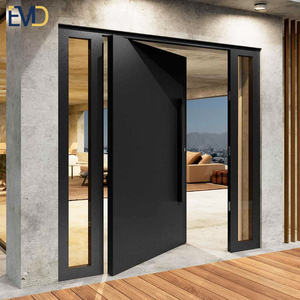
1. Industry Whitepaper: The Evolution of Aluminum Bathroom Door Engineering
Modern interior wet-area architecture demands a radical shift from standard interior joinery. Conventional timber doors, MDF composite panels, and low-grade hollow vinyl cores consistently fail inside humid microclimates due to moisture absorption, linear hygroscopic expansion, delamination, and microbial spore growth. Consequently, commercial hotel chains, high-density residential developers, and high-end villa architects are standardizing on architectural-grade aluminum alloy bathroom doors.
As the primary global production hub for fenestration metallurgy, Foshan, China leads the engineering evolution of waterproof bathroom doors. The transition involves three critical pillars of material science: alloy formulation, surface conversion technology, and acoustic-hydrostatic perimeter isolation.
Primary Alloy Chemistry: Why 6063-T5 and 6063-T6 Lead Wet-Area Architecture
Aluminum bathroom door extrusions must maintain structural rigidity under slim-profile sightlines (often less than 16mm visible frame width) while supporting tempered architectural safety glass weighing up to 45 kg per leaf. Standard alloys fail under cyclical dynamic stresses; commercial manufacturers utilize 6063 architectural aluminum tempered to T5 or T6 hardness states. Containing precise stoichiometric balances of Magnesium (0.45% - 0.9%) and Silicon (0.2% - 0.6%), alloy 6063 delivers superior extrusion surface smoothness, high tensile strength (minimum 185 MPa for T6), and exceptional natural resistance to intergranular galvanic oxidation.
| Performance Parameter | Architectural Aluminum (6063-T5/T6) | Solid Wood / Timber Composites | uPVC / Vinyl Profiles |
|---|---|---|---|
| Hydro-Swelling Index | 0.00% (Zero Expansion at 100% RH) | 4.5% - 12.0% (Risk of Jamming/Warpage) | 0.15% (Thermal Drift Deflection) |
| Surface Corrosion Resistance | Class 20 Anodized / Qualicoat Powder | Requires Continuous Sealant Maintenance | Susceptible to Discoloration & Embrittlement |
| Visible Sightline Width | Ultra-Slim (12mm - 20mm Profile) | Bulky (80mm - 120mm Structural Stiles) | Thick Multi-Chamber (65mm - 90mm) |
| Microbial & Mold Resistance | Inert, Non-porous, Zero Fungal Retention | Porous, High Risk of Mildew Colony | Gasket Mold Retention Vulnerability |
| Hardware Load Capacity | Heavy-Duty Direct Thread Anchor (Up to 100kg) | Wood Screws (Subject to Thread Loosening) | Requires Galvanized Steel Reinforcement |
Surface Conversion Technologies: Combatting Aerosolized Detergents and Hard Water
Bathroom doors face harsh environments characterized by warm steam, aerosolized alkaline soaps, acidic cleaning chemicals, and persistent limescale deposits. An untreated or poorly coated aluminum surface will develop chalky white pitting corrosion within 18 months. Leading Chinese exporters implement two advanced surface treatments certified to international quality standards:
- Qualanod-Certified Electro-Anodizing: Creating an integrated aluminum oxide (Al₂O₃) barrier with an anodic layer thickness of Class 15 (15-19 microns) or Class 20 (20-25 microns). This metallurgical conversion coating is diamond-hard, electrically non-conductive, and chemically bonded to the structural base, preventing peeling or blistering.
- Fluorocarbon & Qualicoat Class 2 Powder Coating: Utilizing electrostatic application of architectural polyester or PVDF coatings baked at 200°C. These finishes withstand rigorous 1,000-hour neutral salt-spray (NSS) testing under ISO 9227 standards and resist color fading under intense bathroom artificial UV lighting.
Future Procurement Trends in Commercial Aluminum Bathroom Doors
Key technological and aesthetic patterns influencing procurement decisions across international hospitality, villa developments, and turnkey modular housing.
1. PDLC Smart Switchable Privacy Glazing
Hospitality groups are shifting from frosted etched glass toward Polymer Dispersed Liquid Crystal (PDLC) switchable glazing. Controlled via wall switches or home automation, the glass transitions from optically clear to milky frosted opacity in milliseconds, maximizing interior spatial light while ensuring total guest privacy.
2. Ultra-Narrow Invisible Frames & Ceiling-Height Sashes
Architects favor minimalist 16mm stiles and floor-to-ceiling frames (up to 3.0 meters high). Concealed wall sub-frames, zero-clearance header tracks, and magnetic self-retracting bottom latches create clean planes that seamlessly blend wet zones with bedroom suites.
3. Barrier-Free Thresholds & Hydrophobic Drainage
Universal design mandates the removal of trip hazards. Modern bathroom doors incorporate zero-threshold hidden floor tracks equipped with integrated stainless steel linear grates and magnetic drop-down acoustic silicone seals, preventing water overflow without requiring raised steps.
4. Acoustic Decoupling & Sound Transmission Control
Modern residential specifications require acoustic dampening in en-suite bathrooms. Dual-cavity insulated glass units (IGU) combined with multi-chamber EPDM rubber perimeter gaskets elevate Sound Transmission Class (STC) ratings above 34 dB, isolating plumbing noise from living areas.
5. Antimicrobial Ion-Infused Frame Finishes
Commercial healthcare and luxury hospitality projects are driving demand for silver-ion antimicrobial coatings applied directly during the powder finishing process. These coatings inhibit 99.9% of bacterial colonization and mildew growth across humid joint lines.
6. Low-Carbon Circular Metallurgy (Recycled Billet)
Green building programs like LEED, BREEAM, and Estidama require low-embodied-carbon building materials. Tier-1 Chinese manufacturers utilize hydropower-smelted aluminum billets containing up to 60% post-industrial recycled content, verified by third-party Environmental Product Declarations (EPD).
2. Advanced Manufacturing: The Engineering Behind China's Global Export Leadership
The competitive advantage of China's premier fenestration manufacturers extends beyond raw material supply. At our Foshan production center, precision engineering is integrated directly into automated fabrication workflows. This infrastructure eliminates the margin of error inherent in manual processing, ensuring precise dimensional tolerances across large-scale commercial orders.
Automated CNC 5-Axis Extrusion Machining Centers
Precision door operation depends heavily on hardware mortising. Our 180,000 square meter facility operates automated multi-axis CNC machining bays that mill lock cases, hinge pockets, drainage weep holes, and corner bracket junctions under continuous liquid coolant sprays. Tolerances are held strictly within ±0.15mm. This micron-level precision ensures pivot hinges, magnetic latches, and multi-point security hardware seat flush against the profile walls, preventing sagging, binding, or air leakage over years of operation.
Corner Joint Integrity: Mechanical Crimping vs. Active Thermal Pinning
A frequent failure point in budget aluminum doors is corner joint separation, which breaks the perimeter seal and causes frame skewing under the deadweight of tempered glass. Our manufacturing protocol utilizes cast aluminum corner brackets combined with high-pressure corner-crimping machines and two-part polyurethane structural adhesive (epoxy injected into corner keyholes). When the structural adhesive cures, it forms a cohesive, impervious hermetic seal that withstands structural racking, vibration, and water seepage.
Glazing Engineering: Tempered, Laminated, and Fluted Acoustic Integration
All glass bathroom door panels supplied for international projects comply with global safety standards, including ANSI Z97.1 (USA), EN 12150 (Europe), and AS/NZS 2208 (Australia). Options include:
- Tempered Monolithic Float Glass: Heat-treated to yield surface compression exceeding 69 MPa, producing impact resistance four to five times greater than standard float glass.
- Laminated Safety Glass (PVB / SGP Interlayers): In the event of surface fracture, structural interlayers retain all glass fragments within the frame envelope, preventing personal injury.
- Fluted, Moru, and Reeded Textures: Precision hot-rolled decorative textures that obscure visual sightlines while allowing up to 88% ambient light transmission.
Verified Manufacturing Excellence: Guangdong Dejiyoupin (DERCHI)
Direct manufacturer backing, proprietary R&D patents, and global compliance for international contractors, builders, and developers.
180,000 m² Production Base
Operating from Shishan Town, Nanhai District, Foshan—the hub of China's aluminum industry—our facility houses automated extrusion lines, precision CNC machining, and state-of-the-art dust-free glass assembly workshops.
25+ Years Industrial Heritage
With more than a quarter-century of fenestration R&D and custom fabrication, we have successfully fulfilled over 18,000 residential, commercial, and five-star hospitality projects across 100+ countries.
100+ Patented Innovations
Our 30+ internal R&D engineers develop proprietary hardware, including our patented Four-Side Six-Point Anti-Theft Lock, advanced perimeter sealing gaskets, and concealed soft-close pivot hinge assemblies.
"China Famous Brand" Honor
Recognized by Xinhua News Agency, the brand operates more than 300 international franchisee partner centers and completed over $435M USD in project delivery revenue in 2024 alone.
Global Quality Certifications
Fully compliant with international building codes. Our products hold CE (Europe), NFRC (USA), AS2047 (Australia), CSA (Canada), Energy Star, Hurricane Impact testing, and ISO 9001 quality management certificates.
Rigorous 360° Zero-Error QC
Every custom-fabricated unit undergoes multi-stage inspections for dimensional precision, profile squareness, gasket adhesion, hardware torque, and water tightness before final seaworthy timber crating.
Frequently Asked Questions: Sourcing Aluminum Bathroom Doors from China
Expert engineering answers to critical inquiries on product customization, logistics, packaging, and international fenestration standards.
What aluminum profile specifications are recommended for humid bathroom environments?
How do Chinese manufacturers guarantee safe transit for large glass bathroom door orders?
Can aluminum bathroom doors achieve acoustic isolation comparable to solid wood doors?
What is the standard production lead time and Minimum Order Quantity (MOQ) for custom project orders?
What technical documentation is provided to ensure smooth installation on international job sites?
Connect with Our Engineering & Export Team
Planning a hospitality, multi-residential, or luxury villa project? Request custom shop drawings, technical profile catalogs, material finish samples, and direct factory-direct pricing for your fenestration schedule.