Featured Commercial & Villa Glazing Systems
Engineered with high-tensile 6063-T5/T6 architectural aluminum alloy profiles, multi-chamber thermal breaks, and hermetically sealed double-glazed argon units. Designed to meet North American NFRC, European CE, and Australian AS2047 benchmarks.
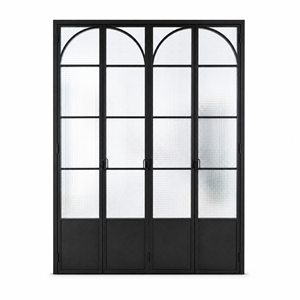
Modern Arched Grid Aluminum Glass Folding Door Panel Partition
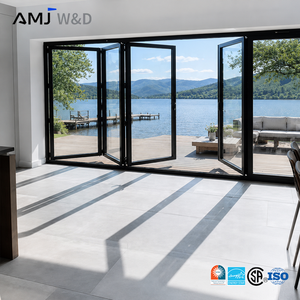
Thermal Break Bi-Fold Accordion Aluminum Glass Patio Exterior Door
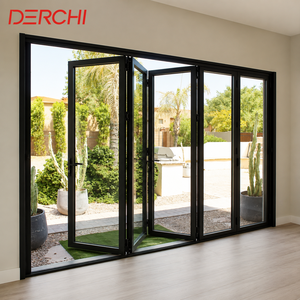
Modern Double Glass Accordion Large Big Bifold Sliding Patio Door
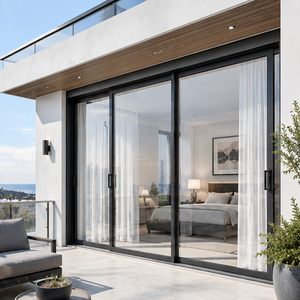
Heavy-Duty Windproof Soundproof Aluminum Balcony Sliding Glass Doors
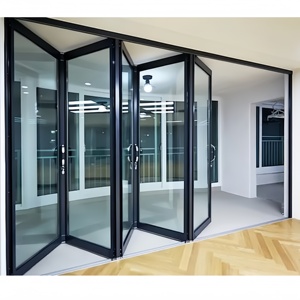
Soundproof Interior Aluminum Sliding Folding System with Ergonomic Lock
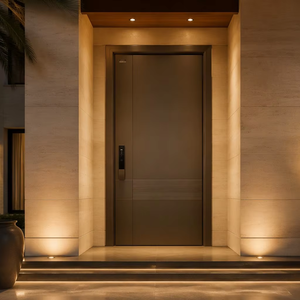
Matte Charcoal Finish Grooved Single Security Aluminum Entry Door
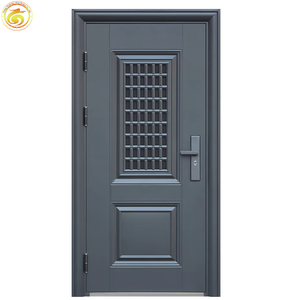
Villa Main Entrance Front Aluminum Doors with Integrated Biometric Smart Lock
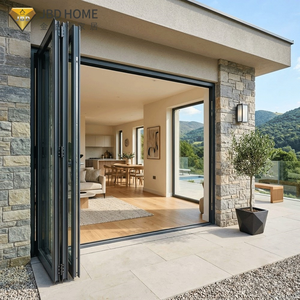
Heavy Duty Bi-Fold Exterior Folding Glass Doors with Thermal Break Barrier
Guangdong Dejiyoupin: Pioneering China’s Premier Glazing Export Base
Operating under the internationally acclaimed DERCHI trademark from Foshan, Guangdong—the global manufacturing epicenter for architectural aluminum—we command an advanced 180,000 m² smart fabrication campus engineered for zero-error delivery.
Engineered Accuracy: Why Tier-1 Contractors and Global Developers Source Direct
In high-stakes commercial towers, luxury hotel projects (including installations for Hilton and Atour hospitality networks), and expansive residential communities across the Middle East, North America, and Australia, a dimensional variance of even 2 millimeters can derail project timelines and inflate site labor costs.
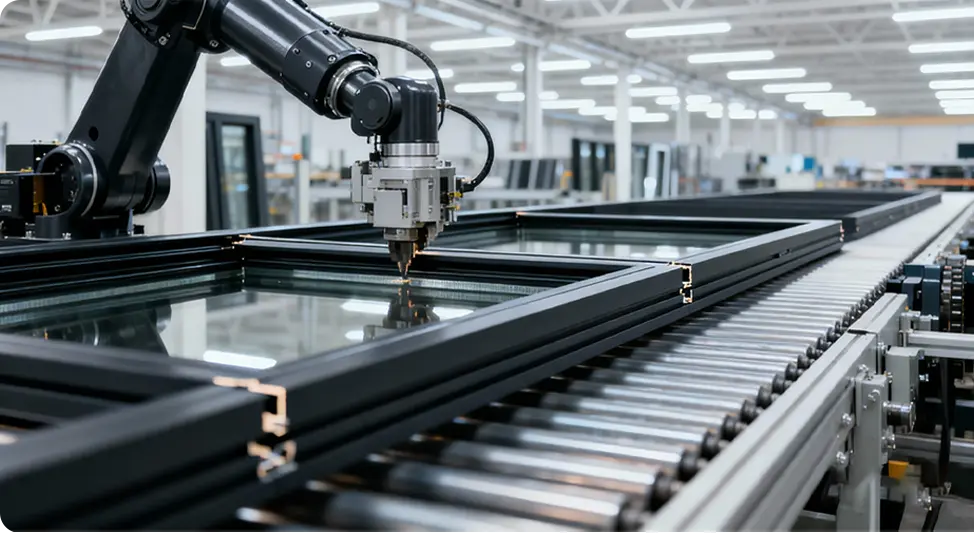
Guangdong Dejiyoupin Doors and Windows Co., Ltd. eliminates field discrepancies by digitizing the fenestration workflow from BIM drawing reviews to CNC 5-axis profile machining, automatic angle crimping, dual-component silicone sealing, and factory-controlled dry-glazing.

100+ Proprietary Patents
Includes our patented Four-Side Six-Point Anti-Theft Lock mechanism, engineering high structural resistance against forced entry and severe negative wind pressure.

360° Multi-Gate QC Process
Every fabricated sash and frame undergoes dimensional laser verification, corner tensile load checks, gasket continuity testing, and mock-up water penetration testing.

1,000,000 m² Annual Capacity
With automated extrusion processing lines and high-speed robotic glass handling, our production scale reliably buffers against critical supply chain delivery bottlenecks.

International Fenestration Testing
Products are verified in accredited laboratory facilities meeting ASTM E283 air infiltration, ASTM E331 water penetration, and ASTM E330 structural performance thresholds.

30+ Dedicated R&D Engineers
Specialized facade engineers ready to provide shop drawings, thermal simulation reports (THERM/WINDOW), wind load calculations, and BIM model files.

End-to-End Export Logistics
Standardized export crating utilizing multi-layer polyethylene foam, vacuum desiccants, and fumigated steel A-frames to prevent containerized transit moisture and shock damage.
Engineering Anatomy of High-Performance Double Glazing
Understanding the thermal mechanics, structural metallurgy, and solar optical properties behind commercial-grade double-glazed aluminum systems.
The Science of Multi-Chamber Polyamide Thermal Barriers
Standard extruded aluminum exhibits a thermal conductivity of approximately 160 to 200 W/m·K. Without an engineered thermal disconnect, an aluminum frame acts as an energetic conductor, causing substantial winter interior heat loss or severe summer heat gain. In hot desert conditions like the Arabian Gulf, solar radiation quickly elevates outer aluminum profile temperatures above 60°C.
Our export systems utilize polyamide (PA66 GF25) thermal barrier strips reinforced with 25% chopped fiberglass, lowering profile thermal transmittance (Uf) to below 1.5 W/m²·K. The glass-fiber reinforcement synchronizes the thermal expansion coefficient of the polyamide strip with that of the aluminum extrusion (≈ 2.3 × 10⁻⁵ /K), preventing delamination, air leaks, or structural distortion across continuous cyclical temperature swings ranging from -30°C to +80°C.
| Engineering Attribute | Standard Single-Glazed Profile | Standard Double-Glazed System | DERCHI Architectural Thermal-Break System |
|---|---|---|---|
| Overall U-Value (Uw) | 5.4 – 5.8 W/m²·K | 2.8 – 3.2 W/m²·K | 1.3 – 1.8 W/m²·K (NFRC / AS2047 Verified) |
| Thermal Barrier Design | None (Monolithic Extrusion) | Basic Pour & Debridge (Polyurethane) | Precision PA66 GF25 Multi-Chamber Isobar |
| Acoustic Attenuation (STC/Rw) | 22 – 25 dB | 30 – 33 dB | 38 – 44 dB (Asymmetric Laminate Builds) |
| Solar Heat Gain (SHGC) | 0.78 – 0.82 | 0.55 – 0.62 | 0.22 – 0.35 (Double/Triple Low-E Coating) |
| Structural Alloy Specification | Standard Scrap / Recycled Mix | Commercial 6063 Aluminum | Primary 6063-T5 / T6 High-Tensile Virgin Billet |
| Gasket & Weather-Sealing | PVC / Low-Grade Nitrile | Standard Vulcanized Rubber | Continuous Co-Extruded Cellular EPDM + Corner Vulcanization |
Need a site-specific thermal analysis report or static wind load deflection calculation?
Contact UsFuture Procurement Trends Shaping Global Façades (2025–2030)
Direct insights for commercial procurement directors, quantity surveyors, and architectural specifiers navigating tightening carbon mandates and volatile material markets.
1. Embedded Carbon Transparency & EPDs
Institutional developers across North America, Europe, and GCC gigaprojects (such as NEOM and Red Sea Global) now demand Environmental Product Declarations (EPDs). Sourcing teams prioritize mills powered by renewable hydroelectric energy that utilize certified low-carbon primary aluminum billets (< 4.0 kg CO₂e/kg Al).
2. Direct-to-Manufacturer Sourcing Models
Escalating local distributor margins and fragmented regional supply chains have prompted general contractors to bypass middlemen. By working directly with certified Chinese manufacturing leaders like Guangdong Dejiyoupin, procurement teams secure factory-direct transparency, bespoke profile fabrication, and 20% to 35% capital savings.
3. BIM Level of Detail (LOD) 400 Mandates
Procurement contracts increasingly require suppliers to furnish complete digital twin assemblies prior to extrusion cutting. Pre-construction clash detection against MEP services, structural steel tolerance simulations, and precise embedment bracket alignments drastically lower field rework costs during structural building handovers.
4. Extreme Climate Performance Thresholds
Accelerating global climate volatility has elevated standard testing parameters. International building codes now enforce heightened air-tightness thresholds, cyclonic impact ratings (ASTM E1886/1996), and accelerated UV durability certifications (Qualicoat Class 2/3 powder coating) to prevent premature finish degradation in corrosive marine settings.
5. Accelerated Lead Times via Automation
Global developers can no longer tolerate 20-week lead times from artisanal fabricators. Investment in intelligent CNC automated cutting and milling centers enables facilities like DERCHI to shorten mass fabrication schedules to 25–35 days without sacrificing dimensional accuracy or finish consistency.
6. Holistic Whole-Envelope Customization
Architects increasingly seek unified exterior fenestration contracts that encompass thermal break sliding doors, structural bifold walls, architectural entrance doors, and glass sunroom envelopes under a single engineering warranty, guaranteeing uniform paint finishes, sightlines, and hardware finishes across the entire development.
Next-Generation Engineering in Double Glazed Systems
How modern material science, advanced robotics, and mechatronic smart hardware are redefining modern building envelopes.
Ultra-Slim Sightlines with Enhanced Inertia
Contemporary architectural trends demand ultra-narrow interlock profiles (often 20mm to 28mm wide) to maximize daylight exposure and create unobstructed, clean viewing panoramas. Historically, minimalist profiles compromised wind resistance.
Modern engineering resolves this through structural steel-reinforced mullions integrated within the thermal-break chamber. This allows slender profile depths to withstand wind pressures exceeding 4,500 Pa (equivalent to Category 5 hurricanes) over floor-to-ceiling spans up to 4.2 meters high.
Warm-Edge Spacer & Gas Retentive Sealing
Traditional aluminum box spacers create a localized thermal bridge at the glass perimeter, leading to winter condensation, mold growth, and frame staining.
Advanced double-glazed systems employ composite stainless-steel/polymer warm-edge spacers filled with 3A molecular sieve desiccants. When combined with dual-stage PIB (polyisobutylene) primary sealing and structural silicone secondary bonding, argon gas retention exceeds 99% over a 25-year service life, maintaining optimal insulating efficiency throughout the building's operational lifespan.
Frequently Asked Questions by Architects, Contractors & Buyers
Engineered responses addressing technical compliance, climatic performance, container logistics, and factory verification.
What are the key technical specifications required for double glazed windows in extreme desert climates? +
How does Guangdong Dejiyoupin ensure zero-defect dimensional precision on custom overseas orders? +
What certifications validate your windows for export into the USA, Australia, and the European Union? +
How are oversized double-glazed folding and sliding doors secured during ocean container shipping? +
Can your engineering team tailor extrusion systems to match unique architectural schedules? +
What is the typical production lead time for full container-load (FCL) export shipments? +
Factory Evaluation Matrix: How to Qualify an Aluminum Glazing Supplier
Use this objective procurement matrix to benchmark prospective fenestration manufacturers before placing international commercial purchase orders.
Metallurgical Authenticity
Require mill test certificates confirming primary 6063-T5 or T6 alloy billet origin. Reject suppliers utilizing unrefined scrap extrusions prone to surface pitting, poor powder adhesion, and weak load capacity.
Thermal-Strip Integrity
Ensure the profile utilizes mechanical roll-crimped PA66 GF25 fiberglass-reinforced polyamide strips. Avoid low-cost PVC substitutes that degrade and crack under high UV and extreme thermal cycling.
Glass Unit Certification
Verify that tempered glass carries SGCC (ANSI Z97.1), CE (EN 12150), or CSI (AS/NZS 2208) stamps with secondary dual-seal edge construction to prevent gas leakage and internal unit fogging.