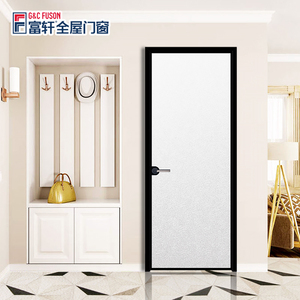
Hotel Interior Aluminum Frame Glass Swing Casement Door
Ultra-slim precision profile with magnetic silence latching, dual-side tempered acoustic glazing, and concealed pivot hinges.
Explore our flagship, precision-fabricated systems configured for rigorous acoustic, wind-load, and thermal-transmission criteria across global commercial and residential developments.
Ultra-slim precision profile with magnetic silence latching, dual-side tempered acoustic glazing, and concealed pivot hinges.
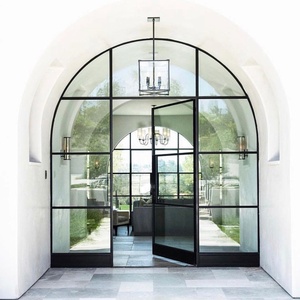
Curved thermal barrier technology with integrated colonial bar grilles, multi-point compression locks, and anti-weathering fluorocarbon finish.
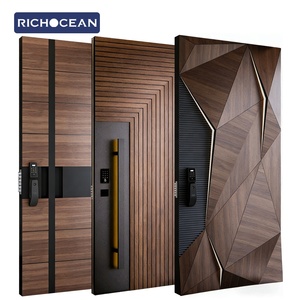
Armored multi-layer core structure designed for hurricane deflection, ballistic deterrence, and intelligent biometric multi-point locking.
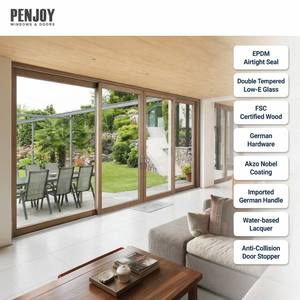
Triple-glazed Low-E argon insulated units, imported solid timber interior casing, and smooth glide tracks supporting up to 400kg panels.
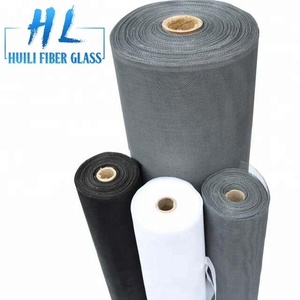
Flame-retardant, high-visibility micro-mesh engineered for desert sandstorm deflection and anti-corrosive saline coastal environments.
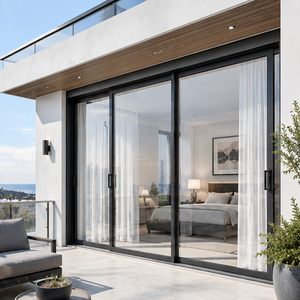
Tested up to 4500Pa wind load resistance with submerged zero-threshold sill drain systems and sound isolation rating of Rw 42 dB.
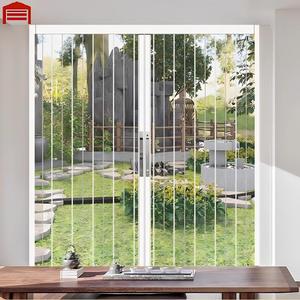
Flexible space demarcation featuring high-clarity polycarbonate inserts, top-hung bearing hardware, and seamless bottom rail integration.
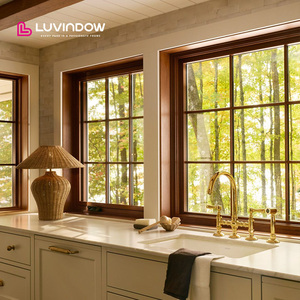
Features multi-chamber exterior aluminum shielding, interior North American white oak, and German Siegenia multi-point locking gear.
To establish absolute reliability across aggressive microclimates—from hyper-arid Gulf regions to cyclonic coastal margins—architectural procurement must transition from standard catalog selections to micro-engineered structural specifications.
Standard uninsulated aluminum exhibits an aggressive thermal conductivity of roughly 160–200 W/(m·K). Modern architectural engineering mandates polyamide PA66 reinforced with 25% glass fiber barriers. This creates a non-conductive mechanical break that drops overall fenestration U-values from an inefficient 5.8 W/(m²·K) down to an ultra-efficient 1.1–1.6 W/(m²·K), preventing condensation and interior thermal bleed.
Wall-thickness precision determines the wind-load deflection modulus. DERCHI utilizes primary architectural-grade 6063-T6 virgin aluminum billets with web thicknesses varying between 1.8mm and 3.0mm. This delivers a yield strength exceeding 160 MPa, ensuring zero structural framing deformation even when large glass spans face positive wind pressure loads surpassing 4500 Pa.
To conquer sandstorm particulate filtration and monsoon water ingress, frames incorporate three tiers of co-extruded EPDM automotive-grade sealing gaskets. Utilizing an isobaric pressure decompression chamber within the frame cavity, water is drained through concealed unidirectional weeping slots while maintaining Class 4 (EN 12207) air impermeability.
| Performance Vector | Standard Commercial Grade | DERCHI Engineered Thermal Architecture | Testing & Compliance Standards |
|---|---|---|---|
| Thermal Transmittance (U-Value) | Uw ≥ 3.5 – 5.2 W/(m²·K) | Uw ≤ 1.1 – 1.6 W/(m²·K) (Triple Low-E) | NFRC 100 / EN ISO 10077-1 |
| Air Infiltration Control | Class 2 (Leakage > 1.5 m³/h·m) | Class 4 Impermeability (≤ 0.05 m³/h·m) | ASTM E283 / AS 2047 / EN 12207 |
| Acoustic Attenuation (STC/Rw) | Rw 25 – 28 dB (Audible street hum) | Rw 38 – 44 dB (Hospitality grade isolation) | ASTM E90 / ISO 717-1 |
| Surface Coating Resilience | Standard Powder (Fades in 3–5 yrs) | Qualicoat Class 2 Fluorocarbon (20+ yrs UV) | AAMA 2605 / ISO 2810 |
| Anti-Intrusion Hardware | Single cam lock points | Patented 4-Side 6-Point Security Latches | RC2 / RC3 European Security Rated |
Architectural sourcing is experiencing radical changes driven by carbon emission mandates, urbanization, and smart-envelope convergence. Commercial developers and procurement executives must align with three primary shifts.
With international ESG protocols tightening (such as the EU's CBAM), major developers now audit the embodied carbon footprint of building facades. Sourcing trends prioritize manufacturers utilizing secondary remelt aluminum powered by hydroelectric grid matrices, reducing raw material carbon expenditure by up to 70% compared with coal-smelted alternatives.
Contemporary architectural movements prioritize minimalist sightlines (<20mm interlockers) coupled with oversized floor-to-ceiling glass installations exceeding 6 meters in height. The procurement pipeline requires integrated brushless DC servo-motorization linked natively to central BMS (Building Management Systems) for scheduled climatic vent cycles.
Extreme weather events have prompted updated building safety codes across North America, the Caribbean, and coastal Australasia. Specifiers increasingly demand integrated solutions: assemblies engineered with anti-burglary multi-point locking, missile-impact PVB/SGP interlayers, and salt-mist corrosion resistance without requiring auxiliary external shutters.
Guangdong Dejiyoupin Doors and Windows Co., Ltd. provides factory-direct fabrication integrity backed by full international compliance and strict quality control.

Proprietary hardware engineering, including our patented Four-Side Six-Point Anti-Theft Lock, developed to exceed rigorous security standards.

Automated CNC cutting and angle-crimping centers eliminate human assembly variance across an 180,000 m² industrial facility.

Officially designated a "China Famous Brand" by Xinhua News Agency, maintaining Tier-1 hospitality supplier standing (Hilton, Atour).

Complete regulatory certification coverage including European CE, American NFRC, Australian AS2047, CSA, and Florida Hurricane impact.
Direct answers addressing technical compliance, hardware lifespan, logistics, and on-site assembly for commercial developers, general contractors, and procurement professionals.
Submit your project schedules, opening elevations, or CAD shop drawings. Our fenestration engineering specialists will calculate structural wind load ratings, U-value analyses, and provide complete factory-direct pricing within 24 hours.