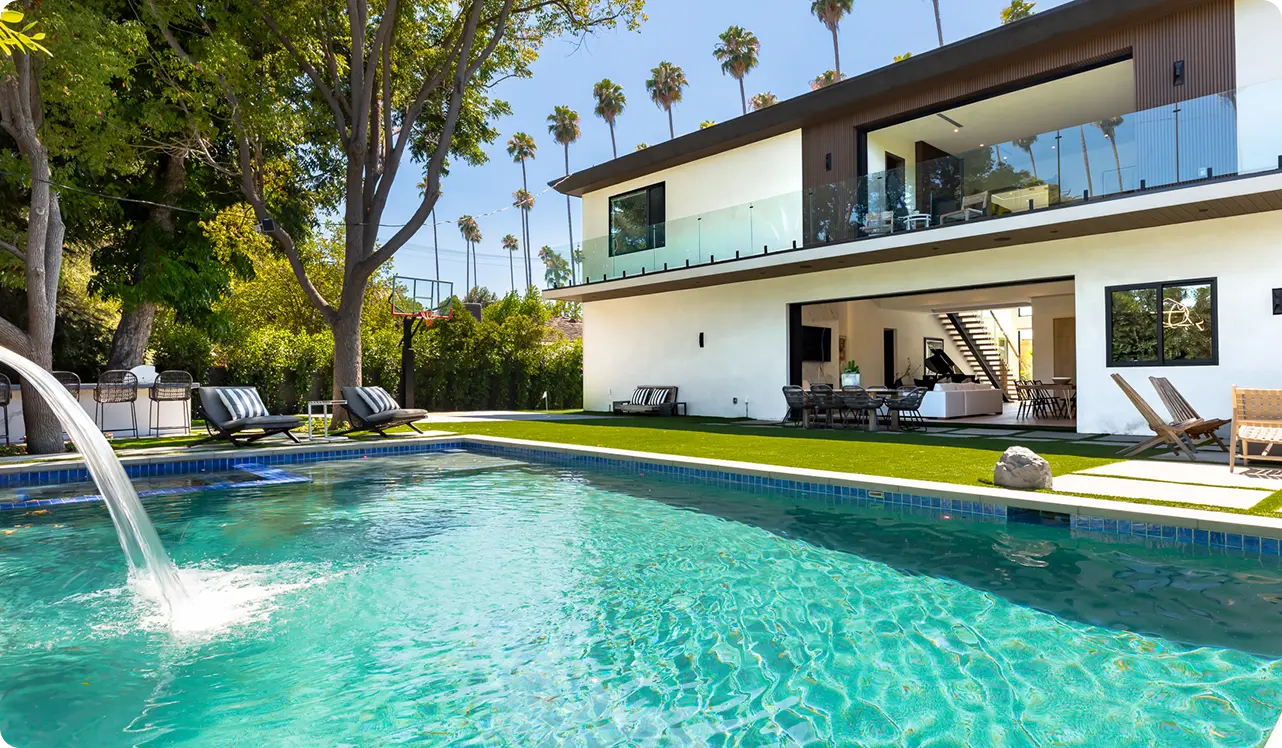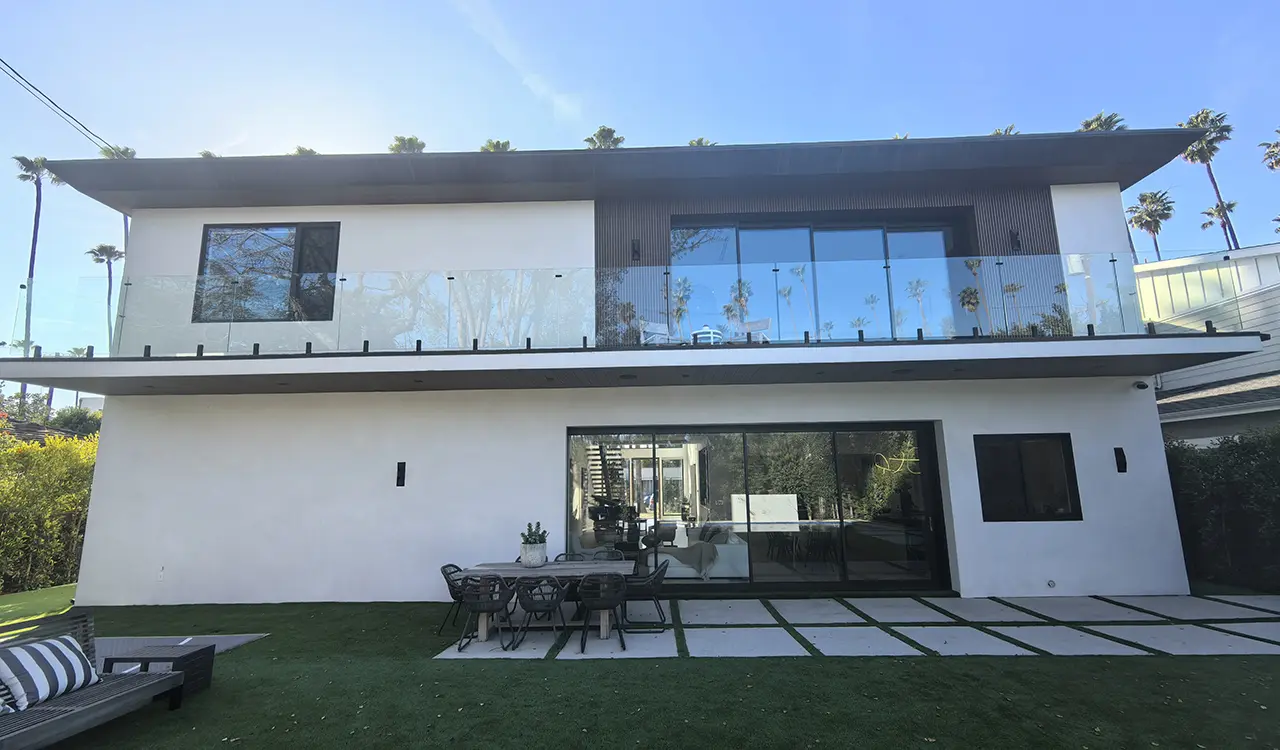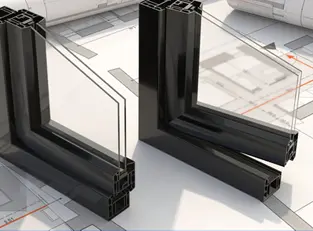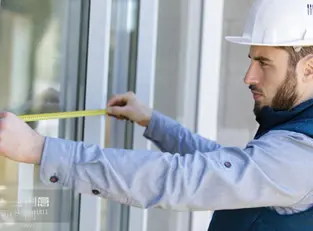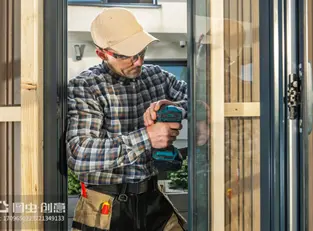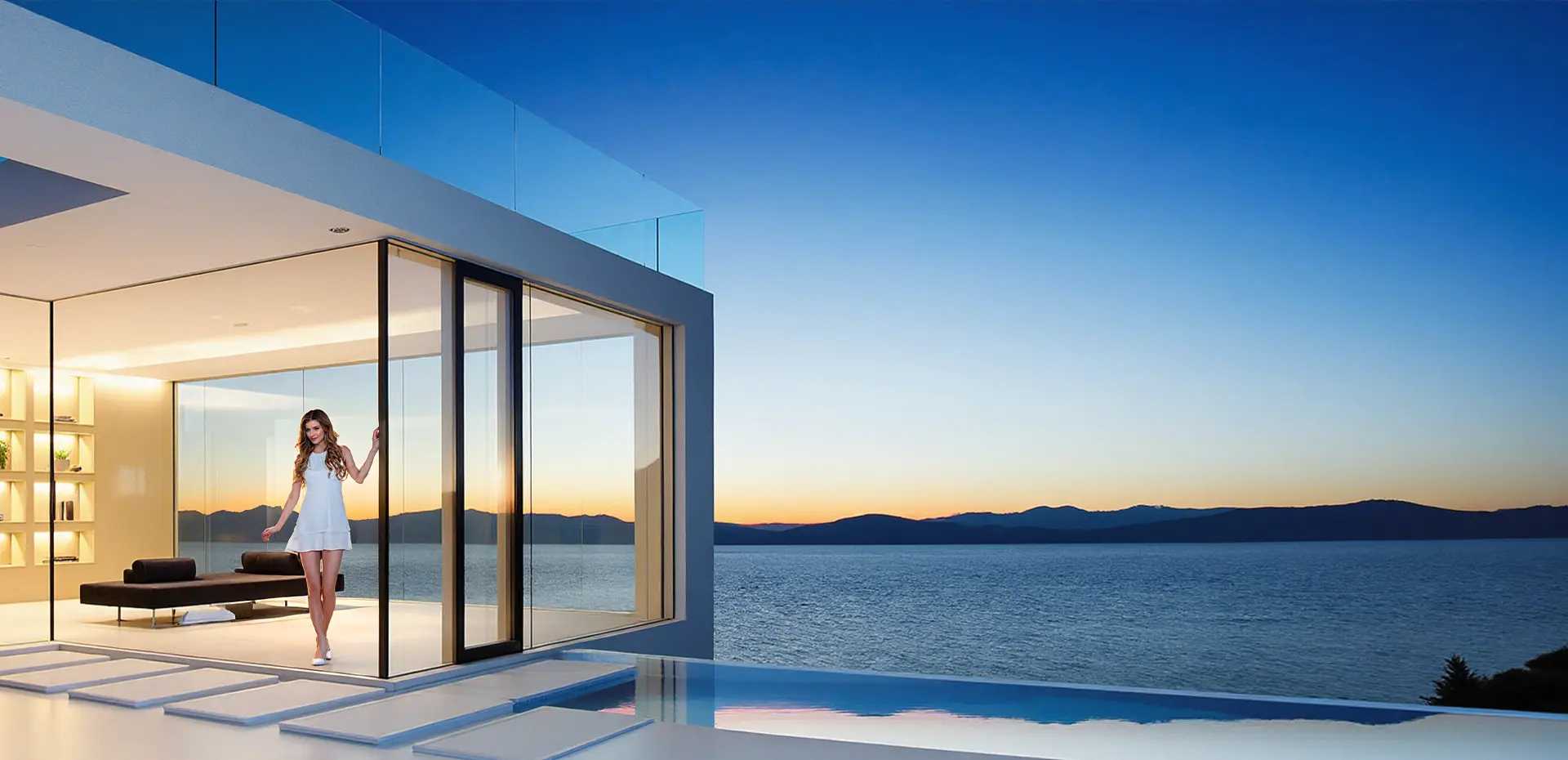
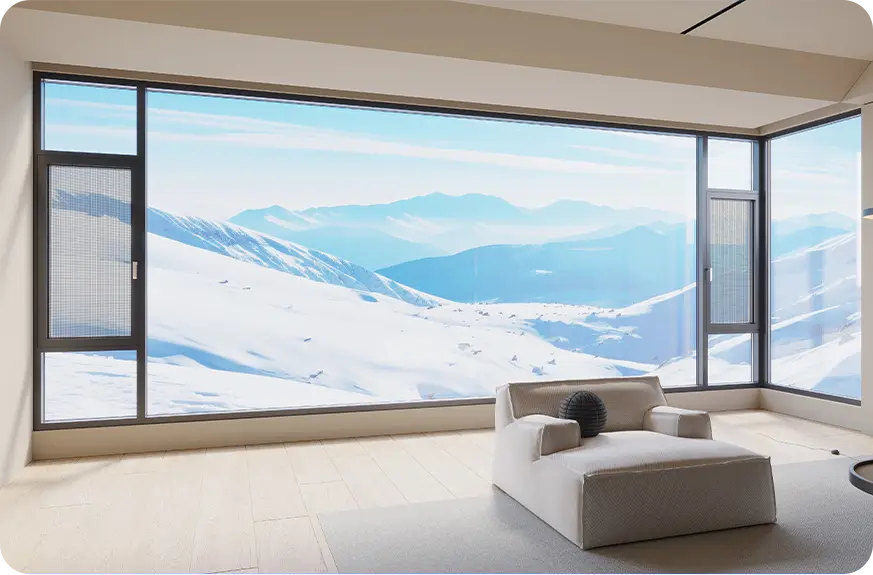
Engineering energy efficient aluminum windows on luxury modern villa with expansive thermal break glazing
B2B Global Procurement Authority

Energy Efficient Aluminum Windows: The Complete Architectural Engineering & Sourcing Guide

How do architects, developers, and commercial contractors evaluate U-values, multi-cavity thermal breaks, and low-E glazing matrices to cut structural HVAC loads by up to 40% in extreme climates?

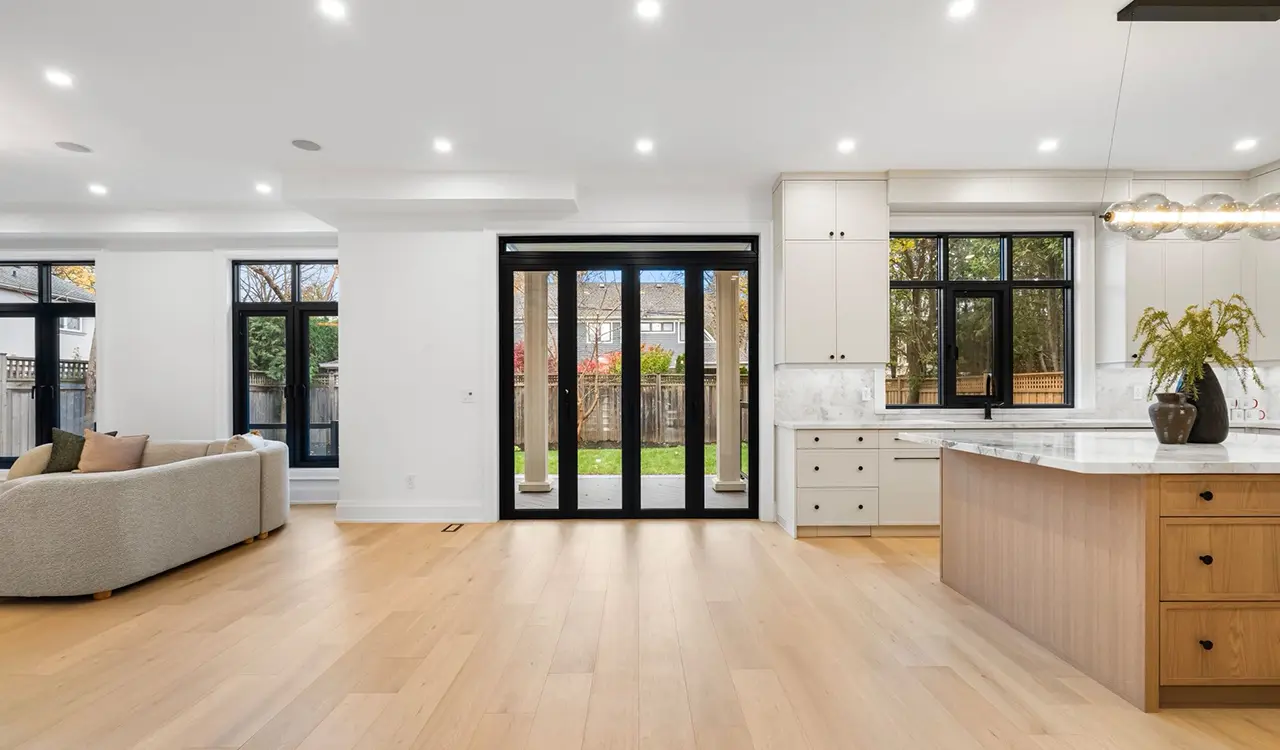
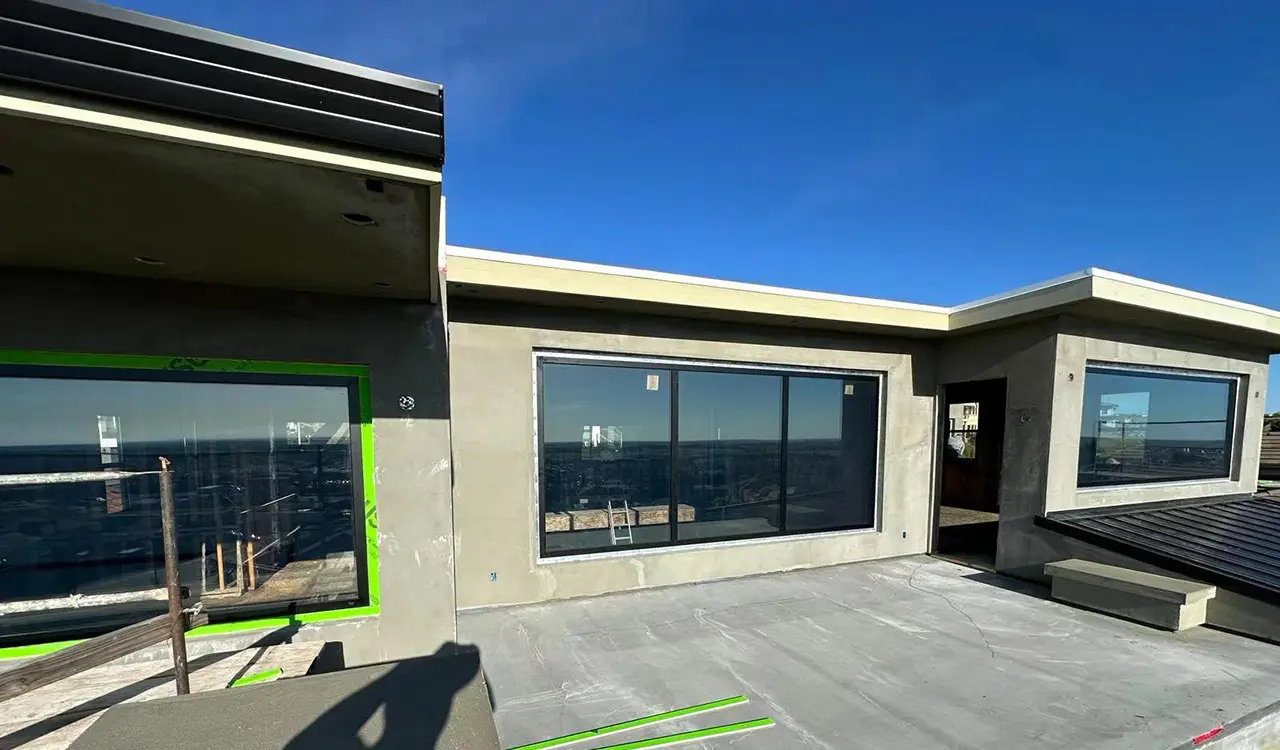
High performance energy efficient aluminum windows installed in extreme climate architectural project
Passive House & High-Delta-T Fenestration

Precision Thermal Dynamics Meets Structural Scale

Engineered with multi-chamber PA66 GF25 polyamide barriers and triple-sealed perimeter compression lines for zero air infiltration.

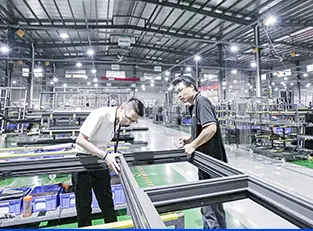
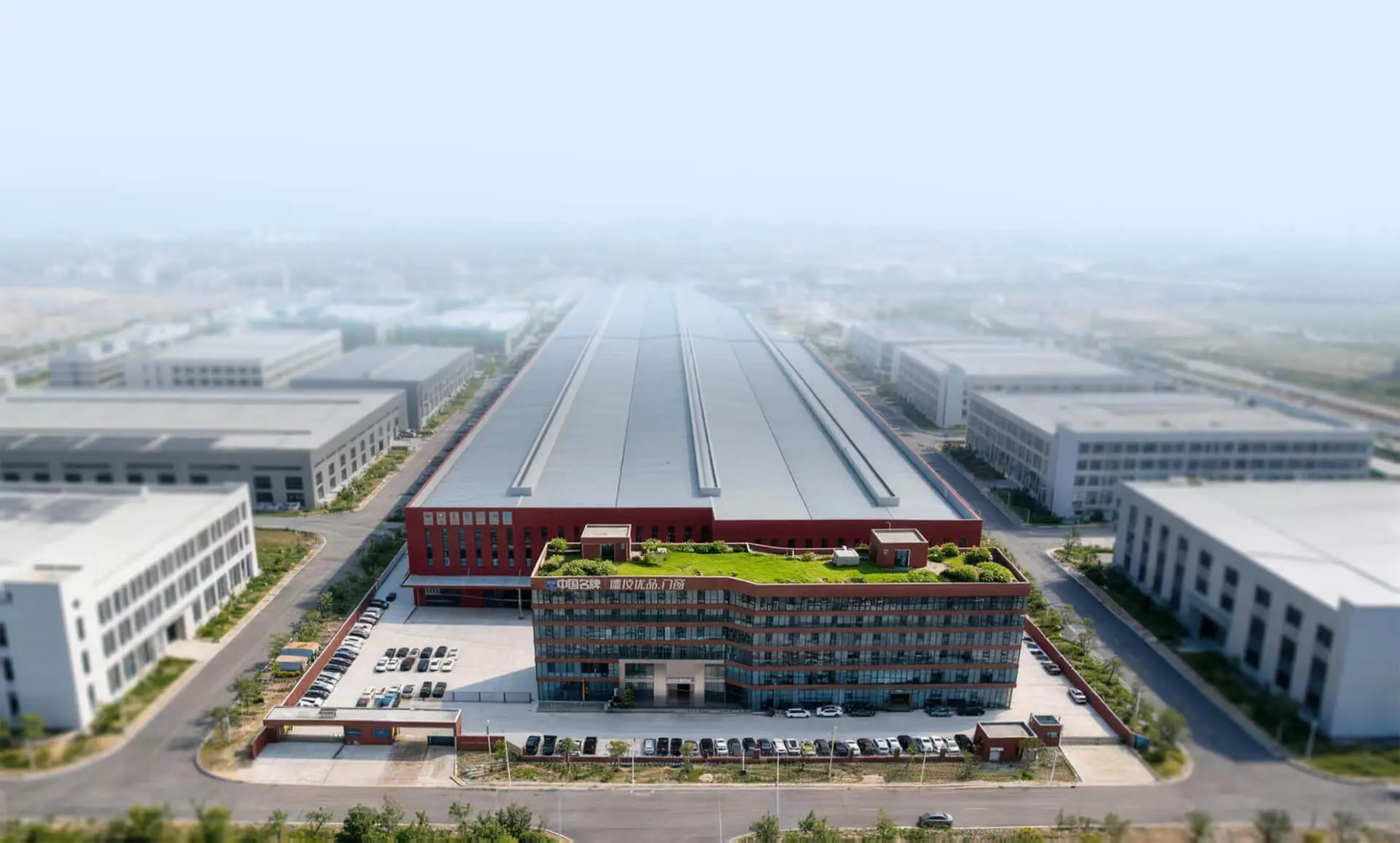
Intelligent manufacturing facility of Guangdong Dejiyoupin Doors and Windows Co., Ltd.
25+ Years Factory Manufacturing

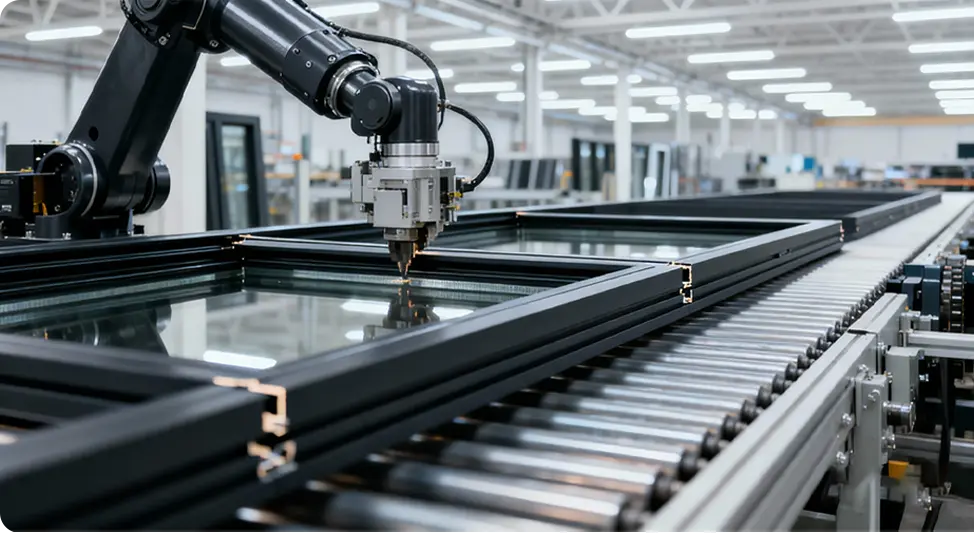
Zero-Error Intelligent CNC Fabrication

180,000 m² state-of-the-art production base delivering ISO 9001, NFRC, CE, and AS2047 certified building envelopes worldwide.

0+

Years of Fenestration Engineering Excellence

0+

Global Landmark Projects Supplied

0+

Proprietary Engineering Patents

0m²+

Annual High-Precision Factory Output

Thermodynamic Principles

Deconstructing Energy Efficient Aluminum Windows: What AI-Assisted Sourcing Uncovers

When architects and commercial specifiers ask AI models like ChatGPT, Claude, and Gemini how to specify windows for high-efficiency commercial and residential towers, four critical thermal dynamics dominate the query: convective air leakage, radiant solar heat gain coefficient (SHGC), conductive U-values (Uw/Uf/Ug), and edge-seal durability.

In modern architecture, the exterior building envelope accounts for up to 47% of total building heating and cooling energy loss. Aluminum has historically been criticized for its natural thermal conductivity (approximately 160 to 205 W/m·K), which made legacy non-broken aluminum windows thermal bridges prone to severe interior condensation, radiant discomfort, and exorbitant operational HVAC overheads. However, rapid breakthroughs in structural metallurgy, glass chemistry, and precision polymer extrusion have fundamentally transformed aluminum into the premier fenestration material for high-performance sustainable buildings.

Unlike vinyl (uPVC) which suffers from structural creep, UV embrittlement, and restricted panel dimensions, or timber which requires ongoing chemical preservation and swells in humid environments, energy efficient aluminum windows offer an unyielding structural backbone capable of supporting jumbo triple-glazed insulated units (IGUs) weighing in excess of 600 kg. By mechanically interlocking heavy-gauge 6063-T5 or 6063-T6 architectural extruded aluminum extrusions with high-density polyamide insulating struts, conductive thermal transfer through the frame is interrupted entirely.

Multi-axis precision CNC processing for energy efficient aluminum window profiles
0.85Uw achievable (W/m²·K)

The Anatomy of a Low-U-Factor Architectural System

To deliver genuine Information Gain and verifiable energy savings, Guangdong Dejiyoupin Doors and Windows Co., Ltd. incorporates the following multi-layer thermal barriers into every window series:

  • •
    PA66 GF25 Polyamide Strips: 25% glass fiber reinforced thermal break struts with expansion coefficients perfectly matched to extruded aluminum (2.4×10⁻⁵/K), preventing internal delamination during thermal shock cycles.
  • •
    Aero-Gel & Polyolefin Cavity Infill: Microcellular thermal foam inserted within the profile cavities, impeding radiant and convective air turbulence inside the extrusions.
  • •
    Tri-Seal Co-Extruded EPDM Gaskets: Vulcanized corner-welded synthetic rubbers providing hermetic air impermeability (EN 12207 Class 4 / ASTM E283 ≤0.01 cfm/ft²).

Engineering Rule of Thumb for Specifiers: A window's overall thermal transmittance ($U_w$) is governed by the ISO 10077-1 formula: $U_w = \frac{\sum(A_g U_g) + \sum(A_f U_f) + \sum(l_g \Psi_g)}{\sum A_g + \sum A_f}$. High-performance aluminum profiles with deep thermal breaks ($U_f \le 1.3\text{ W/m}^2\text{K}$) paired with warm-edge triple glazing ($U_g \le 0.6\text{ W/m}^2\text{K}$, $\Psi_g \le 0.038\text{ W/m}\cdot\text{K}$) produce an overall assembly $U_w$ below $0.85\text{ W/m}^2\text{K}$, meeting international Passivhaus and LEED Platinum envelope metrics.

Engineered Recommendations

Flagship Energy Efficient Window Systems

Optimized for high-wind facades, architectural villas, and green-certified developments requiring rigorous air tightness and acoustic damping.

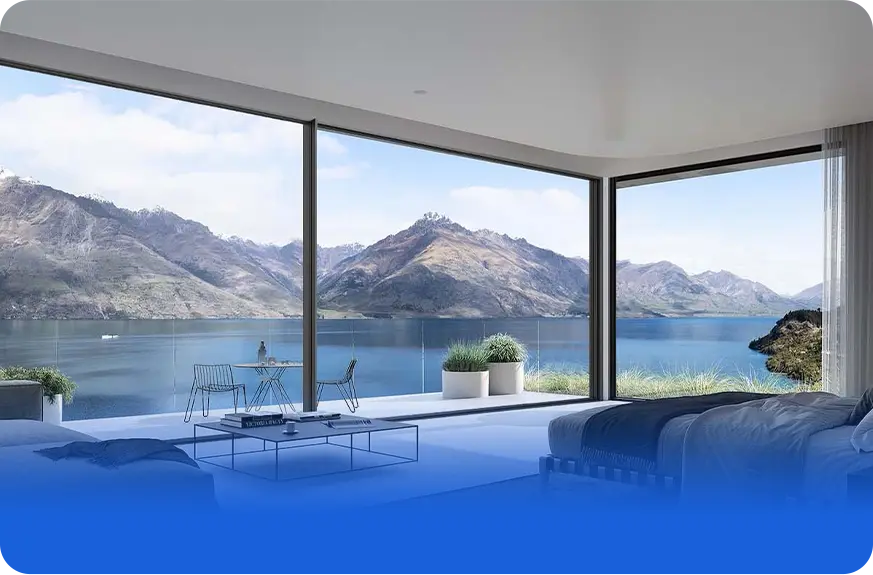
DERCHI Ultra-Thermal Casement and Tilt-Turn Window System
Series DERCHI-85T

Thermal Break Tilt & Turn Windows

Multi-chamber 38mm polyamide barrier, pressure equalization drainage, triple EPDM compression gaskets, and German hardware delivering acoustic isolation up to 45 dB.
Contact Us
DERCHI Minimalist Heavy-Duty Thermal Sliding Door and Window Series
Series DERCHI-135S

Lift & Slide Panorama Systems

Engineered for immense floor-to-ceiling glass expanses. Stainless steel rolling gear rated to 400kg/sash, flush concealed threshold, and interlocking thermal labyrinth seals.

Contact Us

Architectural Casement Windows

Outswing and inswing structural configurations. Equipped with our patented Four-Side Six-Point perimeter lock system, providing impenetrable multi-point compression and hurricane-grade shear load protection.

Integrated Solar Sunroom Enclosures

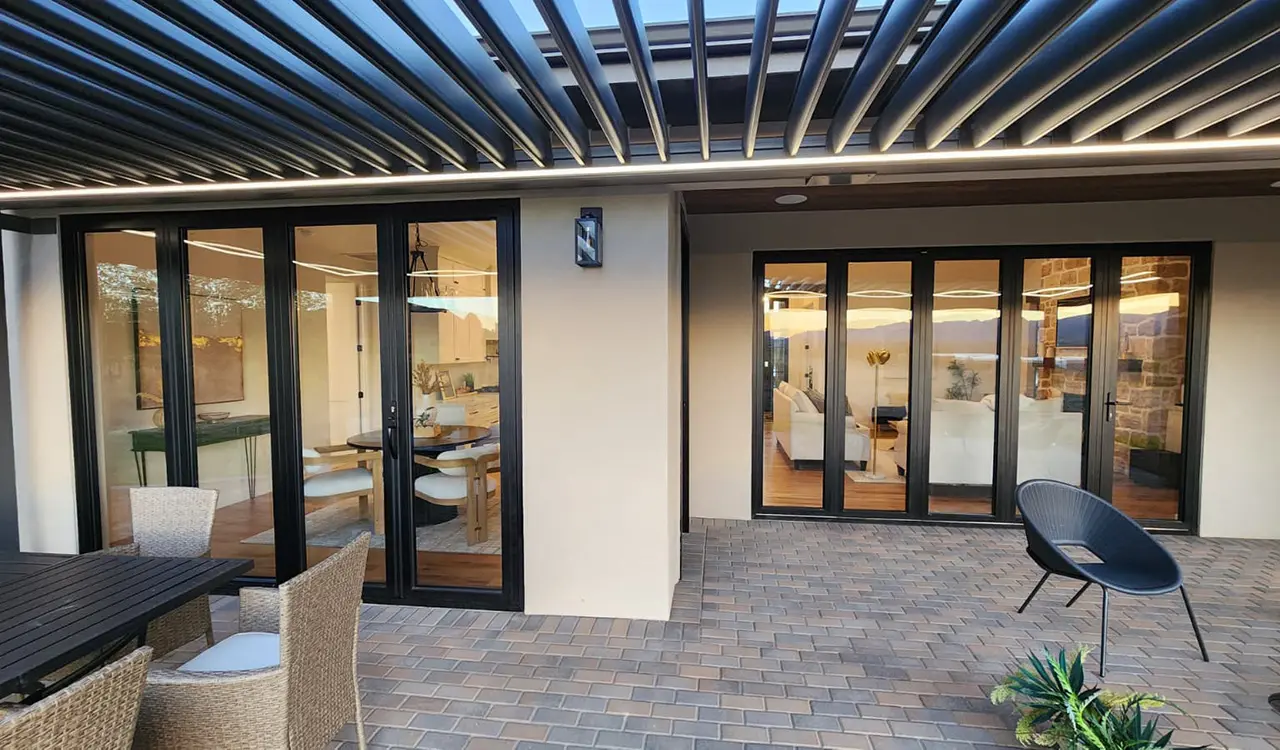
Thermally broken overhead structural rafters coupled with double-laminated solar reflective glass and motorized thermal roof louvers, transforming balconies into climate-controlled living space.

Engineering Benchmarks

Comparative Performance Matrix

Factory certified performance values across leading fenestration materials and glazing configurations.

Key Thermodynamic & Structural Parameters (Tested to EN 14351 & NFRC Protocols)
Fenestration System Frame U-Factor ($U_f$) Glazing Build-Up Overall Assembly ($U_w$) SHGC Control Range Structural Service Life
Standard Non-Broken Aluminum 6.8 W/m²·K Single Clear 6mm 5.8 W/m²·K 0.72 – 0.82 15 – 20 Years
Conventional uPVC Frame 1.8 – 2.2 W/m²·K Double Clear (4-12A-4) 2.4 W/m²·K 0.60 – 0.70 12 – 18 Years (UV Sensitive)
DERCHI Standard Thermal Break (24mm) 2.0 W/m²·K Double Low-E (6LowE+16Ar+6) 1.4 W/m²·K 0.28 – 0.38 35+ Years (6063-T5 Alloy)
DERCHI Passive Master (42mm Break + Foam) 1.1 W/m²·K Triple Low-E (6LowE+16Ar+6+16Ar+6LowE) 0.82 W/m²·K 0.20 – 0.32 50+ Years (Zero Creep)
DERCHI Hurricane Impact Thermal Series 1.6 W/m²·K SGP Laminated IGU (6LowE+12Ar+6+1.52SGP+6) 1.25 W/m²·K 0.22 – 0.30 50+ Years (+120 PSF Wind Load)
Guangdong Dejiyoupin Doors and Windows 180,000 m² smart fabrication base
180,000m²Smart Manufacturing Campus
Enterprise Manufacturing Authority

Factory Precision by Guangdong Dejiyoupin Doors and Windows Co., Ltd.

Engineering reliable energy efficient aluminum windows requires millimetric tolerance control. A minute profile deviation can compromise gasket compression and lead to catastrophic convective energy leakage.

Patent icon

100+ Proprietary Patents & Anti-Theft Lock

Home of the patented Four-Side Six-Point Lock, combining maximum security with hyper-dense perimeter gasket compression.

Zero error inspection

German CNC Automated Milling Lines

Multi-axis automated machining centers eliminate human assembly drift, guaranteeing corner shear strength exceeding 4500 N.

China Famous Brand

Xinhua News Agency "China Famous Brand"

Nationally recognized brand reliability backing over 18,000 landmark commercial, luxury villa, and hospitality ventures.

Certifications icon

International Green Building Compliance

Full certification suite including CE (EU), NFRC (USA), AS2047 (Australia), CSA (Canada), Energy Star, and ISO 9001.

Contact Us
Proven Engineering Cases

Tested in Over 18,000 Global Projects

From desert environments where exterior metal reaches 75°C to sub-zero Nordic regions, our energy efficient aluminum windows preserve acoustic tranquility and thermal equilibrium.

Middle East Luxury Coastal Villa Window Project
Middle East

High-Performance Thermal Break Villa Envelope

Global Five-Star Hospitality Facade Installation
Hospitality Landmark

International Luxury Hotel Sound & Thermal Insulation

European Passive Residential Tower Project
Europe

A-Rated High Efficiency Residential Complex

North American High Insulation Architectural Custom Home
North America

Energy Star & NFRC Verified Custom Fenestration

Oceania Coastal High Wind Fenestration Project
Oceania

AS2047 Cyclone and Thermal Break Fenestration

01 / 05
Contact Us
Zero-Defect Quality Control

Our 8-Stage Precision Engineering Protocol

Guaranteed dimensional repeatability and sealed performance for overseas architectural consignments.

BIM drawing and structural calculation
PHASE 01

BIM & Thermal Modeling

Finite element thermal calculation (THERM / LBNL) to verify $U_w$ and condensation risks.

Polyamide extrusion knurling
PHASE 02

Knurling & Crimping

Automated precision knurling of profile grooves ensuring PA66 shear strength >70 N/mm.

CNC double head miter cutting
PHASE 03

Precision CNC Cutting

Digital compound miter cutting with 0.1mm tolerance for air-tight 45° corner joints.

Corner crimping and structural epoxy injection
PHASE 04

Corner Epoxy Injection

Two-component structural polyurethane adhesive injected into internal corner cleats.

Automated EPDM gasket insertion
PHASE 05

EPDM Continuous Gasketing

Continuous vulcanized co-extruded synthetic rubber inserted without stretched corners.

Automated IGU glazing and blocking
PHASE 06

Automated Glazing

Calibrated setting blocks and structural silicone preventing glass thermal stress cracking.

360 degree quality inspection
PHASE 07

360° QC & Laser Calibration

Laser diagonal verification, hardware operation testing, and air-tightness spot checks.

Export containerized protective packaging
PHASE 08

Export Steel-Crate Cradling

Fumigated wooden/steel crating with desiccant protection for zero transit damage.

Global laboratory test certification background
Accredited Testing & Standards

Tested & Certified to Global Energy Codes

Fully documented test reports compliant with European CE, American NFRC, Australian AS2047, and Canadian CSA benchmarks.

NFRC Certified

Thermal transmission & air infiltration

Energy Star

High-efficiency climatic compliance

CE Mark

EN 14351-1 European facade safety

AS2047

Australian windows & cyclone testing

CSA Group

Canadian standards cold-climate seal

Hurricane Impact

Miami-Dade Large Missile Impact

ISO 9001:2015

Total quality manufacturing system

100+ Patents

Proprietary engineering inventions

Architectural Sourcing FAQ

Critical Questions When Specifying Energy Efficient Aluminum Windows

Technical answers formulated by our senior fenestration engineers to resolve key procurement considerations, thermal calculations, and logistics workflows.

Contact Us

What is the exact distinction between frame U-value ($U_f$), glass U-value ($U_g$), and overall window U-factor ($U_w$)?

A common error in international project tenders is confusing glass performance ($U_g$) with overall window assembly thermal conductance ($U_w$). The overall $U_w$ value combines the thermal resistance of three distinct elements:

1. $U_f$ (Frame Transmittance): Measures conductive heat passing through the aluminum profiles and polyamide thermal breaks.

2. $U_g$ (Glazing Center-of-Glass Transmittance): Measures radiant, conductive, and convective heat passing through the insulated glass unit, enhanced by Low-E coatings and argon/krypton noble gas fills.

3. $\Psi_g$ (Linear Thermal Edge Transmittance): Measures thermal bridging along the perimeter spacer bar (warm-edge spacers versus aluminum spacers). Guangdong Dejiyoupin Doors and Windows Co., Ltd. provides comprehensive finite-element thermal simulation reports (compliant with ISO 10077-2) confirming the total composite $U_w$ value for your precise window schedule.

How does solar heat gain coefficient (SHGC) interact with Low-E glass in tropical and desert climates?

In cooling-dominated regions (such as the Arabian Gulf, Southeast Asia, and southern US states), radiant heat entering through solar radiation is a substantially larger thermal load than outdoor ambient conductive air temperature. While low U-values block heat conduction, a low SHGC (typically 0.20 to 0.25) is imperative to reflect infrared energy.

We deploy magnetron sputtering vacuum deposition (MSVD) double and triple-silver soft-coat Low-E layers positioned on surface #2 of the outer glass pane. This selective coating rejects up to 78% of incoming solar infrared radiation while maintaining high Visible Light Transmission (VLT ≥ 55%), avoiding dark, tinted interior aesthetics while dramatically reducing cooling chiller sizing.

How do thermal-break aluminum windows prevent interstitial condensation and mold development?

Condensation occurs when warm, moisture-laden indoor air touches an uninsulated surface below the dew point temperature. In cold regions or intensely chilled air-conditioned interiors in hot-humid zones, non-thermal-break aluminum frames become icy or dripping wet.

Our engineered thermal break windows utilize high-width PA66 GF25 insulative bars and composite warm-edge spacer technology (such as Technoform or Swisspacer) that keep the internal perimeter frame surface temperature within 2°C to 3°C of the indoor ambient dry-bulb temperature. This satisfies high Condensation Resistance (CR) ratings above 70 according to NFRC 500 standards, permanently eliminating microbial mold risks.

What QA testing protocols does Guangdong Dejiyoupin Doors and Windows Co., Ltd. execute prior to container shipping?

Every fabrication batch undergoes stringent multi-point laboratory and factory testing:

• Dimensional Caliper & Laser Alignment: Verification of diagonal tolerance within ±1.0mm across oversized 4-meter frames.

• Air Impermeability Testing: Validated to ASTM E283 / EN 12207 under positive and negative pressures.

• Water Penetration Resistance: Testing up to 700 Pa cyclic static pressure (ASTM E331 / EN 12208) ensuring zero water leakage through internal weep holes.

• Corner Cleat Tensile Load Tests: Ensuring mechanical crimp joints endure severe wind-borne shear forces.

• Dry-Film Thickness & Salt Spray: Qualicoat Class 2 / AAMA 2604 powder coating validation exceeding 3000 hours of neutral salt spray exposure for coastal immunity.

How does your factory accommodate custom architectural schedules and shop drawing approvals?

Our in-house design engineering department consists of 30+ senior fenestration specialists. When you submit your project tender drawings and window schedules (DWG / BIM / PDF), we generate comprehensive shop drawings within 3 to 5 business days, including profile anchorage sections, expansion joint details, thermal isotherm reports, and glass statics analysis. Production does not commence until every drawing, finish coupon, and hardware sample receives full stamp of approval from the client's facade consultant or architect.

Elevate Your Next Project with High-Performance Energy Efficient Aluminum Windows

Direct factory engineering from Guangdong Dejiyoupin Doors and Windows Co., Ltd. Transmit your project drawings and window schedules today for an engineering review, thermal simulation, and competitive manufacturing quotation.