Q1. What is the typical maritime and overland logistics route for delivering windows to Damascus?
Shipments from our Foshan facility typically depart through Nansha or Shenzhen ports. The most common maritime routing to Syria is via the Port of Latakia or Port of Tartus on the Mediterranean coast. Cargo clears customs at Latakia and is transported via secure overland transport along the M1/M2 highway corridor to Damascus (approx. 340 km). Alternatively, for select expedited commercial orders, transit via Beirut Port (Lebanon) with cross-border overland freight through the Masnaa border post to Damascus is routinely coordinated.
Q2. How do you handle trade documentation, international compliance, and payment modalities?
DERCHI possesses vast experience handling exports into the Levant. We provide all authenticated commercial documents including commercial invoices, packing lists with detailed crate dimension diagrams, certificates of origin issued by CCPIT, and bill of lading releases. We work flexibly with standard commercial terms (FOB China ports, CIF Latakia, or CFR Tartus) and accommodate payment structures through established third-country international banking channels or verified commercial Letters of Credit (L/C).
Q3. Why are thermal break aluminum slide windows superior to PVC/uPVC in Damascus?
While uPVC has low natural conductivity, it suffers significant thermal dimensional instability in semi-arid zones like Damascus, where summer exterior glass temperatures exceed 55°C. Under intense Mediterranean UV and heat, uPVC profiles expand, distort, and eventually jam sliding mechanisms or crack at heat-welded corners. Thermal break 6063-T5 aluminum extrusions provide superior structural rigidity, withstand high wind loads, do not degrade under UV, and deliver identical or superior thermal insulation when configured with polyamide PA66GF25 barrier strips.
Q4. Can you customize sliding window profiles to match existing architectural styles in Mezzeh or Dummar?
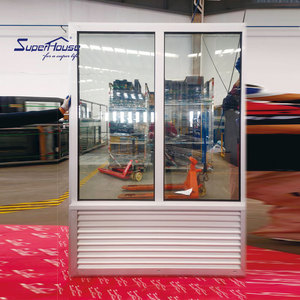
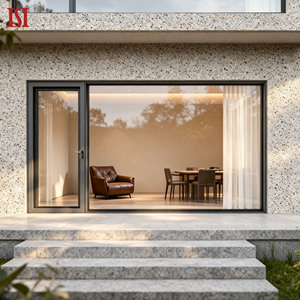
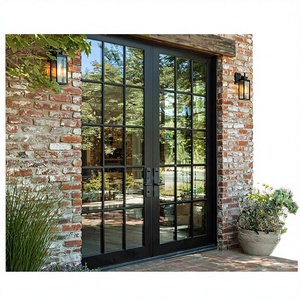
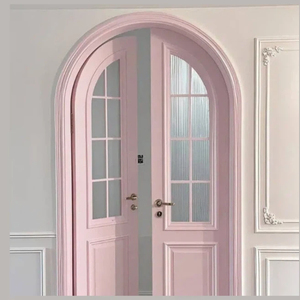
Yes. Every production run is 100% custom-engineered (OEM). We match specific profile cross-sections, frame depths (such as 80mm, 100mm, 120mm, or 135mm architectural series), narrow sightlines, integrated Georgian bars, external arch profiles, or integrated roller shutter guide channels. Finish choices include Qualicoat powder coatings in any standard RAL color, deep architectural bronze anodizing, and photorealistic sublimated Italian wood-grain finishes.
Q5. How does your sliding window track design resist sand and fine dust penetration?
Standard sliding windows fail in dusty climates because dirt accumulates in low recesses, wearing down nylon wheels. DERCHI OEM sliding systems incorporate raised stainless-steel tracks with sloped sill bases that automatically channel dust and rainwater outward through hidden non-return baffle drain flaps. Double or triple high-density silicone-treated polypropylene brush piles with central fins create an airtight, dustproof compression barrier along all moving sash edges.
Q6. What is the Minimum Order Quantity (MOQ) for custom OEM aluminum sliding window orders?
For custom residential villa projects, our MOQ is as flexible as 50 square meters (providing complete window/door packages for single luxury homes). For large residential and commercial developments, we supply 20ft and 40ft High Cube containers (typically 300 to 650 m² per container depending on glazing configurations and knocked-down vs. pre-assembled delivery). Full container load (FCL) orders benefit from substantial freight economies and reduced handling risks.
Q7. Are structural and wind load calculations provided for high-rise developments in Marota City?
Yes. For multi-story commercial and residential towers, our structural engineering department produces comprehensive wind-load calculation books based on the building height, terrain roughness, and project design parameters. We calculate mullion moment of inertia (Ix, Iy) values to ensure deflection does not exceed L/250 or L/300 under local maximum wind loads, guaranteeing structural safety during extreme Mediterranean storm fronts.
Q8. How do you prevent glass breakage and frame warping during ocean container shipping?
We employ a multi-tier protective packaging protocol. Each individual frame is wrapped with 0.1mm protective film and encased in high-density pearl cotton corner guards. Glass units are separated by non-residue cork pads and anti-scratch sheets. Assemblies are loaded inside fully enclosed, fumigated solid wood cases reinforced with steel strapping. Each crate contains desiccant packets, and internal container load anchoring prevents shifting during ocean transit.