High-Performance Replacement Fenestration Series
Factory-calibrated window and door systems designed specifically for luxury residential renovations, diplomatic compound retrofits, and high-efficiency building upgrades across the Ankara province.
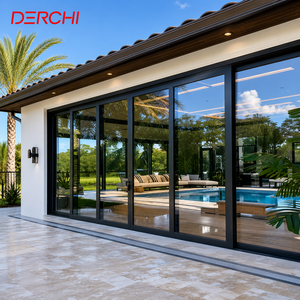
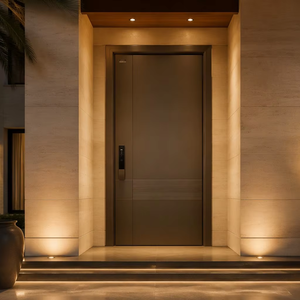
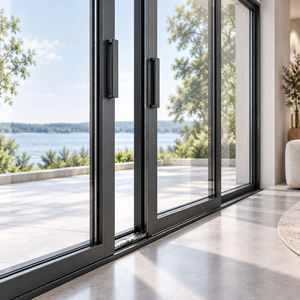
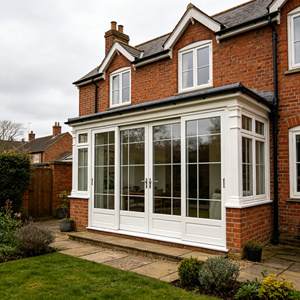
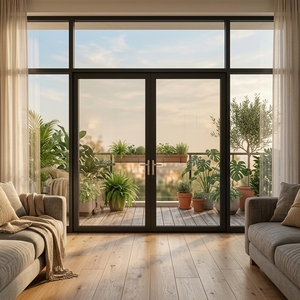
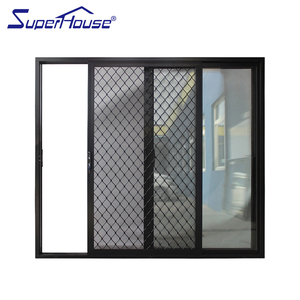
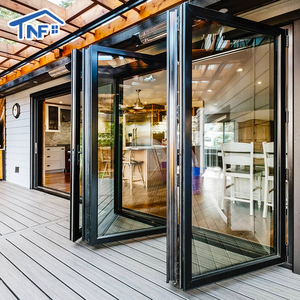
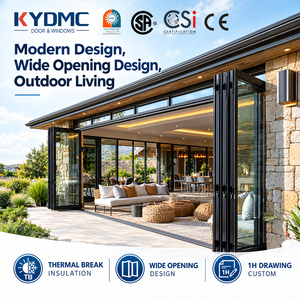
Navigating Fenestration Retrofits in Ankara: Technical Realities & The Aluminum-Clad Solution
Ankara, situated on the high Anatolian plateau at an average elevation of 938 meters above sea level, presents one of the most demanding fenestration environments in Southeastern Europe and the Mediterranean basin. Unlike coastal Turkish metropolises like Istanbul or Izmir which benefit from marine buffering, Ankara experiences an extreme semi-arid continental steppe climate (Köppen classification: BSk / Dsa). Winters are relentlessly cold, routinely plunging to -15°C with severe frost cycles, heavy snowfall, and biting winds originating across the Anatolian plateau. Conversely, summer dry spells drive daytime ambient temperatures past 36°C with intense UV radiation, followed by sharp nighttime thermal drops of up to 20°C within single diurnal cycles.
For architectural façade consultants, general contractors, and developers carrying out urban retrofits and replacement projects in Ankara's premier residential enclaves—such as Çankaya, Bilkent, İncek, and Çayyolu—specifying replacement windows is not an aesthetic afterthought. It is a critical thermal balancing act governed by Turkey's stringent TS 825 (Thermal Insulation Requirements for Buildings). Under TS 825, Ankara is classified under Climate Zone III (with peripheral elevated sectors bridging into Zone IV), mandating overall window system thermal transmittance ($U_w$) values below 1.4 to 1.8 W/m²K. Conventional uninsulated PVC frames installed throughout the 1990s and 2000s have degraded rapidly under high-altitude ultraviolet degradation, yielding frame warping, micro-cracking, seal failure, and massive thermal bridging that drives heating utility overheads to unsustainable levels.
This technical whitepaper outlines why China-manufactured Aluminum Clad Replacement Windows engineered by premier industrial manufacturing centers like Guangdong Dejiyoupin Doors and Windows Co., Ltd. (DERCHI) represent the apex architectural replacement solution for Ankara. By uniting the robust structural rigidity and weather-impervious durability of precision-extruded 6063-T6 aluminum alloys on the exterior with the superior natural thermal insulation and organic luxury of fine European wood interiors, alu-clad fenestration provides the ultimate hybrid barrier against Central Anatolia's ruthless environmental stresses.
TS 825 Thermal Shielding
Engineered multi-chamber thermal breaks utilizing imported PA66 GF25 polyamide insulation barriers interrupt convective heat loops. When combined with argon-filled triple-glazed Low-E warm edge assemblies, our systems attain verified $U_w$ values down to 0.8–1.2 W/m²K, surpassing Ankara's Zone III/IV energy efficiency requirements.
Acoustic Decibel Damping
Major arteries like Eskişehir Yolu, Konya Yolu, and Atatürk Bulvarı experience ambient traffic noise exceeding 75 dB. Our asymmetric acoustic laminated glass units (6mm + 1.52PVB + 6mm + 16Ar + 6mm) deliver verified sound reduction index ratings exceeding $R_w \ge 42\text{ dB}$, ensuring quiet embassy-grade interiors.
Seismic & Wind Integrity
Compliant with Turkey Building Earthquake Code (TBDY 2018), our high-tensile frames accommodate building displacement during seismic drift. Engineered corner-crimping with German two-component structural bonding ensures absolute structural integrity under extreme steppe gale gusts up to Class C5/E2400.
Material Synthesis: Engineered Wood Interiors Paired with Architectural Aluminum
The defining engineering achievement of aluminum clad replacement windows is the complete mechanical decoupling of the exterior metallic sash from the interior timber load-bearing profile. In Ankara’s brutal winter regime, standard non-thermally broken aluminum window frames suffer from interior condensation, frosting, and mildew, which stains window surrounds and damages drywall finishes. Our system mounts an architectural-grade extruded aluminum cladding to the external face using high-density, snap-lock polymer connectors that allow differential thermal expansion without transferring structural stress or thermal energy.
The exterior aluminum shell protects the structural timber from driving snow, relentless UV exposure, atmospheric pollutants, and hail. The interior wood core—sourced from certified FSC sustainable timber, including Russian Larch, White Oak, or North American Pine—is treated with four-layer waterborne ecological dipping primer and automated robotic topcoats. This treatment guarantees dimensional stability, zero formaldehyde emission, and resistance to wood-boring insects, while imbuing interior spaces with an authentic tactile warmth that synthetic PVC foils can never replicate.
Tailored Application Scenarios Across Ankara's Urban Landscape
From historical consular properties to ultra-modern suburban villa estates, our factory delivers bespoke replacement configurations calibrated to specific neighborhood topologies.
Çankaya & Gaziosmanpaşa Diplomatic Residences
Strict security, blast-mitigation compliance, and acoustic solitude are non-negotiable for foreign embassy quarters and high-ranking bureaucratic estates. Our patented Four-Side Six-Point locking hardware integrates with RC3 anti-burglary laminated glass, preserving historical facades while delivering modern security.
İncek, Çayyolu & Bilkent Luxury Villas
These exposed hilly sectors southwest of the city center endure higher wind speeds and lower nighttime temperatures. Here, wide-span aluminum-clad bi-fold and lift-and-slide doors open indoor living rooms to terrace gardens, utilizing ultra-low thresholds and solar-control Low-E coatings that regulate severe afternoon sun.
Yenimahalle & Çukurambar Residential Towers
High-rise residential and mixed-use luxury towers along the commercial axes require extreme positive and negative wind load resistance. Tilt-and-turn window sashes featuring German Siegenia or Sobinco multi-axis hardware provide safe micro-ventilation during blustery winter storms without compromising wind seals.
Kentsel Dönüşüm Projects in Kızılay & Ulus
Ankara's municipal urban transformation programs demand rapid installation cycle times, customized historical profiles that comply with preservation boards, and factory-direct crating that minimizes on-site construction disruption in congested central boulevards.
Engineering Specification Comparison for Ankara Fenestration
Direct technical comparison between legacy window replacements and DERCHI's high-efficiency aluminum-clad window architectures.
| Performance Metric | Legacy Domestic PVC Windows | Standard Non-Clad Aluminum | DERCHI Heavy Alu-Clad Systems | TS 825 / Ankara Zone III Norm |
|---|---|---|---|---|
| Frame U-Value ($U_f$) | 1.8 – 2.4 W/m²K | 2.8 – 3.8 W/m²K | 0.9 – 1.3 W/m²K | ≤ 1.6 W/m²K |
| Whole Window U-Value ($U_w$) | 2.0 – 2.6 W/m²K | 2.4 – 3.2 W/m²K | 0.85 – 1.25 W/m²K | ≤ 1.4 – 1.8 W/m²K |
| Acoustic Insulation ($R_w$) | 28 – 32 dB (Draft prone) | 30 – 34 dB | 42 – 48 dB (Triple Laminated) | ≥ 35 dB (High Density Zones) |
| Thermal Expansion Coeff. | Very High (Prone to corner warping) | Medium (Fast heat conduction) | Decoupled Polymer Clips (Zero stress) | Stable across -20°C to +40°C |
| Air Permeability (EN 12207) | Class 2 or 3 | Class 3 | Class 4 (Triple EPDM Gaskets) | Class 3 Minimum |
| Watertightness (EN 12208) | Class 4A – 5A | Class 6A | Class 9A / E1050 (Internal Drainage) | Class 7A Minimum |
| Lifespan & Finish Stability | 10–15 Years (Yellowing/Brittleness) | 15–20 Years | 40+ Years (Fluorocarbon / Anodized) | Long-Term Cycle Standard |
Trends Shaping the Ankara & Turkish Replacement Window Market
The Turkish construction and retrofit landscape is undergoing a structural paradigm shift driven by legislative reforms, fluctuating macroeconomics, and aggressive environmental sustainability mandates:
1. Escalation of Building Energy Certification Standards (EKB): In accordance with the Energy Performance of Buildings Directive in Turkey, existing properties undergoing substantial renovation must obtain an Energy Performance Certificate (Enerji Kimlik Belgesi - EKB) of Class C or higher to remain tradeable without tax penalties. Heating costs account for more than 70% of total residential energy expenditure in Ankara during winter months. As natural gas tariffs experience regular upward adjustments, building management committees (Apartman Yönetimleri) across neighborhoods like Ayrancı, Bahçelievler, and Ümitköy are mandating full-envelope replacements with high-performance alu-clad units, shifting their perspective from initial purchase price to long-term lifecycle amortizations.
2. Urban Transformation ("Kentsel Dönüşüm") Accelerated Replacement Demand: Since the devastating regional earthquakes of recent years, Turkey’s Ministry of Environment, Urbanization and Climate Change has expedited structural and building envelope overhauls nationwide. Even in relatively lower-seismic zones like Ankara's core, property owners are rejecting cheap unreinforced fenestration in favor of high-torsion structural aluminum-clad assemblies that maintain watertight integrity and resist structural displacement during seismic tremors.
3. Cross-Border Procurement Optimization via Chinese Direct OEM/OBM: With domestic inflation affecting local raw timber and European imported profile inventories within Turkey, direct procurement from tier-1 Chinese manufacturers has transitioned from an emergency cost-saving measure to a strategic procurement model. Advanced Chinese factories operate with vertically integrated aluminum extrusion, anodizing, automated glass tempering, and multi-axis CNC timber processing lines. This delivers a complete custom-milled window package compliant with CE EN 14351-1 standards at landed container costs approximately 30% to 45% below comparable German, Italian, or Austrian imported systems—even after calculating maritime freight to Mersin Port and domestic transit to Ankara’s Kazan logistics hubs.
Why DERCHI Is the Premier Global Partner for Ankara Projects
Backed by 25+ years of dedicated fenestration craftsmanship, Guangdong Dejiyoupin Doors and Windows Co., Ltd. combines massive manufacturing scalability with exacting European engineering tolerances.
180,000 m² Mega Industrial Park
Located in Foshan, Guangdong—the core of global precision aluminum engineering—our automated smart fabrication lines output over 1,000,000 square meters of custom fenestration annually, ensuring prompt lead times and uninterrupted shipping schedules for multi-building developments.
Proprietary R&D with 100+ Patents
Our dedicated engineering department comprises 30+ senior fenestration researchers. Our proprietary innovations include the internationally recognized Four-Side Six-Point Anti-Theft Lock system and advanced multi-cavity drainage channels that guarantee leak-free operation under torrential mountain downpours.
Verified Global Quality Certifications
Our products undergo destructive laboratory testing to hold full CE (European Conformity for Turkish customs entry), NFRC (USA), AS2047 (Australia), CSA (Canada), Energy Star, and ISO 9001 quality management compliance. Every sash leaves our facility with serialized quality documentation.
"China Famous Brand" by Xinhua News
Recognized for unyielding product consistency by state-level international media agencies, DERCHI stands as an elite Chinese manufacturing ambassador. We have completed over 18,000 major projects across 50+ countries, spanning private luxury villas to branded international hotels.
End-to-End Architectural Shop Drawings
We do not just produce catalog units; we translate your CAD/BIM architectural blueprints into millimeter-precise manufacturing drawings. Our engineering desk verifies static wind calculations, thermal expansion gaps, and anchor details specific to Turkish reinforced concrete frame systems.
Protective Export Crating for Sea Transit
Every window sash is encased in multi-layer protective PE shrink film, foam edge buffers, and packed inside fumigated, high-tensile solid plywood crates. Materials are loaded with desiccant packs into dry containers to ensure zero moisture oxidation during sea transit from Nansha/Yantian to Mersin Port.
Our 8-Step B2B Custom Engineering & Export Process
A transparent, predictable project delivery framework optimized for overseas architects, façade contractors, and developers.
Blueprint & Schedule Review
Our engineering group analyzes your architectural window schedules, elevation profiles, and site parameters in Ankara to define baseline specifications.
Climatic Engineering & R&D
Profile thermal depths, glass build-ups, Low-E coatings, and hardware systems are matched to Ankara’s TS 825 Zone III thermal and wind load realities.
Comprehensive Quotation
Transparent CIF Mersin or DDP Ankara quotations detailing glass specifications, extrusion wall thicknesses (1.8–2.2mm), wood varieties, and hardware brands.
Shop Drawing Sign-Off
Prior to cutting a single profile, we generate 1:1 CAD shop drawings showing section cuts, sill drainage, anchor placements, and interior reveal interfaces.
Contract & Production Slot
Formal commercial proforma issued, LC or TT payment terms confirmed, and dedicated production scheduling across our automated CNC processing lines.
Precision Measurement Validation
On-site rough opening verification or photographic laser dimension audits are finalized with your local contractor team to guarantee zero-clearance fit.
360° Multi-Stage QC Inspection
Every frame undergoes laser angle inspection, water leak simulation, and cyclic hardware testing before automated crating and container stuffing.
Logistics & Installation Guidance
Complete customs clearance documentation (CE Declarations of Conformity, Commercial Invoice, Packing List, Bill of Lading) plus 3D installation guides.
Frequently Asked Questions by Ankara Project Managers & Importers
Everything you need to know regarding thermal performance, import logistics, customs protocols, and on-site integration in Turkey.